
A woman recently paid $32 to have an Arby's double roast beef sandwich delivered to her home. The sandwich cost $13.28. Uber Eats tacked on a $12 delivery fee, another $2 for distance, taxes, and a $3 tip. Thirty-two dollars for a sandwich.
And then she complained about the price.
Something is profoundly wrong with that transaction, and it has little to do with roast beef. Somewhere along the way, getting off the couch, getting into a car, and picking up lunch became an inconvenience worth paying someone else to avoid. Apparently, $32 for a sandwich is preferable to making the trip.
This is the consumer economy Americans have built. We pay monthly fees for entertainment, finance phones that cost more than some people's first cars, subscribe to services that deliver everything from groceries to restaurant meals, and routinely spend money to avoid ordinary tasks. These expenses accumulate, become habits, and eventually find their way into the household budget as though they were unavoidable.
Then we wonder why everything costs so much.
Politicians have discovered that affordability is a useful campaign word. It turns every financial frustration into an indictment of government and gives every frustrated voter someone in Washington to blame. The political promise is always some variation of the same thing: lower prices, higher wages, and a government that will make life affordable again. What rarely enters the conversation is the other side of the household ledger. What have Americans decided they must have? How much of their income goes toward necessities, and how much goes toward maintaining a lifestyle that previous generations would have considered extraordinary? Politicians are eager to debate what things cost. They have considerably less interest in questioning what people expect to buy.
Food delivery is hardly an obscure indulgence. A January 2025 YouGov survey found that 28.2 percent of Americans used food delivery apps at least once a week. Nearly two in five Gen Z and millennial respondents did so. A Purdue University survey found that approximately two-thirds of consumers had used a food-ordering app for takeout or delivery. What began as an occasional convenience has become a regular part of how many households eat.
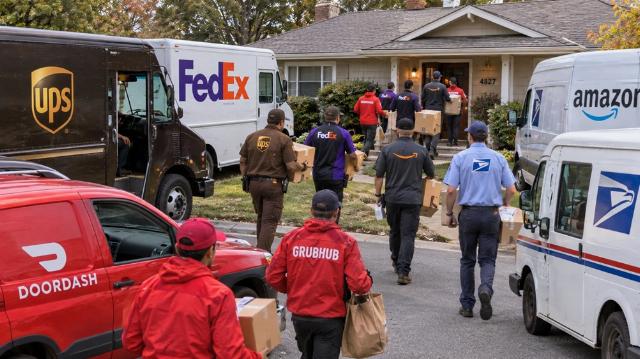 The individual transaction is part of a larger household budget. Restaurant delivery carries fees and tips. Grocery delivery adds charges for a service once performed by the person doing the shopping. Entertainment arrives through multiple subscriptions. Cellular service, internet access, device payments, gaming memberships, and premium television packages produce a steady stream of monthly obligations.
Reviews.org estimated that Americans spent an average of nearly $280 monthly on internet, mobile, television, and streaming services in 2025. That is more than $3,300 annually. Some of those services are useful, even necessary. Others are choices. The distinction matters because a household cannot spend the same dollar twice.
Consider how those expenses multiply. A smartphone is no longer simply a telephone. It brings a service contract, a data plan, insurance, accessories, and the temptation to upgrade every few years. A television becomes the gateway to several streaming subscriptions. A gaming console brings games, online memberships, and additional purchases. Each expense may seem manageable in isolation. Together, they establish a permanent claim on household income. The monthly payment has become the preferred way to evaluate a purchase, while the annual cost receives considerably less attention.
Fifty years ago, an ordinary household operated with a much shorter list of recurring expenses. There was a telephone, usually shared by the family. There was a television, often one set, and broadcast programming. People went to the store, cooked dinner, and bought many household items outright. They entertained themselves with radio, records, movies, libraries, and neighborhood activities. Life was hardly free of expenses, and the 1970s brought their own economic hardships. But the household budget did not carry the same assortment of subscriptions, electronic devices, delivery services, and financed conveniences.
The difference is not simply technological progress. It is the transformation of optional purchases into expected features of ordinary life.
Household formation also changed the economic equation. In 1976, marriage generally occurred earlier, and couples more commonly established households together. Two incomes could support one home, one set of utilities, and shared transportation expenses. Today, more adults maintain independent households, often for longer periods. The U.S. Census Bureau reports that one-person households increased from 19 percent of all households in 1974 to 29 percent in 2024. The median age at first marriage rose from 23.1 to 30.2 for men, and from 21.1 to 28.6 for women. Two people living separately must each pay for housing, utilities, furnishings, appliances, and transportation. Those are legitimate personal choices, but they carry economic consequences.
The financing of consumption has accelerated that transformation. Layaway once required a customer to put money down, make payments, and wait until the merchandise was paid for before taking it home. The arrangement imposed a simple discipline: if you couldn't pay for something, you waited.
Today, the merchandise comes home immediately, while the payments follow. Buy now, pay later. Finance the phone. Stretch the automobile loan. Divide the purchase into installments. A manageable monthly payment can make an expensive purchase appear affordable, even when the total cost says otherwise.
This way of thinking extends beyond the consumer. Manufacturers borrow to produce goods, distributors finance inventory, and retailers carry the cost of merchandise while waiting for it to sell. Money tied up in inventory is money unavailable for other uses. Borrowing has an interest expense, but even capital that a company already possesses has an opportunity cost. The longer money remains committed to a product before it generates a return, the more expensive that transaction becomes. Those costs travel through the supply chain and ultimately find their way into the prices consumers pay. The cost of money doesn't stop at the interest on a consumer's statement.
None of this makes housing, healthcare, education, insurance, or groceries any less expensive. Those are genuine pressures, and families struggling with them deserve to be taken seriously. Housing costs can overwhelm a budget. Medical expenses can devastate savings. Education can leave young adults carrying debt before their careers have properly begun. Inflation has reduced what a paycheck can buy.
But those realities do not explain every dollar disappearing from a household account. Nor do they excuse us from examining the choices that consume the money left after necessities are paid. A government policy can affect the price of a home or a gallon of gasoline. It cannot explain every subscription, delivery fee, financed upgrade, or convenience charge appearing on a monthly statement.
An entire generation can experience higher living costs while simultaneously making lifestyle choices that increase those costs. Both can be true. Recognizing one does not require denying the other. Yet the political debate encourages Americans to see themselves almost exclusively as victims of rising prices, rather than consumers whose own expectations and decisions also shape their financial circumstances.
The woman with the $32 sandwich was entitled to spend her money as she pleased. But her transaction illustrates a larger problem. When convenience becomes routine, when financing substitutes for saving, and when optional expenses become indistinguishable from necessities, the resulting financial pressure is easy to mistake for something entirely beyond personal control.
Politicians can promise to make life more affordable. They can argue over prices, wages, taxes, and government spending. But no administration can make every lifestyle affordable, and no campaign slogan can repeal the arithmetic of household budgets. Until we are willing to examine what we expect our incomes to support, we will keep confusing the cost of living with the cost of living the way we have chosen.
The cost of living is as real as the cost of the lifestyle we choose to maintain.
Source link