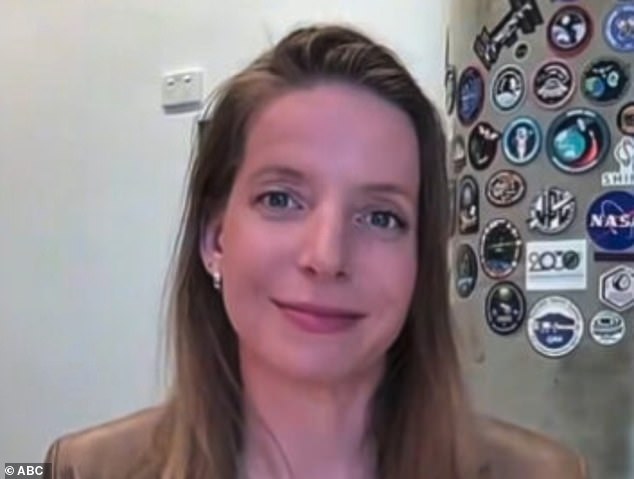
An astronomer has claimed the moon is part of 'Indigenous sky country' during a bizarre interview about space pollution and exploration.
Rebecca Allen, co-director of the Space Technology and Industry Institute at Swinburne University of Technology, made the comment on ABC on Saturday.
A SpaceX rocket is set to slam into the moon on Wednesday after drifting for more than a year, creating a crater and sending a plume of dust and debris into space.
Dr Allen was asked whether she was concerned about the impact or the growing problem of space junk.
'The moon is something that has fascinated us,' she said.
'It's deeply rooted to Indigenous sky country and storytelling and so we want to respect the fact that this is not just something for us to go and explore.'
Dr Allen was referring to Indigenous astronomy, which has been practised by Aboriginal and Torres Strait Islander peoples for thousands of years.
It uses knowledge of the stars and moon for navigation, seasonal calendars, weather prediction, storytelling and cultural law.
Rebecca Allen, co-director of the Space Technology and Industry Institute at Swinburne University of Technology, made the comment on ABC Breakfast on Saturday
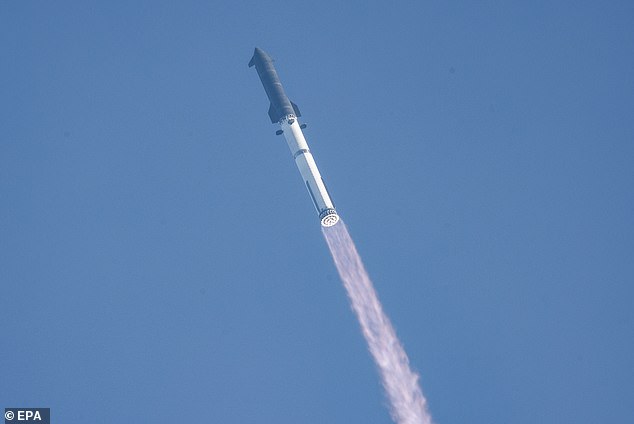
A SpaceX rocket is set to slam into the moon on Wednesday after drifting for more than a year, creating a crater and sending a plume of dust and debris into space
Dr Allen said the incident highlighted the need for responsible space exploration as Australia expands its role in the global space industry.
'We've got to be doing it in the right way,' she said, adding that space regulation was becoming an increasingly important global conversation.
Her comment sparked mixed reactions online, with some social media users criticising her.
'Unsure if she is aware that the moon is not on Earth,' one user joked.
'The moon belongs to no one, and one rocket stage won't damage a lifeless rock that's survived billions of years of impacts,' another wrote.
Others shifted the focus back to the issue of space debris pollution, arguing the bigger concern was the growing amount of human-made waste left in space.
'This is about space pollution,' one said.
'When did the people of Earth agree to make the moon a dumping ground? There should be laws about space trash disposal,' another added.
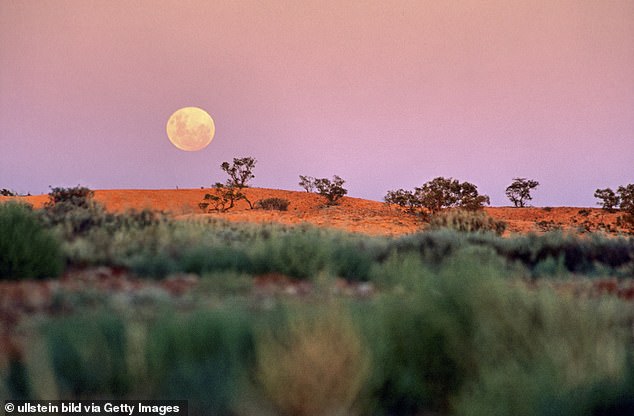
'It's really important to remember that the moon is also part of Indigenous sky country and Aboriginal storytelling, so it's not just something for us to go and explore,' Dr Allen said
Should exploring or impacting the moon require respect for Indigenous cultural beliefs and stories?
Australia has rapidly expanded its space ambitions in recent years, growing its domestic industry and launch capabilities.
A major milestone came last year with the launch of Australia's first locally built orbital rocket Eris.
Astronomers within the Australian Space Agency have raised similar concerns about the need for responsible space exploration.
They have warned that growing space activity must be balanced with protecting the space environment, reducing debris and preserving the night sky.