The pilot of a doomed Learjet aircraft that crashed into a fireball in Palm Beach, Florida may have flown directly into the eye of a thunderstorm before the tragedy, a meteorologist said.
Nine people were killed when the jet crashed near Palm Beach International Airport on Sunday, as footage showed the aircraft nosediving to the ground and exploding at an intersection.
It is unclear what caused the crash, and the National Transportation Safety Board said it has launched an investigation into the tragedy.
However, early reviews into the flight data and radar from the time of the crash show the Learjet flew into a fast-growing thunderstorm, reports The Palm Beach Post.
Meteorologist Matthew Cappucci told the outlet that the storm rapidly developed on Sunday morning, and its clouds shot up 15,000 feet in 20 minutes.
At the time of the crash at 12:50pm, the clouds reached 48,300 feet, minutes after the pilot of the aircraft asked air traffic control to climb from 35,000 feet to 37,000 feet due to heavy rain.
The plane's mayday call came just moments later, as audio captured co-pilot Nathalia Filgueiras, 20, panicked and warning the ground the aircraft was coming down.
'Descending 20,000ft per minute... we're going to crash into the ground,' the co-pilot said, as her pilot, who has not been identified, could be heard reciting the Lord's Prayer in the background.
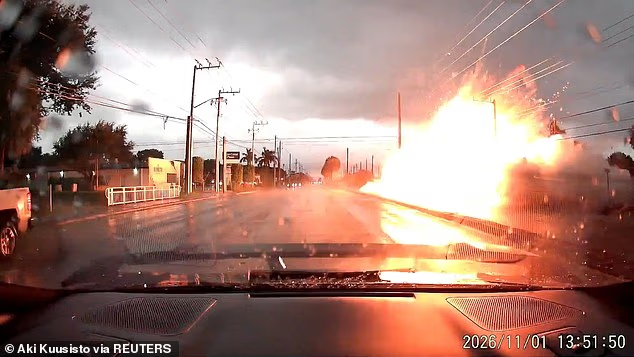
The pilot of a doomed Learjet aircraft that crashed into a fireball in Palm Beach, Florida may have flown directly into the eye of a thunderstorm before the tragedy, a meteorologist says
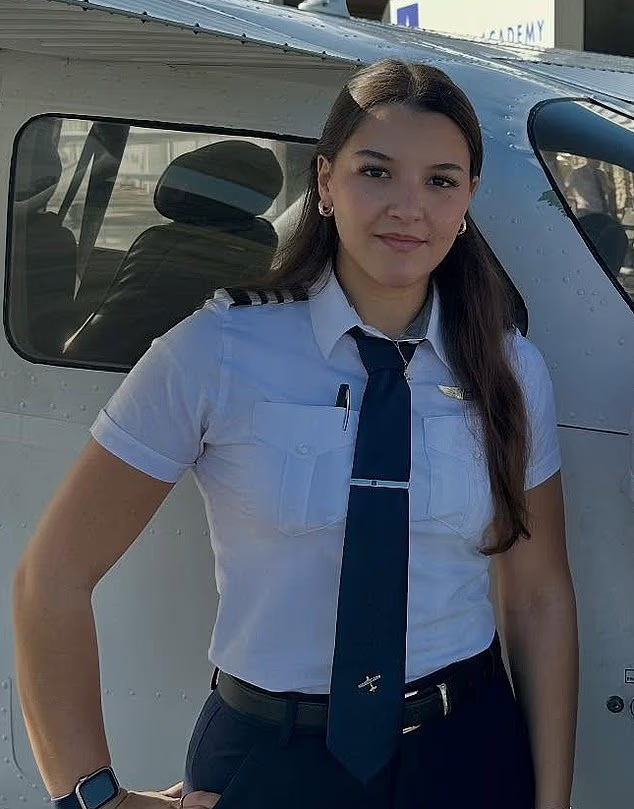
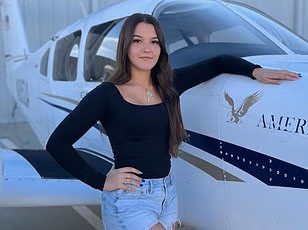
Co-pilot Nathalia Filgueiras, 20, was heard warning air traffic control of the imminent disaster moments before the jet crash landed
Filguerias was identified as the co-pilot of the doomed aircraft on Monday, as her family said she grew up in Palm Beach County with a passion for aviation.
When she earned her pilot's license aged 17 in 2023, Filguerias appeared on local TV to celebrate the achievement.
She told CBS12: 'I definitely do brag because people say, "Oh, you can't drive," and I'm like, "Yeah, but I can fly".'
Her mother Camila often shared images of Filgueiras and her siblings traveling on private jets, with her father Allan also having his pilot's license.
Camila told The New York Times: 'She loved the freedom. It was completely different seeing the world from the top.'
Audio from the cockpit captured the young co-pilot attempting to describe the crisis in the Learjet 60 aircraft to air traffic control in the moments before it went down.
She could be heard saying the aircraft had banked 60 degrees, meaning it was flying sideways, and she was noting the altitude changes while the panicked pilot next to her recited the Lord's Prayer.
The Daily Mail has chosen not to publish the final seconds of audio which are extremely distressing.
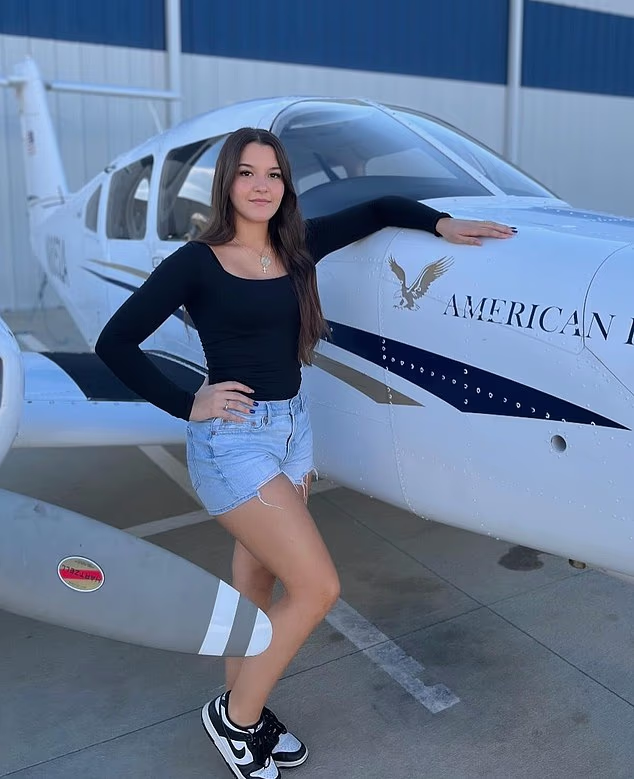
Nathalia Gadelha Filgueiras, 20, was co-piloting the Learjet 60 on Sunday when it crashed near West Palm Beach
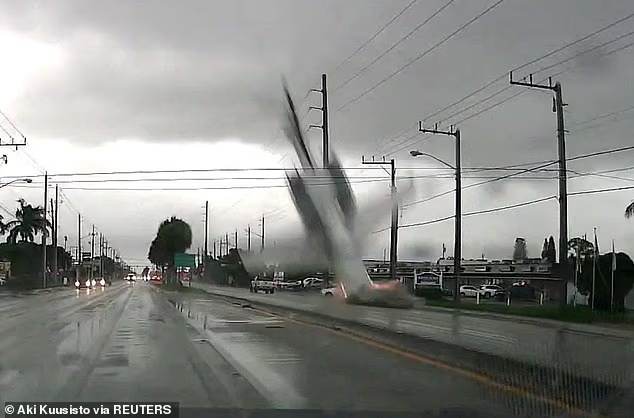
Experts have speculated that the jet, worth $2 million, was potentially downed by what is known as coffin corner
Read More
BREAKING NEWS Doomed Learjet co-pilot identified as woman aged just 20, as male pilot heard praying 'Our Father'
The flight had set off from Austin, Texas, bound for North Eleuthera in the Bahamas before its path abruptly ended just near West Palm Beach, according to flight data.
The impact left debris scattered across a significant distance and a massive crater in the road, but authorities said nobody on the ground was injured or killed in the crash.
The jet crashed just eight miles from President Trump's Mar-a-Lago country club, and the president and Air Force One took off from Palm Beach International Airport just an hour before the crash landing.
The cause of the tragedy is under investigation, with some aviation experts suggesting the plane may have fallen foul of 'coffin corner' while trying to climb above two storm systems, known as cells.
Coffin corner is a phenomenon whereby the jet's minimum safe speed and maximum safe speed converge into a very narrow range at high altitude, making it extremely difficult to fly safely.
If the plane goes too slow or fast it will stall and quickly become uncontrollable.
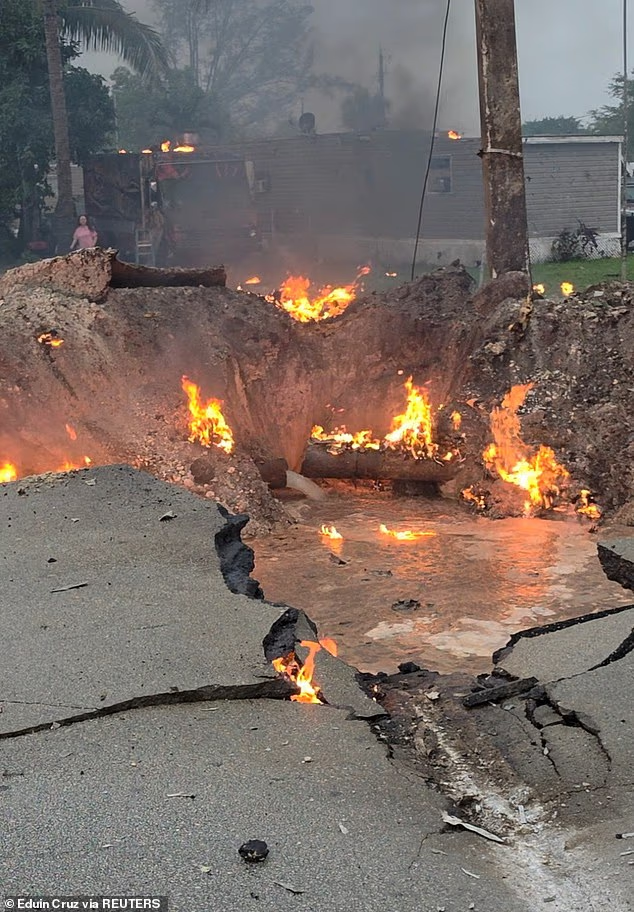
The impact left a massive crater in the middle of the road, damaging nearby infrastructure
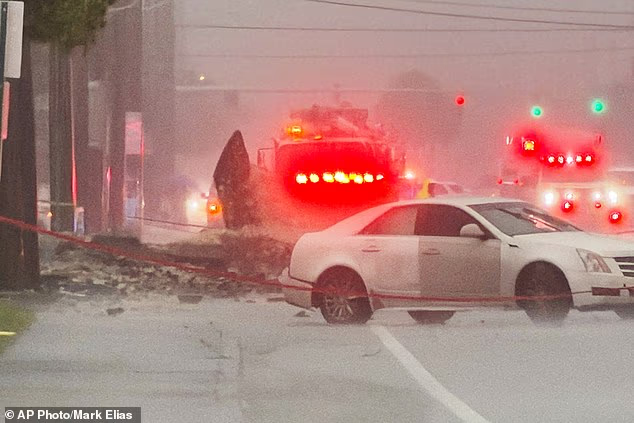
Officials do not believe the road where the plane crashed will be open for another month
Former pilot Martin Varsavsky, who now runs his own AI firm, posted to X saying that he believed that bad weather in the area could have caused the fatal error.
He said: 'The radars clearly showed those cells; in light jets, the rule is to deviate with a good margin, not to fly through them – this could be an error by the woman who was piloting.
'What storms do by changing the outside temperature is that airplanes can no longer stay aloft at the same speed. It's called the coffin corner. Or they become very difficult to keep under control.'
Source link