Homeowners facing soaring mortgage repayments have been warned the worst may be yet to come, with a prominent economist predicting interest rates could surge to 6.5 per cent and push Australia into recession.
Judo Bank's chief economic adviser Warren Hogan suggested financial markets and households were underestimating how high rates may ultimately need to go.
He told ABC's The Business that interest rates may be too low to effectively combat inflation and said he was forecasting two further increases on top of the widely expected rate rise on Tuesday.
He said under a worst-case scenario, six more interest rate rises may be necessary, taking the cash rate beyond six per cent.
'It's [the interest rate] still extremely low by any standard of the last 50 years. I've got a forecast for a further two rate hikes [in] the first half of next year,' he said on Monday.
'If inflation remains stubborn, who knows how high we'll have to go.
'The worst case scenario for us would be having to get the cash rate up to where the RBA took it just before the (Global Financial Crisis) when we last had an inflation problem, and that was a cash rate of 7.25 per cent.
'I don't think the economy will withstand a cash rate much above six per cent, so the worst case is probably somewhere between six and 6.5 [per cent] in the next two years. We'd definitely have a recession, there's no two ways about that.'
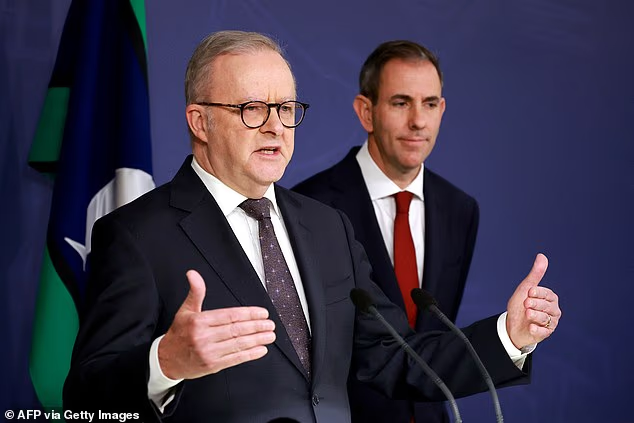
The Albanese government is expected to face a rate rise by the RBA on Tuesday
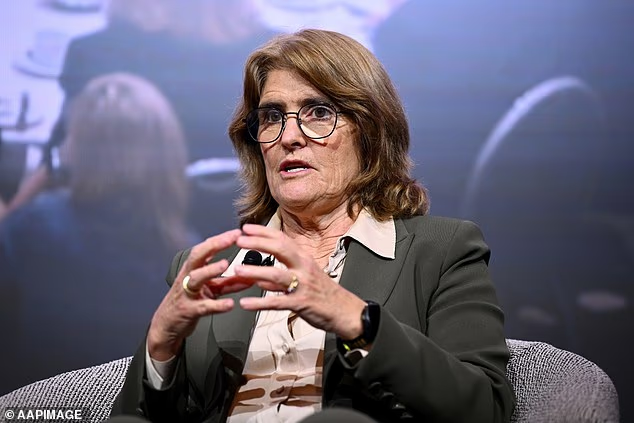
RBA governor Michele Bullock (pictured) has a tricky job taming inflation in Australia
The Reserve Bank's cash rate currently sits at 4.85 per cent, meaning Mr Hogan's worst-case scenario would require another six 25-basis-point rate rises.
Mr Hogan said Australia was a long way from a genuine restrictive monetary policy setting, arguing higher borrowing costs were hurting mortgage holders but had not done enough to slow the broader economy and bring inflation under control.
'No, I don't think monetary policy is restrictive to the overall economy [although] it's certainly restrictive in certain parts of our economy,' he said.
'I don't think there's a mortgage holder in the country that won't tell you that monetary policy is not restrictive, and I think that's a legitimate perspective.
'The economy is not getting inflation down.'
Mr Hogan said persistent inflation risked forcing the Reserve Bank to inflict even more economic pain to bring price growth under control.
He added governments could ease pressure on the RBA by winding back spending, saying a modest reduction in recurrent expenditure could eliminate the need for further rate rises.
'Government spending has exploded in this country in the last decade,' he said.
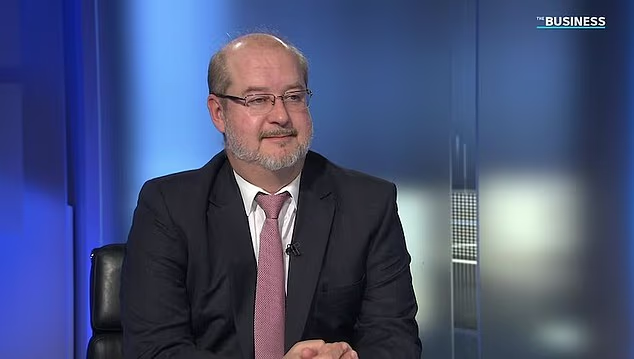
Judo Bank's chief economic adviser Warren Hogan (pictured) is forecasting two further rate rises following an expected increase on Tuesday
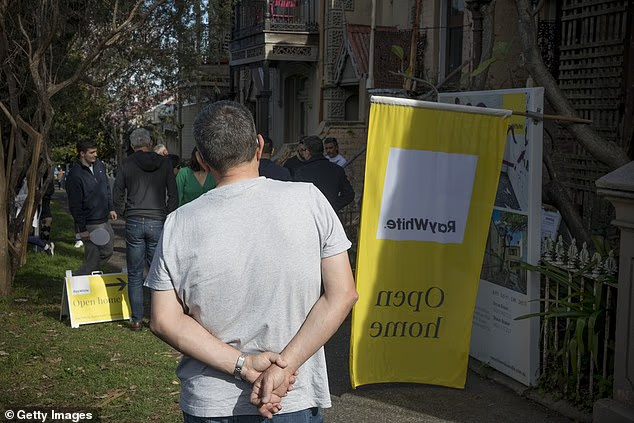
Glenn Price said a buyer who could comfortably afford a median-priced home a year ago is now being priced out by higher interest rates
'The states can play a role. If they all universally just pulled back a little bit on their spending, that would take tremendous pressure off the RBA.
'In fact, if the governments of Australia came out and cut fiscal policy recurrent spending by one per cent straight away, I think this could be the last rate hike we see.'
Meanwhile buyer's agent Glenn Price has warned the expected rate rise could trigger a property market 'bloodbath', pushing thousands more homeowners towards forced sales while locking aspiring buyers out of the market.
He said a further increase would slash borrowing power to about 10 per cent below where it was a year ago, leaving many would-be purchasers unable to afford median-priced homes and creating a growing stand-off between owners who need to sell and buyers who can no longer secure finance.
He added that a buyer who could comfortably afford a median-priced home a year ago is now being priced out by higher interest rates.
In Brisbane, that buyer is now about $140,000 short of the median house price of $1.04million, he said.
In Sydney the gap is about $17,000 on a median-priced house worth $1.19million, while in Melbourne it is about $18,000.
'That's the problem facing the market. You can't sell a house to a buyer the bank has already said no to,' he told the Daily Mail.
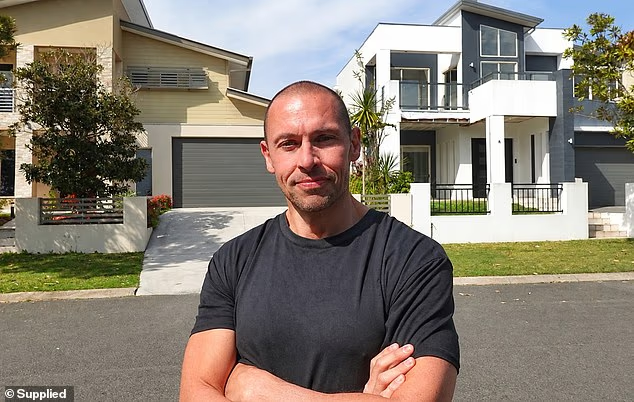
Buyer's agent Glenn Price (pictured) has warned an expected Reserve Bank rate rise could trigger a property market 'bloodbath'
'Take a buyer who could just afford the median 12 months ago, with a 20 per cent deposit and the same income,' Mr Price said.
'Borrowing power is down about 9 per cent already, and a hike takes it to about 10 per cent.'
Mr Price said home prices in Sydney and Melbourne had already come down to meet buyers while Brisbane had not.
He said whether the RBA hikes or holds on Tuesday, it will not solve what he described as growing pressures in the residential property market.
'It only stems the bleeding. A hike is a bloodbath, and it is about to create a lot more sellers,' he said.
'It's not just rates either. Fuel is up 23.6 per cent on a year ago and electricity 12.8 per cent. Buyers have less to borrow, less left over to save, and it costs more to get to the open home.
'And that's the other half. Another hike is about to put more sellers on the market. Tomorrow's would be the fifth this year, and on a $700,000 loan that's about $570 a month more than a year ago, with inflation and the cost of living already eating the household budget.
'For plenty of owners, the repayments are about to become unaffordable.
'So we have buyers who can't afford to buy, and sellers who can't afford to hold. More sellers, same asking prices, buyers $140,000 short. That's not a market, that's a stand-off with a mortgage.'
Source link