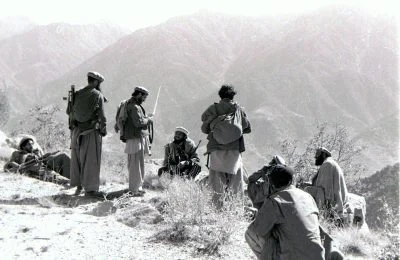
The Afghan jihad in the 1980s, beyond being a military and political confrontation, became a vast arena for religious mobilisation, the organisation of volunteer fighters, and the strengthening of Arab extremist movements. Some Arab governments, particularly Saudi Arabia, played a role in encouraging Arab volunteers to join the war through financial, propaganda, and religious support for the Afghan jihad. They intensified the propaganda atmosphere to motivate volunteers to such an extent that its heat also engulfed Arab societies, their social and cultural traditions, and the prevailing religious perceptions within these societies.
The Afghan jihad in the 1980s played a very significant role in the expansion of Salafi jihadism and the radicalisation of certain religious movements in Saudi Arabia. Thomas Hegghammer, a renowned researcher of jihadist movements, explains in his book Jihad in Saudi Arabia: Violence and Pan-Islamism since 1979 that the Saudi jihadist movement emerged during the 1980s in the context of the Afghan war.
The role of intelligence agencies in organising and strengthening the Afghan jihadist movements cannot be separated from the subsequent consequences of religious extremism.
Cooperation between the United States Central Intelligence Agency (CIA), Pakistan's Inter-Services Intelligence (ISI), and Saudi Arabia's intelligence apparatus in supporting armed groups opposed to the Afghan government formed part of an organised Cold War policy.
This cooperation, together with religious mobilisation and transnational propaganda and financial networks, helped strengthen forces, some of which later developed into independent extremist movements and even opponents of their former supporters.
Thus, intelligence support for the Afghan jihad left lasting consequences not only for the fate of Afghanistan but also for the political and security developments of Arab societies and Pakistan.(6)(7)(8)
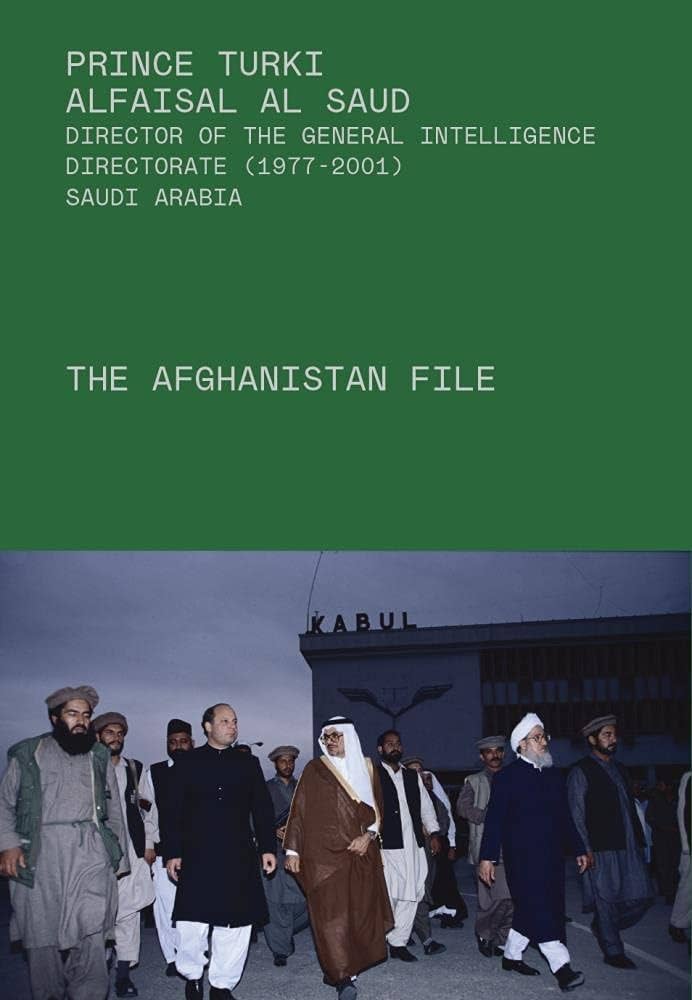
Prince Turki Al Faisal Al Saud, the former head of Saudi intelligence, presents accounts in his book The Afghanistan File that can be examined from the perspective of the return of the consequences of religious extremism to the societies that supported the jihad.
Extremists' Attack on the Charity Organisation of the Saudi Intelligence Chief's Sister
Turki Al Faisal writes that one of his sisters, who was involved in charitable activities and worked to expand the social role of women, became the target of an attack by a religious preacher. During a Friday sermon at one of the mosques in Riyadh, the preacher described her charitable organisation as a "brothel."
Turki Al Faisal explains that the following Friday, he personally went to the same mosque and asked the preacher to provide evidence for his accusation. Since no evidence was presented, the preacher was dismissed from his position by the end of the week.(1)
This incident demonstrates how the spread of strict and extremist religious attitudes, whose roots were connected to Saudi Arabia's policies concerning Islamist projects, could even target social activities associated with the Saudi ruling family.
Religious Extremism and the Restriction of Women in Algeria
In the same book, while examining the attitudes of Arab Islamist movements towards women, Turki Al Faisal quotes one of the leaders of Algeria's Islamic Salvation Front as saying:
"A woman should leave her home only three times in her entire life: when she is born, when she gets married, and when she is taken to the cemetery."(2)
What emerges from this picture is the rhythm of the Afghan jihad and its background in Arab countries, where alarm bells continued to sound.
This viewpoint was an example of strict religious thinking that severely restricted women's participation in society. Turki Al Faisal explains that, for those holding such attitudes, the expansion of women's role in society had become a challenge they were incapable of confronting.
Osama bin Laden: From Jihadist Mobilisation to Confrontation with the Saudi Government
One of the most prominent examples of the return of the consequences of the Afghan jihad to Arab countries is the story of Osama bin Laden.
Bin Laden, who took advantage of the favourable political, financial, and religious environment of the Afghan jihad to establish and expand networks of Arab fighters, later became one of the principal figures of transnational terrorism.
His activities and those of al-Qaeda left devastating consequences for Afghanistan and other countries. However, the same environment that had facilitated the growth of his religious and organisational influence eventually led to a confrontation between him and the Saudi government after his return to Saudi Arabia.
Turki Al Faisal writes on page 112 of his book that, during the crisis caused by the occupation of Kuwait, bin Laden presented a proposal to Prince Sultan under which his forces could participate in the liberation of Kuwait.
According to Turki Al Faisal's account, this proposal was militarily unrealistic because bin Laden had failed to consider the difference between guerrilla warfare in the mountains of Afghanistan and conventional warfare on the flat terrain of Kuwait. He also overlooked the limited role of Arab volunteers compared with the Afghan mujahideen.
Prince Sultan rejected bin Laden's proposal and asked him to support the Saudi government during those difficult circumstances. Turki Al Faisal writes that the rejection of this proposal apparently deeply offended bin Laden and played a role in the subsequent transformation of his thinking.(3)
Pages 112 and 113 of the book state that, in late 1990 and early 1991, bin Laden delivered speeches at the bin Laden Mosque in Jeddah and in schools without permission from the Saudi Ministry of Education. He criticised the presence of foreign forces in Saudi Arabia and called for Muslim unity.
The Jeddah police summoned him and ordered him to stop delivering unauthorised speeches. Bin Laden complied with this order for a while, but two months later he resumed speaking publicly. Once again, he was summoned by the police and faced a more serious order to cease his activities.(4)
What is particularly noteworthy about this approach is that, with the active participation of the camp of Arab terrorism, the Democratic Republic of Afghanistan collapsed and the mission of these Arab terrorist groups came to an end; even terrorist leaders such as bin Laden were no longer permitted to deliver speeches in Saudi mosques.
This process eventually led to bin Laden's open confrontation with the Saudi government, and in 1994 his Saudi citizenship was revoked, a matter Turki Al Faisal also mentions on page 112.(5)
It should be emphasised that bin Laden's departure from Saudi Arabia not only did not mark the end of his mission and jihadist activities, but also marked the beginning of a new phase of his involvement in the political and military developments of the region and the advancement of new jihadist projects. Bin Laden's connection with the Taliban and the Islamic Emirate of Afghanistan marked a new stage in the transformation of jihadist networks. After returning from Sudan to Afghanistan in 1996, bin Laden strengthened his relations with the Taliban and, in exchange for financial and military support for the group, obtained a safe haven and extensive facilities for organising al-Qaeda. Thus, Afghanistan once again, this time under the rule of the Islamic Emirate, became a base for training, equipping, and planning transnational terrorist operations. These relations eventually apparently provided the conditions for al-Qaeda to organise the terrorist attacks of 11 September 2001; attacks that created the grounds for the military intervention by the United States and its allies and the occupation of Afghanistan.(14)
The Emergence of the Taliban: Continuation of the Legacy of Jihad and the Formation of a New Phase of Regional Politics
The emergence of the Taliban cannot be examined separately from the legacy of the Afghan jihad project—a project in which the United States, within the framework of Cold War competition, Saudi Arabia through financial and religious support, and Pakistan through intelligence and military organisation played roles in strengthening it.
The Taliban emerged within the religious, military, and political networks that had developed from that same war and, with Pakistan's decisive support, became a new force in Afghanistan's power equation.
The bitter irony of history was that this movement, after benefiting from the legacy of jihad, eventually rose against many of those same mujahideen organisations and commanders and wrested power from their hands. Thus, a project cultivated to overthrow a political system, through a historical transformation, produced a force that also removed the original heirs of that project from the arena of power.
Pakistan and Tehrik-i-Taliban Pakistan (TTP): The Return of the Seeds of Extremism to the Land That Nurtured Them
Pakistan, which through its military intelligence organisation (ISI) played a central role in organising, equipping, and supporting Afghan jihadist groups, eventually itself became one of the main arenas for the return of jihadist violence.
The armed networks and cross-border relationships that had expanded over decades in the context of the Afghan war entered a new phase after 2001 and Islamabad's change of position regarding the war on terrorism.
In 2007, Tehrik-i-Taliban Pakistan (TTP), under the leadership of Baitullah Mehsud, emerged from an alliance of armed groups and expanded its war against the Pakistani state. Through suicide attacks, the killing of civilians, and operations against security forces, this group challenged the authority of the state.
Following the Taliban's return to power in Afghanistan in 2021, cross-border connections and TTP activities once again became one of the factors intensifying tensions between Kabul and Islamabad.(9)(10)
The bitter irony of history lies in the fact that Pakistan's intelligence apparatus, which had turned Afghanistan into an arena for nurturing and expanding jihadist movements, is now confronting the consequences of that same political and ideological environment within its own country.
Thus, the fire that was ignited to achieve strategic objectives in Afghanistan became one of the factors eroding domestic security and intensifying the crisis in relations between Afghanistan and Pakistan.
Arab Fighters: From Hekmatyar's Threats and Drug Addiction to the Expansion of Jihad into Tajikistan and Chechnya
Turki Al Faisal's account of the fate of Saudi fighters reveals another shocking aspect of the consequences of the Afghan jihad.
According to him, in October 1992 Saudi Arabia sent General Mohammed Eid Al Otaibi to Kabul to bring back Saudi volunteers. However, Gulbuddin Hekmatyar, the most extremist jihadist leader, whose forces included a large number of Saudi fighters, had confiscated their passports and prevented their return by threatening them with imprisonment.
Turki Al Faisal claims that Hekmatyar had even allowed a number of these fighters to become addicted to drugs because individuals under the influence of narcotics were more willing to carry out suicide missions on his behalf.
Of the 20 Saudi fighters who were brought back from Hekmatyar's forces, 16 were addicted to drugs and required treatment. This account demonstrates how some Arab volunteers were transformed into instruments of war for jihadist commanders.(11)
Despite the return of approximately 200 Saudi fighters between October 1992 and September 1996, the flames of cross-border jihad were not extinguished, and a number of Arab jihadist fighters moved from Afghanistan to the wars in Tajikistan and subsequently Chechnya.
Thus, for some Arab fighters, Afghanistan was not the end of a war but the beginning of a chain of transnational wars whose consequences eventually returned to their countries of origin. (Same source, pages 134–135)
On 16 November 1993, The Christian Science Monitor reported that Rovshan Javadov, Azerbaijan's Deputy Minister of Internal Affairs, had travelled to Afghanistan in August of that year and negotiated with Gulbuddin Hekmatyar over sending fighters from his party to the Karabakh front in exchange for payment. The newspaper also documented the presence of Hezb-e Islami fighters in the war against Armenian forces.(12)
Humayun Jarir, Hekmatyar's son-in-law, stated in 2020 that the number of fighters sent by Hezb-e Islami was approximately five thousand.(13)
According to accounts from some Hezb-e Islami fighters who personally participated in the Karabakh war, Hezb-e Islami paid them only a portion of the wages designated for the fighters, while a considerable share of those funds remained in the hands of the party's leaders.
Conclusion
The Afghan jihad became a double-edged sword for its regional and international supporters. The intelligence agencies that exploited religious motivations and fuelled the flames of jihad to achieve their geopolitical objectives eventually faced the consequences of the expansion of extremist networks themselves.
From bin Laden's confrontation with the Saudi government and the dispersal of Arab fighters across other battlefields to the emergence of Tehrik-i-Taliban Pakistan and the spread of violence in that country, one historical reality stands out: once armed and ideological networks are established, they do not necessarily remain within the framework of their original supporters' objectives.
The experience of Afghanistan demonstrated that the flames of religious extremism can be ignited to achieve political objectives, but there is no guarantee that those flames will remain within predetermined borders; a fire that was once directed towards Afghanistan eventually engulfed a number of its own supporters and organisers.
*
Click the share button below to email/forward this article. Follow us on Instagram and X and subscribe to our Telegram Channel. Feel free to repost Global Research articles with proper attribution.
Mohamad Aref Erfan, Writer and Political Analyst from Afghanistan, based in the United Kingdom.
Notes
(1) Prince Turki Al Faisal, The Afghanistan File, page 116. Account of a religious preacher's attack on the charitable organisation of the author's sister.
(2) Same source, page 116. Quotation of a viewpoint attributed to one of the leaders of Algeria's Islamic Salvation Front concerning women.
(3) Same source, page 112. Bin Laden's proposal to Prince Sultan regarding the liberation of Kuwait.
(4) Same source, pages 112–113. Bin Laden's speeches and his summons by the Jeddah police.
(5) Same source, page 112. Reference to the revocation of bin Laden's Saudi citizenship.
(6) Central Intelligence Agency, Memorandum from Director of Central Intelligence Turner to Zbigniew Brzezinski, 5 November 1979, Document No. 80, Foreign Relations of the United States, Afghanistan volume.
(7) Central Intelligence Agency, Memorandum Prepared in the Central Intelligence Agency, 11 June 1980, Document No. 288, concerning the transfer of weapons through Saudi Arabia and Pakistan.
(8) Thomas Hegghammer, Jihad in Saudi Arabia: Violence and Pan-Islamism since 1979, Cambridge University Press, 2010, Chapter Two, pages 38–58.
(9) Council on Foreign Relations, Pakistan's New Generation of Terrorists, concerning the formation of TTP in 2007 and its relations with Afghan jihadist groups.
(10) Abdul Sayed and Tore Hamming, The Tehrik-i-Taliban Pakistan After the Taliban's Afghanistan Takeover, CTC Sentinel, May 2023.
(11) Prince Turki Al Faisal, The Afghanistan File, Chapter Twelve, Bringing Home the Volunteers, pages 133–134. Account of the confiscation of passports, Hekmatyar's threats, drug addiction, and the return of Saudi fighters. Also pages 134–135 concerning the experiences of Khalid Al Subaie and his presence in Afghanistan, Tajikistan, Chechnya, and subsequently Saudi Arabia.
(12) The Christian Science Monitor, 16 November 1993. Report concerning the presence of Afghan fighters in the Karabakh war and Rovshan Javadov's visit to Afghanistan to negotiate with Gulbuddin Hekmatyar over sending fighters in exchange for payment.
(13) Radio Azadi, 7 October 2020. Report concerning the participation of Hezb-e Islami fighters in the Karabakh war and statements by Gulbuddin Hekmatyar, Humayun Jarir, and several former fighters regarding the deployment of Afghan forces to Azerbaijan.
(14) National Commission on Terrorist Attacks Upon the United States, The 9/11 Commission Report, 2004, Chapter Two, Section 2.5, pages 63–70, concerning bin Laden's return to Afghanistan, his relations with the Taliban, and the establishment of al-Qaeda's operational base; also the report's Executive Summary concerning al-Qaeda's role in the terrorist attacks of 11 September 2001.
Featured image: Mujahideen in Kunar, Afghanistan (CC BY-SA 3.0)
Global Research is a reader-funded media. We do not accept any funding from corporations or governments. Help us stay afloat. Click the image below to make a one-time or recurring donation.

Comment on Global Research Articles on our Facebook page Become a Member of Global Research
Source link