Killers will go free if drill rap lyrics are banned from court cases, police have warned.
Scotland Yard has told ministers gang members are unlikely to be convicted or even prosecuted in murder and serious violence cases if a campaign succeeds to ban music lyrics from prosecutions.
A group of lawyers and academics is lobbying ministers to make lyrics inadmissible, arguing that it criminalises creativity and unfairly penalises young black men.
But detectives and families of victims fear any prohibition will lead to dangerous offenders escaping punishment.
Police can produce lyrics or use a defendant's appearance in a music video as evidence that a suspect is affiliated with a gang or involved in a specific crime.
The evidence has proved vital in some cases, including those when a music track leads to a murder in retaliation or the killer confesses in a rap mocking victims and their families.
The Art Not Evidence group wants a change in law that would limit the use of lyrics only when it can be said they are directly related to a crime, preventing police from using the music to prove gang affiliation.
An open letter sent to the Government argues that 'these creative expressions have no connection to the serious crimes alleged and are used to paint a misleading and prejudicial picture, conflating art with evidence.'
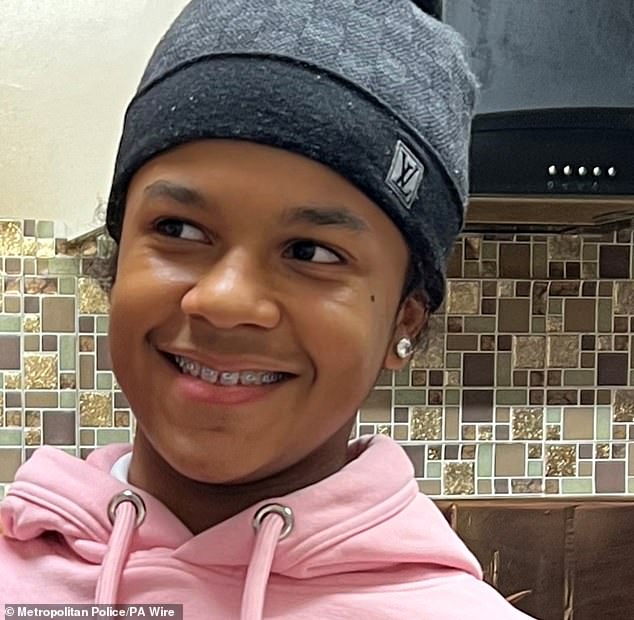
Leonardo Reid was about to start his GCSEs when he was stabbed to death at a music video shoot in June 2023
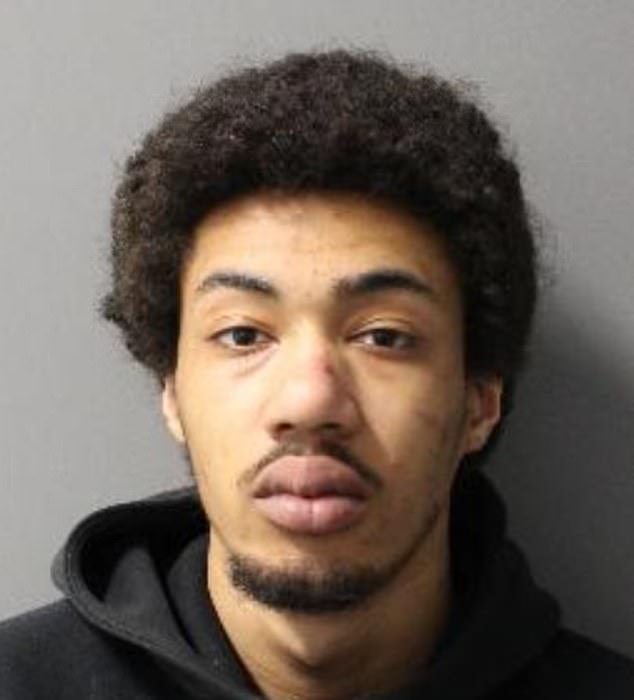
Only a day later, Xavier Poponne wrote a rap on his phone bragging about the attack which led to him being convicted for murder
Signatories to the letter include rapper Giggs and DJ Semtex, senior academics from the universities of Oxford, Manchester and the London School of Economics, and Riel Karmy-Jones KC, chair of the Criminal Bar Association.
Campaigners also want to see independent music expert witnesses instead of police witnesses in court.
Baroness Shami Chakrabarti has said: 'We're in a ridiculous position at present where somebody's musical taste is somehow probative of their criminal intent. It is like saying that my love of Francis Ford Coppola's The Godfather makes me a mobster.'
But the Met's lead on gang material, Detective Sergeant Matt Corbin fears there could be 'incorrect verdicts' as a result.
He said: 'It is a key tool in securing justice for victims and taking violent criminals off our streets.
'It has proved essential in proving cases of serious violence including murders by making sure juries have sufficient information to find a verdict.
'To be clear – restricting officers' use of drill and rap lyrics as evidence could significantly limit our ability to prosecute cases of serious violence and secure justice for victims.'
He told the Daily Mail: 'Our policy is very clear: we would treat opera, pop or anything else the same way if it was linked to a murder.'
In some murder cases, drill artists 'are storybooking everything they're going to do', the officer added.
Yesterday the mother of a 15-year-old boy whose killer wrote a rap about his murder said it was 'disgusting' that campaigners want to restrict the use of lyrics as evidence.
Leonardo Reid was about to start his GCSEs when he was stabbed to death at a music video shoot in June 2023.
He had no links to gangs but was excited to hear filming would take place outside his home in Archway, north London, and went to watch with his older brother.
Leo's killers believed members of a rival gang would be at the shoot and ambushed it with machetes, killing him and Klevi Shekaj, 23.
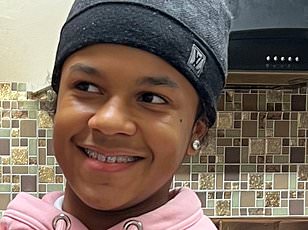
A day later, Xavier Poponne wrote a rap on his phone bragging about the attack which led to him being convicted for murder.
'Leo was a quirky little boy,' his mother, Valentina Locci, told the Daily Mail. 'Highly missed, highly loved.
'If you think it's acceptable as an artist to talk about someone who has been murdered, then we've got to be able to use that in court.
'If we can't, it shouldn't be allowed on any platform - YouTube, social media.'
Ms Locci, who previously worked as a behaviour manager at her son's school, said it was 'heartbreaking' to read lyrics about the murder.
'They were such a crucial part of getting justice. So as much as it was painful, I was all for it.'
On the proposed restrictions, she added: 'It's disgusting.
'Talking about that - about how you killed someone - will never be acceptable.'
The case is one of many in which drill, a sub-genre of rap, has been central to a prosecution.
In October, Lekan Akinsoji was jailed for 28 years for fatally stabbing a gang rival while wearing in a balaclava, bragging later in a song that he would escape justice as 'no face, no case'.