
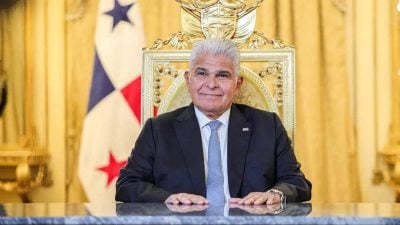
The week of February 23, 2026, marked a definitive and dramatic escalation in the long-simmering dispute over the crown jewels of Panamanian infrastructure: the container terminals of Balboa and Cristobal. In a swift and forceful action, the Panamanian government executed a final Supreme Court ruling, seizing physical control of the ports from the Hong Kong-based conglomerate CK Hutchison Holdings and its local subsidiary, Panama Ports Company (PPC).
You can also read this article in other languages by clicking the Translate Website button below the author’s name.
The move, which saw government authorities make a “direct physical entrance” to the facilities and order PPC staff to leave under threat of criminal prosecution, has profound implications for international investment law not to mention Panama’s reputation as a safe place for business and investment.
Occupation Or De Facto Expropriation
The events of this past weekend were the escalation of a judicial process that began in January. At that time, the Panamanian Supreme Court declared the 1997 concession contracts, which had been extended in 2021, as unconstitutional although the state itself was the one that crafted these concession contracts. The latest chapter concluded on Monday, February 23, when the ruling was finally published in the country’s official gazette, a formality that rendered the decision final and enforceable.
What followed was not a negotiated transfer as was hoped by CK Hutchison Holdings local subsidiary, Panama Ports Company (PPC) but a state-directed occupation which many fear might lead to expropriation. A government decree, citing “reasons of urgent social interest,” authorized the Panama Maritime Authority (AMP) to take immediate possession of the ports. The decree was remarkably broad, ordering the seizure of all movable property, including critical infrastructure such as Super-Post-Panamax cranes, vehicles, computer systems, and proprietary software which all belong to PPC. This level of detail in the decree underscores the government’s determination to ensure operational continuity without the cooperation of the previous operator.
PPC has vehemently rejected the action, describing it as an “unlawful“ and “confiscatory” takeover executed “without transparency or coordination”. The company warned that the abrupt removal of its personnel posed “serious risks to the operations, health and safety” of the terminals. In response to ensure those very operations, the Panamanian government immediately appointed temporary administrators. In a significant move, APM Terminals, a subsidiary of Danish shipping giant Maersk, will run the Pacific-side Balboa port, while Terminal Investment Limited (TIL), part of Mediterranean Shipping Company (MSC), will oversee Cristobal on the Atlantic side under 18-month transitional concessions. President José Raúl Mulino was careful to frame the action as a temporary measure to guarantee operations “until their real value is determined for the corresponding actions” in a future international tender.
This legal dispute must be understood as economic lawfare that is part of the intense geopolitical rivalry between the United States and China, as the North American giant seeks to limit or kick out the Asian giant from its foothold in the western hemisphere by all means necessary. The Panama Canal is a chokepoint for global trade, handling an estimated 5% of world trade and 40% of US container traffic.
The recently terminated management of these ports by a Hong Kong-based firm had long been a point of contention in Washington, with former President Donald Trump having vocally claimed, without evidence, that China was “running the Panama Canal.” The timing and execution of the takeover suggest Panama is acutely sensitive to this pressure. The US Ambassador to Panama, Kevin Cabrera, has already endorsed the Supreme Court’s ruling, calling it “very good” for the Panamanian people and defending Panama’s right to make its own judicial decisions. This tacit approval from Washington has seen in Beijing as confirmation that the move was driven by US coercion.
While Beijing may struggle to reverse the physical takeover, it holds significant economic leverage as the second-largest user of the canal and a major trading partner for Panama and the region. While this appears to be a tactical victory for the US, China is likely to “recalibrate” its approach, deepening its influence through less visible commercial and financial networks in Latin America rather than retreating. Hong Kong for its part has formally complained to the government of Panama after it took control of two ports on the Panama Canal. It accused the Panamanian authorities of taking them over by force.
Sovereignty vs. Investment Protection
From a legal standpoint, this conflict sits at the fault line between national sovereignty and the protections afforded to foreign investors under international law. Panama’s position rests on the supremacy of its domestic constitutional order with the Supreme Court’s finding that the concession contracts were “unconstitutional” provides the government with a powerful, and under Panamanian law, unimpeachable legal basis for its actions. By nullifying the contract ab initio, the court’s ruling suggests the agreement was always invalid, thereby justifying the state’s reclamation of control over what it deems strategic national assets even if it does not own them.
However, CK Hutchison is not without powerful legal recourse from its own part as the company has already initiated arbitration proceedings at the International Chamber of Commerce (ICC), reportedly seeking $2 billion in compensation. This shifts the battlefield from Panamanian courts to the realm of international investment law with Hong Kong and China having bilateral investment treaties with Panama that likely contain provisions for fair and equitable treatment, as well as protection against unlawful expropriation.
The key question for the arbitral tribunal will be whether a sovereign act, even a constitutionally mandated one, can constitute an expropriation requiring “prompt, adequate, and effective compensation.” Panama will argue that this is a legitimate, non-discriminatory regulatory exercise of sovereignty, a defense known as the “police powers” doctrine. CK Hutchison, in turn, will argue that the annulment was a targeted, confiscatory measure that deprived it of its investment without compensation, made all the more egregious by the physical takeover of its assets. The fact that the government has explicitly stated this is “not an expropriation” while simultaneously seizing assets creates a legal paradox that will be central to the arbitration.
Infrastructure and the Question of Confiscation
The ports of Balboa and Cristobal are not simple docks, they are highly sophisticated logistics hubs. In 2025, they handled 3.77 million twenty-foot equivalent units (TEUs), representing 38% of the total container traffic in the Panamanian port system. The government’s decree specifically targeting the seizure of “cranes, vehicles, computer systems and software” highlights the complexity of the takeover. These are not assets that can be simply handed over. They are integrated systems operated by specialized personnel.
The question of whether assets will be taken has been definitively answered in the affirmative although the government says its until their price has been determined. The physical assets are now under state control, operated by new temporary administrators. However, the ownership of those assets remains a central point of legal contention because CK Hutchison has not sold them, they have been seized. The arbitration will ultimately decide whether this seizure transforms into a legally recognized expropriation with compensation, or whether Panama’s sovereignty defense prevails. For now, the Chinese conglomerate has lost operational control, but the battle for financial and legal restitution has only just begun.
*
Click the share button below to email/forward this article. Follow us on Instagram and X and subscribe to our Telegram Channel. Feel free to repost Global Research articles with proper attribution.
Miguel Santos García is a Puerto Rican writer and political analyst who mainly writes about the geopolitics of neocolonial conflicts and Hybrid Wars within the 4th Industrial Revolution, the ongoing New Cold War and the transition towards multipolarity. Visit his blog here.
He is a Research Associate of the Centre for Research on Globalization (CRG).
Featured image is from the author
Global Research is a reader-funded media. We do not accept any funding from corporations or governments. Help us stay afloat. Click the image below to make a one-time or recurring donation.