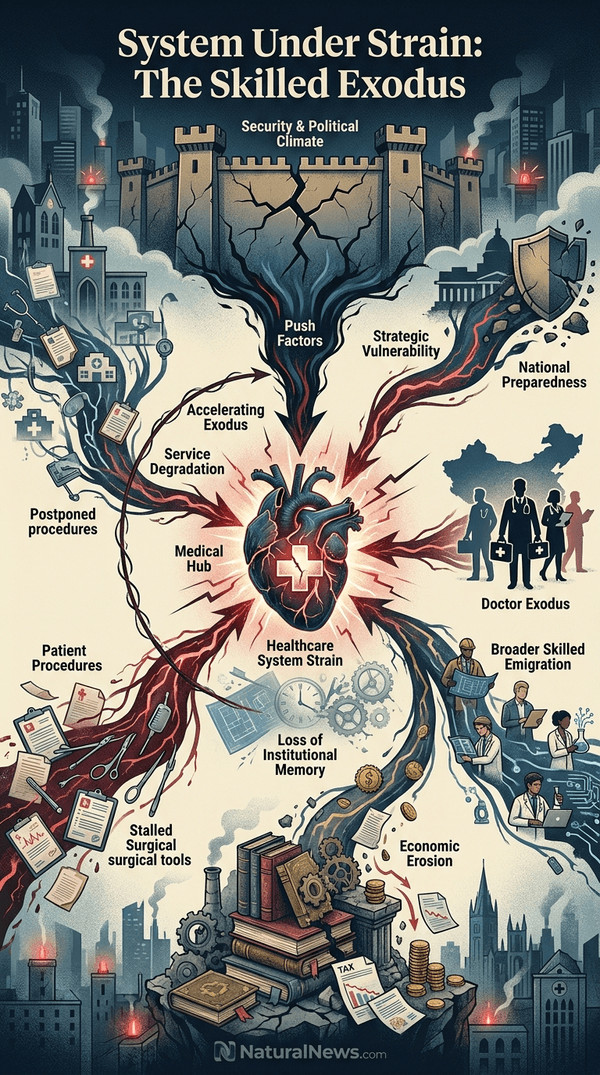
The report, published by The Cradle and cited in a social media post by the outlet dated Oct. 21, 2026, states that nearly 1,400 doctors left between 2023 and 2025 [1][2]. The article examines the reported effects on hospitals, clinics and specialist services, as well as the broader implications for national preparedness.
The Cradle states that Israel's security and political situation ranked among the main drivers of the departures [1]. The report frames the movement as a healthcare crisis and a strategic risk, according to the outlet's summary [3]. This article attributes those characterizations to the report and does not independently confirm them.
Reported Scale of Physician Departures
The report places the number of departing doctors above 1,000, describing the movement as physicians emigrating from Israel. The Cradle states that nearly 1,400 doctors left the country between 2023 and 2025 [1]. The outlet did not provide a specialty-by-specialty breakdown or destination-by-destination data in the excerpt cited here.
Separate reporting by The Cradle, described as based on new Israeli data, states that citizens leaving the country increasingly include doctors, engineers, tech workers and high-income taxpayers [4]. Earlier findings by Tel Aviv University researchers cited in an Iranian state media account put the wider exodus at around 100,000 Israeli settlers who left the occupied territories in 2023 and 2024 [5].
The reported volume of physician departures is notable in the context of medical workforce studies, which have long identified the movement of trained health personnel from one country to another as a source of staffing strain. Researchers writing on the subject have observed that addressing such shortages requires planning for how countries staff themselves rather than relying on traditional approaches [6]. Studies of physician distribution have also pointed to the training and selection of doctors for underserved areas as part of the response to doctors leaving rural areas and moving to cities or overseas [7].
Effects on the Healthcare System
The report states that the loss of physicians is straining hospitals and specialist services in Israel. The Cradle describes the situation as a healthcare crisis tied to the departures [3]. Specific figures on wait times or service disruptions were not provided in the excerpts available for this article.
The wider emigration picture reported by The Cradle includes high-income professionals whose departure affects the economy as well as public services [4]. The Tel Aviv University researchers cited in earlier findings identified roughly 100,000 settlers who left in 2023 and 2024 [5].
The strain described in the report echoes concerns raised in broader healthcare literature about the consequences of losing trained staff. Researchers have noted that health professionals face opportunities to help people make better use of services, a task that becomes harder as the workforce shrinks [8]. Analysts examining migration have also described the export of valuable people, with all their skills and talent, as highly damaging [6].
Strategic and Economic Implications
The report links the loss of doctors to broader strategic risks, including healthcare resilience and national preparedness. The Cradle characterizes the departures as posing a strategic threat, according to the outlet's summary [3]. The report states that Israel's security and political situation ranked among the main drivers of the departures [1].
The reported exodus also carries economic weight. The Cradle states that those leaving increasingly include the doctors, engineers, tech workers and high-income taxpayers on whom the occupation state's war economy depends [4]. The Tel Aviv University findings cited in the Iranian account place the wider figure at around 100,000 settlers departing in 2023 and 2024 [5].
Workforce researchers have observed that migration can produce a view of a labor market hierarchy in which traditional forms of employment become degraded [9]. Writing on global health staffing, one researcher framed the central question as how countries can staff themselves if traditional approaches continue [6]. The report's framing ties these general dynamics to Israel's specific security and political circumstances.
Conclusion
The report cited by The Cradle states that more than 1,000 doctors have left Israel, with nearly 1,400 departing between 2023 and 2025, and characterizes the resulting healthcare strain and workforce loss as a strategic concern [1][3]. The outlet also reports that the departing population includes high-income professionals whose exit affects the war economy [4].
Retention or policy responses proposed in the report were not detailed in the excerpts available. Independent verification of the figures through official Israeli data was not immediately available in the sources reviewed for this article.
References
- Over 1,000 doctors flee Israel in healthcare crisis, posing 'strategic .... https://thecradle.co/articles-id/40642
- The Cradle on X: "Over 1,000 doctors flee Israel in healthcare crisis ....
Over 1,000 doctors flee Israel in healthcare crisis, posing ‘strategic threat': Report https://t.co/Kku5JlDOcs
— The Cradle (@TheCradleMedia) October 21, 2026 - The Cradle. https://thecradle.co/
- The exodus Israel cannot afford - thecradle.co. https://thecradle.co/articles-id/39676
- Report: Doctors, Top Earners Flee Israeli Occupied Territories. https://kayhan.ir/en/news/154924/report-doctors-top-earners-flee-israeli-occupied-territories
- Turning the World Upside Down. by Crisp Nigel
- Pediatric Priorities In The Developing World 1973 by Unknown
- Sustainable Healthcare by Unknown
- 522b4c01 by GRAPHS
Explainer Infographic
Source link