'It Blossoms in the Dark': Mehdi Hasan Presides Over Anti-AIPAC Event Where Conspiracy Theorists Spun Tales of a Jewish Cabal Plotting World Domination
The event, a screening of an anti-AIPAC documentary and panel discussions, focused on Israel's alleged control of the US, with AIPAC carrying out Israel's orders
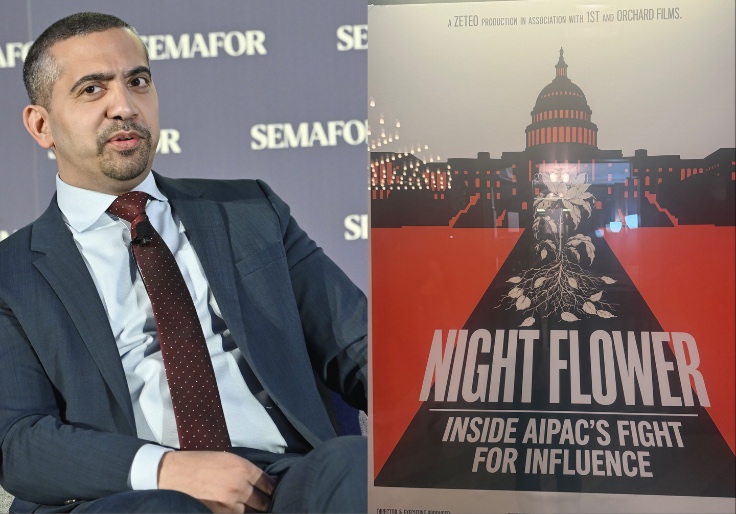
CHICAGO—Mehdi Hasan, the fired MSNBC host who now runs the virulently anti-Israel news startup Zeteo, presided Tuesday over a gathering focused on the malign influence of AIPAC—the pro-Israel American lobbying organization—which is being portrayed by a growing chorus of far-left conspiracy theorists as a shadowy Jewish Death Star hell-bent on world domination.
The centerpiece of the evening, held at Chicago's historic Pickwick Theater, was the screening of Night Flower, a conspiracy theory-packed, Zeteo-produced documentary about AIPAC's "fight for influence." Following the screening, Hasan led discussions with speakers who conjured up images that mirrored centuries of antisemitic propaganda about Jewish conspiracies. AIPAC was described as a corrupt dark money behemoth operating on orders from the Israeli government to clandestinely secure Jewish dominion over American foreign policy.
"AIPAC is performing antisemitic tropes and then getting mad when you criticize them," Hasan told the crowd during a live discussion after the film ended, quoting a line from Daniel Biss, the former Evanston, Ill., mayor who is currently running for Congress. "I think that was the best line in the film. I think you all did, too, because I know you burst into applause there."
Elsewhere in the discussion, Hasan invoked "moderator privilege," telling his audience that "clearly we need to have a more honest discussion about what Israel is doing in our politics, what they're doing with lobby groups."
America "wouldn't have gone to war with Iran were if not for Israel's role," he said.
Hasan added that while Israel lobbied multiple American administrations to attack Iran, "the only one dumb enough to say yes was Donald Trump."

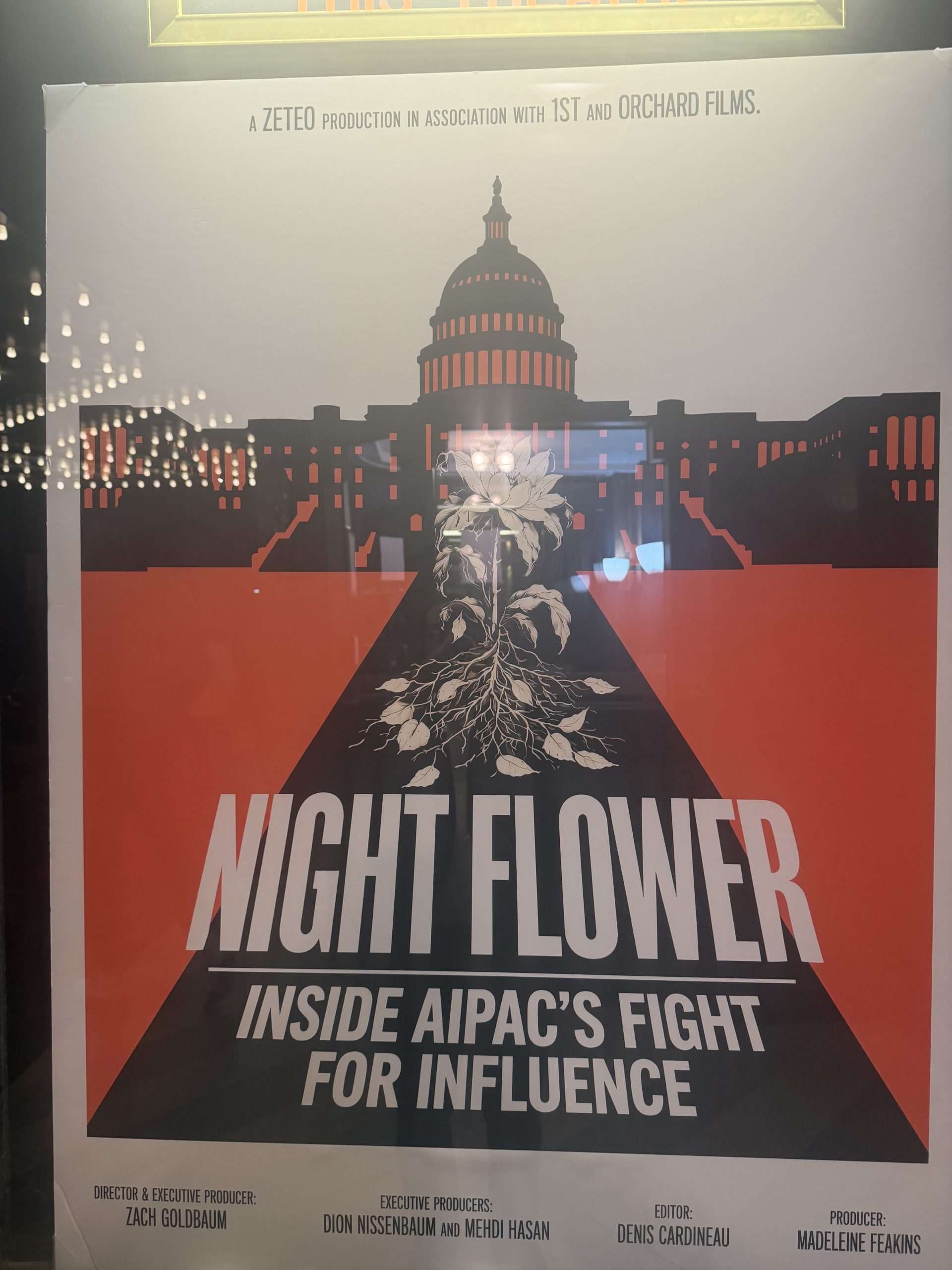
The crowd of a few hundred at the Pickwick Theater, a historic landmark that boasts glittering marquees frontside and ornate high-domed ceilings within, had excitedly purchased popcorn and other sundries before settling into the theater's deep red leather seats for the debut screening of Night Flower, which is only currently accessible behind a paywall on Zeteo's site. Hijabs, keffiyahs, and even some COVID-era face masks dotted the theater hall, and prior to the show, one starstruck young girl argued with her friend about whether she should approach Hasan, who stood near the screen greeting guests. Another attendee approached a Washington Free Beacon reporter minutes before the film started to lobby him on opposing "Illinois's investment in Israeli bonds," which have become a prime target for supporters of the antisemitic campaign to economically isolate Israel.
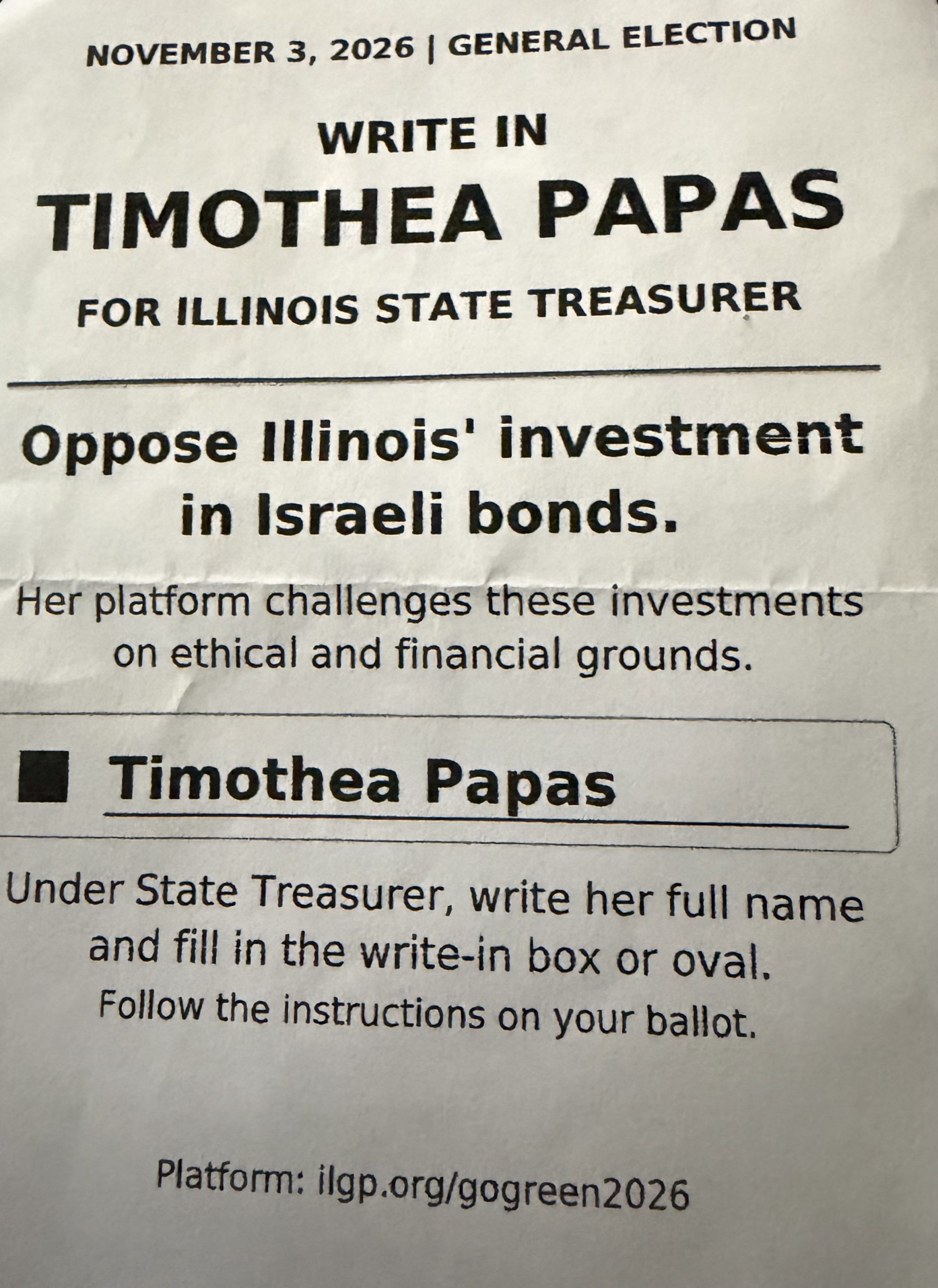
The film itself followed former Wall Street Journal reporter Dion Nissenbaum, who previously worked in Gaza, as he attempted to prove that AIPAC is in fact working at Israel's behest in violation of the Foreign Agents Registration Act, or FARA, a federal law that requires lobbyists for foreign nations to disclose their work.
AIPAC is run by pro-Israel Americans, many of them Jewish, but its detractors have long smeared the group and its backers with accusations of dual loyalties to Israel and clear-cut violations of federal law. Smears about dual loyalties among Jews are nothing new—the idea of a global Jewish cabal plotting global domination is one of the oldest conspiracy theories in modern existence.
Nissenbaum set out to prove during the film's 60-minute runtime that AIPAC's allegiance to Israel is not a far-flung conspiracy theory, but rather a fact. He spoke to several of the organization's outspoken former employees, as well as a host of veteran anti-Israel activists who have long attacked the organization for defending the Jewish state's security interests.
"The question is: Is AIPAC doing it on their own volition, or are they doing it in the order, direction, or control of the Israeli government?" one speaker asked in the film's opening minutes.
"Israel, through its emissaries like AIPAC, has put dollars into the pockets of virtually all of our politicians, and they will not go down without a fight," said another.
One of Nissenbaum's first interview subjects was M.J. Rosenberg, the onetime AIPAC staffer turned Israel hater who was booted from a job at Media Matters in 2012 for employing antisemitic tropes about so-called Israel-firsters. The film's title originates from a story Rosenberg recalled about his first day at AIPAC: "I walked into my new office and there was a piece of paper, and it said: 'M.J. Always remember, a lobby is a night flower. It blossoms in the dark and withers in the sun.'"
Other longform interview subjects included Lara Friedman, a veteran of the anti-Israel advocacy scene; congressional candidate Biss, a Jewish politician who has aggressively campaigned on an anti-AIPAC platform; Kat Abughazaleh, a Palestinian American who unsuccessfully ran for a House seat in Illinois; Sam Lauter, a former Biden aide and Democratic political operative whose family was active in AIPAC; Ilan Goldenberg, a former Defense Department official who now serves as chief policy officer at the virulently anti-Israel group J Street; and Lily Greenberg Call, a onetime AIPAC supporter who described President Donald Trump in the film "as a Nazi, antisemite, racist, misogynist danger."
Nissenbaum, in what was meant to be the film's shocking penultimate moment, interviewed a figure he claimed was a recent former AIPAC staffer who became disillusioned with the organization after Hamas's Oct. 7, 2023, terror spree jumpstarted the protracted war in Gaza. The staffer, draped in black with a voice modifier to protect his identity, claimed AIPAC leaders forebodingly told staff when the war started that they "are going to see photos of horrible things" but that employees must "hold the line" to defend Israel.
AIPAC itself was given a few brief moments to defend itself in a written statement that was displayed just before the film's ending credits: "AIPAC is an American organization. Our members and board leadership are all Americans, and our funding comes exclusively from Americans. We advocate for the U.S.-Israel relationship because we believe it is good for America. We make our own decisions, set our own policies, and take direction from one place: the AIPAC Board." "Suggesting that pro-Israel Americans should register with the government as foreign agents because of their views on American foreign policy is an attack on our most basic American freedom," the statement went on.
AIPAC did not respond to a separate Free Beacon request for comment on the film.
When the film concluded, Hasan took to the stage alongside far-left Rep. Delia Ramirez (D., Ill.), whom he praised for fighting "the good fight on Palestine in the hallways of the House of Representatives for the last three years."
Ramirez, to scattered applause from the crowd, said that "it gives me shivers" of excitement and joy to know that "AIPAC now has to operate in the shadows." She went on to predict that a sea change is coming to Congress in just over two months, saying, "We're about to welcome the largest pro-peace, anti-AIPAC Congress this Congress has ever made."
Hasan, meanwhile, warned Democrats about taking funds from AIPAC's political action committee: "AIPAC is funded by a lot of Republican billionaires, so it's not even just a bipartisan group anymore. When you're taking money from AIPAC and you're a Democrat, you're taking money from Republicans." (Fundraising data do not support this claim. AIPAC draws on support by both Democratic and Republican donors, and its donor base is not lopsidedly Republican.)
Ramirez claimed that AIPAC is somehow working at Israel and the GOP's behest to elect pro-Israel Democrats.
"Republicans are meddling in Democratic primaries, and every single Democrat should be pissed off about that and should be calling out AIPAC for what they're doing," she said.
Hasan went on to ask Ramirez if Democrats will launch investigations of AIPAC if they take back a chamber on Capitol Hill.
"It should absolutely be investigated," she responded to massive applause from the crowd.
Following that discussion, Hasan brought to the stage Nissenbaum, the film's journalist protagonist; Abughazaleh, the failed Palestinian-American politician; and Margaret DeReus, the executive director and co-founder of the Institute for Middle East Understanding Policy Project, itself a lobbying group that seeks to "advance Palestinian rights and freedom."
Nissenbaum immediately touted his film as a brave piece of journalism that could never be produced by legacy media organizations that kowtow to Israel.
"This is a fact-checked film. What did Mehdi provide? He provided funding. He provided fact checkers. He provided lawyers. And this is an act of journalism," he said.
The duo went on to mock AIPAC officials for not agreeing to be interviewed as part of the film.
"This is an organization that brags about its influence and power on Capitol Hill," Hasan said. "They loved showing off their power and influence."
Nissenbaum, who worked as a reporter in Gaza, quipped that "it was easier for me to get members of Hamas to do interviews than it was to get someone from AIPAC."
DeReus, meanwhile, gleefully told the crowd that AIPAC's nefarious "stranglehold our government's policy toward Israel and the Palestinians [is] breaking apart in real time."
Abughazaleh, a 27-year-old outspoken critic of Israel who once worked for Hasan, said she was surprised that pro-Israel political forces sought to keep her out of Congress.
"It made me nauseous how much money was being spent," she said, claiming that many of the attacks against her were tied to "a dark money influencer scheme" based in Tel Aviv.
During a question-and-answer session with members of the audience, conspiracy theories about Jews and power abounded.
"Due to the effect of AIPAC and Israel in American politics, America's reputation around the world has worsened," opined one attendee. Another bizarrely wondered what role AIPAC plays in ensuring undocumented Israeli citizens can work inside the United States.
"What role does AIPAC play in keeping these businesses running with few of any restrictions, including actively allowing undocumented Israelis to work in the U.S. simultaneously?" the person said.
Said another: "Why do we sometimes have to act as if the United States controls Israel, not the other way around, when it's so evident that Israel controls America?"
Asked another young woman: "How do we unravel America and Israel?"
The final question came from a young, presumably pro-Palestinian man, who pointedly asked what many in the crowd were likely wondering: "Where's our AIPAC?"
Source link