President Donald Trump's low approval ratings, mirroring Americans' sentiments about the economy, are looming over the 2026 midterms and Republicans' chances of maintaining control of Congress.
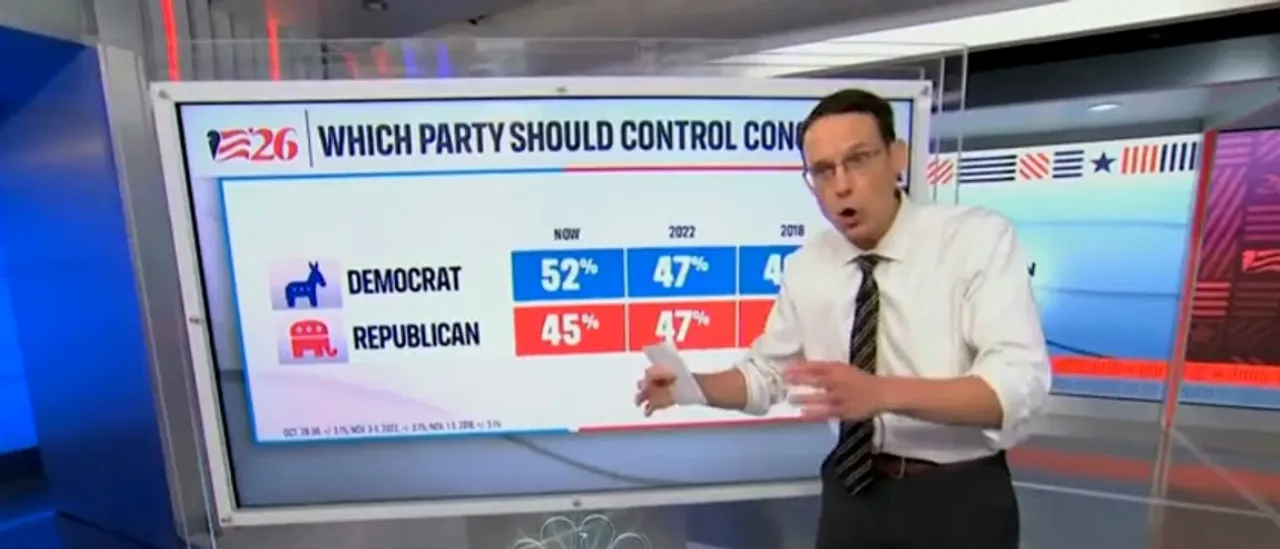
NBC News political analyst Steve Kornacki presented the outlet's final poll during Sunday's episode of "Meet The Press." He noted Trump's approval ratings have declined going into his second term's midterm elections, echoing respondents' dissatisfaction with their personal finances and the economy for the first time in 30 years.
Historically, Trump's biggest selling point to voters has been his handling of the economy. Ahead of the midterms, however, nearly three quarters of respondents (73%) indicated they were dissatisfied by the effects of the affordability crisis.
"[C]ompare this to Trump's first midterm in 2018," Kornacki observed while pointing to a series of poll results displayed on a large screen. "I think this is why his standing in that approval rating is lower now. Because, look at this, in 2018 the economy was his strong suit: nearly 70% of voters on the eve of that midterm were satisfied with it. Total opposite right now. And then there is this one: your own personal financial situation: 49[%] satisfied, 51[%] dissatisfied. This 51% figure that you see right here for 'dissatisfied,' that is the first time in over 30 years of the NBC poll that the dissatisfaction number has been at that level, has been a majority."
Overall, President Trump's pre-election approval rating sits at 40 percent approval. Despite this low rating, when asked which party would do a better job on key issues, poll respondents still found that the Republican Party would be more favorable in terms of handling the economy, government corruption, and immigration. Respondents also said, however, the Democratic Party would be preferable in addressing the war with Iran and inflation, signaling a shift in satisfaction trends.
"But which party would do a better job on key issues?" Kornacki previewed. "This also tells the story here. When it comes to inflation, Democrats [have] an advantage of a point. That may not seem like much, but this was, like, a 20-point advantage for Republicans just a couple years ago as Trump was returning to the White House. Same thing here on the economy: that is a two-point advantage for [Democrats]. But again, this was Trump's strong suit, this has historically been a strong suit. For those to even be close, that represents ground gained by Democrats."
"Is there hope for Republicans?" he comcluded. "The one number they would point to would simply be, and this is a difference from 2018, the image of the two political parties here. Republicans are not popular, but their number, overall as a party, their favorable, unfavorable number [is] about where it was in 2018. The Democrats, though, Kristen, [are] only 29% favorable right now. That's different than 2018, and that is one of the questions heading into Tuesday. In '18, the Democrats, as a party they were positioned to take votes from voters who were dissatisfied with Trump. Does the Democratic Party have more baggage now in a way that will prevent it from capitalizing on all of these other numbers we're showing you?"
Source link