Several key races on Tuesday will determine if Republicans were able to beat expectations after trailing Democrats in the polls.
The elections appeared grim for Republicans in both the House and Senate races, particularly as voters remained dissatisfied with President Donald Trump's handling of the economy. The races in deep-red states and districts, such as Ohio, Kansas and Texas, as well as in battleground states like Michigan, will be the most anticipated matchups to watch Tuesday night.
Alaska Senate
The Alaska Senate race has been embroiled in legal woes and investigations after The New York Times reported that former Democratic Alaska Rep. Mary Peltola's campaign and aides with the Democratic Senatorial Campaign Committee (DSCC) coordinated to recruit other Republican candidates to run against Republican Alaska Sen. Dan Sullivan. Former schoolteacher Dan J. Sullivan entered the race in June and will appear on the ballot, which could confuse voters into voting for the wrong Sullivan.
Aides with the DSCC introduced Democratic operative Jerid Kurtz to former members of Peltola's team, who informed them he was in contact with another Sullivan from Petersburg. He attempted to recruit other Alaskans to run as Republicans by traveling to several communities and meeting different individuals in casual settings. (RELATED: Secret Scheme To Sabotage GOP Senator Revealed After Democrat Denied Involvement: REPORT)
Matthew Salisbury of Anchorage told the Times that he got a call from an unfamiliar number with an Ohio area code. The person, who identified himself as Zane, met with him at a pub and urged him to run for Senate. When the Times showed Salisbury a photograph of Kurtz, Salisbury confirmed that Kurtz was the person in question.
Alaska's open voting system made this scheme possible, given that candidates can claim any party affiliation on the ballot without being vetted by parties themselves, according to the Times. Republicans backed an effort to help a candite serving time in a New York prison stay on the ballot when Peltola ran for reelection to the House in 2024.
The Department of Justice subpoenaed over three dozen individuals as part of its investigation into the Democrats' scheme. Republican Alaska Gov. Mike Dunleavy ordered the Department of Public Safety to investigate whether the scheme violated any laws.
Today’s New York Times reporting reveals disturbing new evidence of an organized effort to manipulate Alaska’s elections by recruiting candidates—including one with the same name as an incumbent U.S. Senator—to deliberately confuse voters and misdirect their votes. The Alaska…
— Governor Mike Dunleavy (@GovDunleavy) October 29, 2026
Peltola led by an average of 1.2 points as of Friday, though it remains to be seen how the Times' report will impact her chances.
The other Sullivan's candidacy prompted legal action to be taken over the summer. Division of Elections Director Carol Beecher informed Sullivan in an Aug. 26 letter that his declaration of candidacy "was not filed in order to declare an actual good-faith candidacy," but rather to confuse voters into voting for the wrong Sullivan. After Sullivan appealed the ruling, Superior Court Judge Thomas Matthews ruled he could remain on the ballot for the state's primary.
The Alaska Supreme Court overturned that ruling in a June 30 decision and allowed the other Sullivan to be on the ballot. The DSCC and Peltola's campaign celebrated the high court's decision, according to the Times.
The other Sullivan changed his party affiliation from Republican to unaffiliated on Wednesday.
Democratic strategist Amber Lee authored a press release announcing the other Sullivan's candidacy, metadata reviewed by the DCNF showed. Lee told The Hill in January that she believed there was a good chance Peltola could defeat Sullivan and previously hoped Peltola would run for governor.
Michigan Senate race
Former public health official Abdul El-Sayed and former Republican Michigan Rep. Mike Rogers face a tight competition to replace Democratic Michigan Sen. Gary Peters. El-Sayed, a political newcomer who ran as the anti-establishment candidate, defeated Democratic Michigan Rep. Haley Stevens by one point in the Democratic primary after receiving endorsements from independent Vermont Sen. Bernie Sanders, Democratic New York Rep. Alexandria Ocasio-Cortez and Democratic Michigan Rep. Rashida Tlaib.
The race will determine whether an anti-establishment Democrat can defeat an establishment, traditional Republican in a battleground state that President Donald Trump won by one point in 2024. El-Sayed would have to win over enough non-college educated, non-white and lower income voters to win, although he struggled with these voters during August's Democratic primary.
Stevens won more than 50% of the vote in counties where less than 30% had a college education, while El-Sayed won nearly 60% of the vote in counties where at least 30% of residents held a bachelor's degree, according to Politico. He also won in areas with universities while further-left candidates performed well with young voters and underperformed with black voters.
The Michigan Democrat held a 3.2-point lead against Rogers as of Friday, according to RealClearPolling. El-Sayed centered his campaign around affordability, fighting corporate money in politics and opposing the political establishment. He also supported cutting off aid to Israel and condemned the Iran war.
Rogers received an endorsement from Trump, although he broke with Trump during the general election cycle on the Iran war and Canadian tariffs. Rogers' campaign released an advertisement on Oct. 8 that called for an end to a "tariff war" with Canada to help lower prices for consumers in the state, given that the state's economy is strongly tied to the neighboring country.
Trump announced in July that 50% tariffs would be imposed on various Canadian goods, including wood and large motorcycles, under Section 338 of the Tariff Act of 1930, to force trade concessions. He implemented bans on specific Canadian alcohol, dairy and motorcycle products that went into effect on Sept. 29.
Rogers backed the tariffs in an Aug. 29 statement, stating they were "necessary" for Michigan's economy.
"President Trump is right to put America First - and tariffs are necessary, but are not a size-fits-all solution," Rogers said. "Elissa Slotkin and Gary Peters are missing in action. Michigan deserves a Senator who will work with President Trump to broker a trade deal with Canada that supports our farmers and gets the best deal for Michigan autoworkers and manufacturers."
Rogers flip-flopped on the Iran war, stating in a Sept. 21 ad that it needed to end to bring costs down. He previously described Iran as an "imminent threat" and called U.S. military action a "win-win-win" for the nation.
Democratic voters largely voted out establishment incumbents and replaced them with further-left candidates, such as El-Sayed. Many in the Democratic coalition have increasingly become opposed to aiding Israel, which appeared evident when over 100 Democratic representatives voted for Republican Kentucky Rep. Thomas Massie's amendment that would have slashed $3.3 billion in foreign aid to Israel.
The American Israel Public Affairs Committee (AIPAC) spent $30.6 million during the primary season, spending over $20 million opposing El-Sayed and over $10 million supporting Stevens, according to Federal Election Commission (FEC) filings. Rogers' allies told AIPAC in August not to advertise on his behalf after El-Sayed won, although he said during an Oct. 9 debate that he welcomed support from AIPAC and anyone else who wanted to help his campaign.
AIPAC reportedly planned to give up to $9 million to a pro-Rogers super PAC, the Great Lakes Conservative Fund, in late October, anonymous sources told The New York Times. The spending was deliberately timed for after the Oct. 14 deadline so it would not appear on FEC filings before Election Day.
Current FEC filings do not show any contribution from AIPAC or UDP going to Rogers' super PAC. UDP spent $95,000 on mailers to oppose El-Sayed on Oct. 9.
Texas Senate
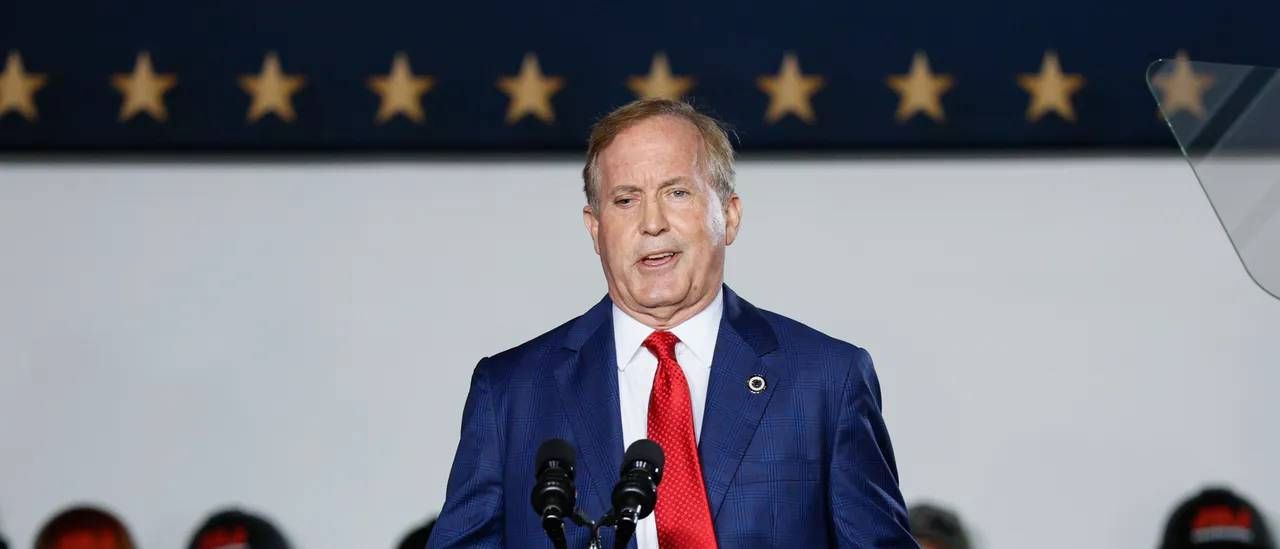
The race between Republican Attorney General Ken Paxton and Democratic Texas state Rep. James Talarico remains tight, despite Texas being a traditionally red state.
Republicans spent over $300 million to help Paxton defeat Talarico. Texas has not had a Democratic senator since 1993, and Republicans control the state Legislature, attorney general's and governor's offices.
Talarico led Paxton by an average of 1.8 points as of Friday, according to RealClearPolling. The tight race has made Democrats hopeful they could flip a Senate seat blue for the first time in over three decades, prompting them to spend over $130 million in ad spending.
Corruption became a top issue for voters in the final stretch before the election, which likely hurt Paxton's candidacy. The Republican-controlled Texas state Legislature impeached Paxton in 2023 on bribery and abuse of power charges, although the state Senate acquitted him.
Paxton was accused of misusing the office of the attorney general to protect and assist Austin real estate developer and political donor Nate Paul, who faced federal investigations. He allegedly intervened in lawsuits, issued favorable legal opinions to protect Paul's properties from foreclosure and hired a special prosecutor to investigate claims helpful to Paul.
Paul allegedly paid for expensive renovations to Paxton's home and employed a woman with whom Paxton had an extramarital affair. Paxton denied all wrongdoing.
Talarico repeatedly accused Paxton of being a corrupt politician who has used his power to get richer. Paxton's net worth rose from $174,000 when he first entered the state Legislature in 2003 to an estimated $13 million currently, according to Forbes.
An October University of Texas/Texas Politics Project poll found voters trusted Talarico more on handling corruption than Paxton by ten percentage points.
Talarico stated in 2021 that God was "non-binary" and that transgender children were made in His image. He claimed that the biblical account of Jesus' conception justified abortion and also said on a May 2023 podcast that he loved transgender kids when asked to name something he loved other than his family and friends.
Paxton argued on the campaign trail that Talarico is too liberal for Texas.
The Texas Democrat left the campaign trail for nine days during the first week of October, claiming he had a "nasty case of the flu."
#TXPol: "This man cheated on the mother of his children...Paxton betrayed his wife. He betrayed taxpayers. Crooked Ken is corrupt to his core."
— AdImpact Politics (@AdImpact_Pol) May 18, 2026
The Cornyn Lonestar Victory Fund is up with a new #TXSen ad attacking Ken Paxton.
Runoff ad support:
Cornyn: .1M
Paxton: .9M pic.twitter.com/ulrKb9FJkn
Ohio Senate & Governor's races
Democrats are eyeing Ohio as a potential win against Republicans, who control the state Legislature and governor's office. Former Democratic Ohio Sen. Sherrod Brown and Democratic Ohio gubernatorial candidate Amy Acton held slight leads in the polls against Republican Ohio Sen. Jon Husted and Republican Ohio gubernatorial candidate Vivek Ramaswamy.
Brown led Husted by an average of 2.6 points, according to RealClearPolling. Trump won Ohio by a twelve-point margin, 55.2% to 43.9%. Husted assumed office in January 2025 to replace Vice President J.D. Vance.
Acton led Ramaswamy by an average of 4.3 points as of Friday, according to RealClearPolling. Ramaswamy faced backlash after an advertisement featuring Acton's estranged mother, Donna Arthur, telling voters not to vote for her.
Acton and her mother have been estranged since 1978, when she was 12 years old. She and her younger brother were removed from Arthur's custody after her husband was charged with sexually abusing Acton.
Ramaswamy's poll numbers dropped six points Thursday after the ad aired, according to Truthout.
Maine Senate race
Republican Maine Sen. Susan Collins faces a tough challenge against Democratic Maine Senate candidate Troy Jackson, who entered the race late in the game. Heating fuel prices became a top issue for Maine voters since the Iran war began, which could give Democrats an advantage in the deep blue state.
Jackson held a slight lead over Collins in the deep-blue state, holding a 1.4 point average lead, according to RealClearPolling. Former Vice President Kamala Harris won Maine by a 52.4% to 45.5% margin in the 2024 election. Maine Democrats control the governor's office, attorney general's office and the state Legislature.
Despite Maine being a blue state, Collins has won five Senate races since 1996.
The two candidates both campaigned on the high cost of living, particularly the high-heating costs in Maine. The average statewide heating fuel prices rose to $6.05 per gallon as of Oct. 26. Roughly half of the population in Maine rely on heating oil as their principal energy source in the winter, meaning they could face an increase of thousands of dollars in heating.
The Iran war caused heating fuel prices to soar, given that the Strait of Hormuz handles roughly 20% to 25% of the world's seaborne oil and petroleum product flow. Collins voted to extend U.S. military operations in Iran five times since February.
Collins and independent Maine Sen. Angus King urged the Trump administration to tap into the Northeast Home Heating Oil Reserve to help lower costs before the elections. She joined a bipartisan push to expedite the release of over $38 million in federal home heating assistance for Maine households.
Collins initially ran against former Democratic Maine Senate candidate Graham Platner, who dropped out of the race after a woman accused him of rape.
Kansas Senate
Republican Kansas Sen. Roger Marshall is trailing Democratic Kansas Senate nominee Adam Hamilton by an average of 2.6 points. A Democratic victory would be a major upset, given that Kansas has not had a Democratic senator since 1939.
The Republican senator sued 700 of his patients for outstanding debts during his time as an OB-GYN, which led to 81 arrests, The New York Times reported. Some facing lawsuits were mothers with outstanding bills from their deliveries, and many patients lacked insurance. One mother had a nine-month-old baby when her bank account was garnished.
Marshall paid a bakery $1,300 after its owner, Holly Thomas, accused his 2020 campaign of leaving a nearly $700 bill unpaid for six years. The senator said on X that he paid the bill and apologized to the bakery, claiming he had "no idea" how the bill went unpaid for six years.
RealClearPolling averages showed Marshall and Hamilton in a tie in mid-October.
The close race caused the Senate Leadership Fund, Senate Republicans' campaign arm, to spend $14 million to support Marshall.
The Senate Majority PAC, the Democrats' Senate campaign arm, launched a $5 million statewide television advertising campaign that plans to run through Election Day, indicating that Democrats were increasingly confident they could flip the seat, Politico reported. One ad attacked Marshall for voting against an amendment that would require the Department of Justice (DOJ) to release the files related to deceased sex offender Jeffrey Epstein. The PAC's research found that Epstein ads can sway elections three to six points in the Democrats' direction.
The economy remained a top issue for Kansas voters, according to an Emerson College poll from Thursday. Diesel prices averaged $6.03 per gallon in Kansas, which Marshall largely attributed to the war in Ukraine. Hamilton pinned the high Diesel prices on Trump and the Iran war, which has likely resonated with farmers across the state.
House races
Elections forecasters projected that Democrats would retake the House in the next Congress. Republicans redrew several districts to give themselves an advantage in November, but many Republican-held seats are still at risk of flipping for Democrats.
Republicans hoped to flip Democratic Florida Rep. Jared Moskowitz's seat in Florida's 25th district. The state redrew the district with hopes that a Republican could pick up the seat, although Cook Political Report moved the race from the "Toss Up" column to "Lean Democratic."
The Congressional Leadership Fund, the top House super PAC, slashed $6 million in ad spending in the district to oppose Moskowitz, who is running against former Republican Boca Raton Mayor Scott Singer. The No Going Back PAC, a super PAC backed by MAGA Inc., planned to spend $6.3 million in the district.
The super PAC also slashed $3 million from Texas' 28th district, which was redrawn to help Republicans oust Democratic Texas Rep. Henry Cuellar. Trump won the district by seven percentage points in 2024.
Cook Political Report shifted the races in Arizona's sixth district, Colorado's eighth district, Virginia's second district and Wisconsin's third district into the "Lean Democratic" column less than two weeks before Election Day. Republican Reps. Juan Ciscomani of Arizona, Gabe Evans of Colorado, Jen Kiggans of Virginia and Derrick Van Orden of Wisconsin currently hold those seats.
Eight Republican-held seats shifted in Democrats' favor, including Republican Pennsylvania Rep. Brian Fitzpatrick's seat in Pennsylvania's first district and Republican Indiana Rep. Victoria Spartz's seat in Indiana's fifth district, according to Cook Political Report. The projection would give Democrats up to 240 seats in the House in the next Congress if they flip between 12 and 25 seats.
Republican Ohio Rep. Max Miller could lose to Democratic Ohio congressional nominee Brian Poindexter in Ohio's 7th district, where Trump won by 10.6 percentage points in 2024. Miller's ex-wife, Emily Moreno, accused him of domestic abuse, which Miller repeatedly denied.
Miller refused to drop out of the race when some in his party called on him to drop out. Among those who called on him to drop out included Husted and Miller's ex-father-in-law, Republican Ohio Sen. Bernie Moreno. Miller did not exit the race by the necessary deadline for Ohio's Republican party to replace him, meaning Poindexter would have remained uncontested if Miller had exited the race.
Poindexter out-raised Miller by a wide margin in the third quarter. The Democrat reported $2.47 million in receipts and $1.72 million in spending between July 1 and September 30, while Miller raised $1.14 million and ended September with about $944,000 on hand.
Republican New York Rep. Mike Lawler faces a competitive reelection bid against Democratic New York congressional nominee Cait Conley in New York's 17th district. He is one of the most vulnerable Republican incumbents since Harris won his district in the 2024 election by less than one point, although former President Joe Biden won it by ten points in 2020.
The candidates were neck-and-neck as of Friday. A McLaughlin & Associates survey from late September showed Lawler leading by three points, while an Emerson College poll showed Conley leading by two points.
Lawler painted Conley as a radical socialist on the campaign trail, while Conley tied Lawler to Trump. The district is one of the most centrist in the U.S.
Democratic New York Rep. Tom Suozzi is defending his seat in New York's third district against former Republican New York state Assemblyman Michael LiPetri. Suozzi, who replaced former Republican New York Rep. George Santos after he was expelled from Congress, narrowly won his seat in 2024 by a three-point margin. The No Going Back PAC, a super PAC tied to Trump's political organization MAGA Inc., spent nearly $8 million to support LiPetri, which included $5.7 million in ad spending to attack Suozzi.
Republican New York congressional nominee Anthony Constantino and Democratic New York congressional nominee Blake Gendebien are running for an open seat in New York's 21st district after Republican New York Rep. Elise Stefanik decided not to run. While traditionally a Republican district, the candidates are neck-and-neck while tariffs, the economy and relations with Canada remained top issues.
A Public Policy Polling survey from mid-October found Constantino leading by two points, while a New York Times/Siena College poll showed Gendebien leading by four points.
Republican Pennsylvania Rep. Rob Bresnahan is defending his seat against Democratic Scranton Mayor Paige Cognetti in Pennsylvania's 8th district. The cost of living remained the top issue in the district, prompting Bresnahan to call on the Iran war to come to an immediate end. About two-thirds of Americans disapprove of Trump's handling of the Iran war, which is expected to cost many Republicans House seats.
An Emerson College poll showed Cognetti leading 52% to 48%, while A New York Times, Philadelphia Inquirer and Siena University poll found her ahead by a 51% to 46% margin.
Republican Michigan Rep. Tom Barrett is facing off with Democratic Michigan congressional nominee William Lawrence, a further-left political activist, in Michigan's seventh district. Lawrence co-founded the Sunrise Movement, an organization that advocates for action on climate change.
Recent polls showed Lawrence leading Barrett, including an Emerson College poll where Lawrence led by eight points.
Source link