This content was produced via a partnership with KCPAC. The views and opinions expressed in this commentary are those of the authors and do not reflect the official position of the Daily Caller.
Trilateralism Rejected
South Korea has declined to participate in a U.S. trilateral air exercise with Japan involving American B-52 strategic bombers. This move is raising fresh concerns in Washington about its long-standing alliance with South Korea as the Trump administration sharpens its deterrence against China.
This was recently reported in South Korea’s Chosun Ilbo, Seoul Edition. The U.S. and Japan proceeded without Korean participation, conducting air exercises on Feb. 16 and 18. These exercises included four B-52H strategic bombers, which are one of America’s most visible long-range strike assets. (RELATED: Japan’s Historic Election Signals A Stronger Security Posture — And A Warning To Beijing)
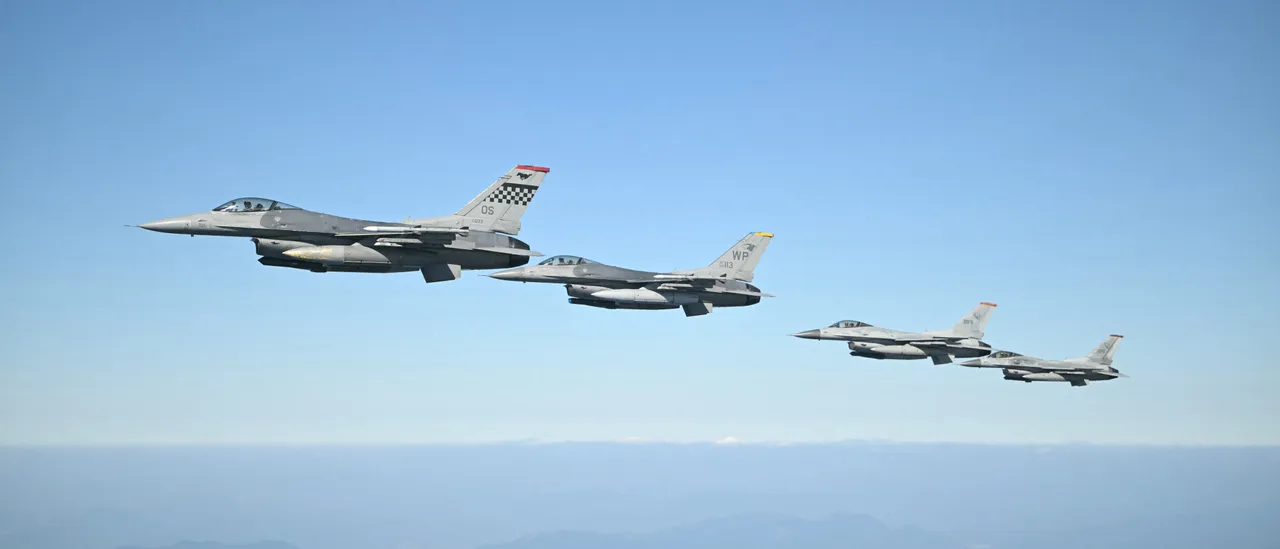
The episode quickly escalated beyond routine training. As part of the operation, the B-52s flew in airspace stretching from south of Jeju Island toward Taiwan before moving northward and briefly entering the West Sea, according to the Chosun Ilbo. U.S. Forces Korea (USFK) simultaneously conducted large-scale F-16 fighter aircraft drills in the same maritime region.
Chinese forces responded by scrambling fighter aircraft, resulting in a face-off between U.S. and Chinese jets in international airspace. Rather than standing shoulder-to-shoulder with its treaty ally, Seoul reportedly protested to Washington following the U.S.-China aerial standoff. For U.S. policymakers focused on deterring Beijing’s growing assertiveness, the optics could not be worse.
Testing the Status Quo: First Island Chain Defense
The timing of this standoff is significant. The Trump administration’s National Security Strategy released in December emphasized strengthening deterrence “by denial” along the so-called First Island Chain. This is the arc of allied territories stretching from Japan through Taiwan to the Philippines that forms a geographic barrier to Chinese military expansion into the Pacific.
By deploying B-52 bombers alongside Japanese fighters in that corridor, the U.S. is sending a deliberate signal: America intends to contest Chinese coercion and prevent unilateral changes to the status quo of Northeast Asia.
Japan’s Joint Staff stated that the exercise reaffirmed the allies’ determination to prevent “unilateral changes to the status quo by force”. This is language commonly used by Washington and Tokyo to criticize Beijing’s territorial claims and its military pressure campaign against Taiwan.
However, South Korea’s decision not to participate underscores a widening strategic divergence. Korea’s president, Mr. Lee Jae Myung, has emphasized “strategic autonomy” in foreign policy, warning against both entanglement and abandonment of alliances.
His administration has also discussed scaling back certain joint exercises with the United States to reduce tensions with North Korea. But the present geopolitical reality is that the Korean Peninsula no longer sits in isolation from broader Indo-Pacific dynamics. China’s military modernization, its coordination with Russia and its expanding naval presence directly affect U.S. force posture in Korea.
This is precisely why Washington has been reevaluating the mission of the United States Forces Korea (USFK). It is considering shifting from a force primarily focused on deterring North Korea to one capable of contributing to regional deterrence against China.
South Korean Strategy: Intention or Drift?
USFK’s recent consolidation of F-16 squadrons into a “super squadron” formation and expanded operations in the West Sea reflect that evolution. In the view of the Pentagon, the Korean Peninsula is not merely a North Korea problem. It is a critical node in the Indo-Pacific deterrence network. (RELATED: Can America Count On South Korea To Help With Taiwan? Maybe Not)
Seoul’s apparent reluctance to join trilateral exercises risks sending a different message. If South Korea declines participation in drills designed to uphold freedom of navigation and prevent Chinese coercion, then Beijing may interpret that hesitation as a crack in the alliance structure.
Alliance cohesion is itself a deterrent signal but, inside South Korea itself, there is a public divergence that is weakening that signal. Critics there are arguing that being drawn into the U.S.-China rivalry could increase regional tensions. But there are risks to declining visible cooperation. Great Power competition does not pause simply because an ally prefers strategic ambiguity.
Furthermore, reducing live-fire training and mobility exercises that operate under the annual “Freedom Shield” drills is reportedly under review. This could have second-order effects. It may degrade readiness not only against North Korea but against broader contingencies requiring rapid integration of U.S. and allied forces.
The Sept. 19 2018 inter-Korean military agreement, which limits certain activities near the Demilitarized Zone (DMZ), was originally framed as a confidence building measure for both nations. Yet unilateral restoration of constraints without reciprocal North Korean concessions could narrow surveillance and response capabilities — just when Pyongyang is continuing missile development and deepening ties with Moscow and Beijing.
The China Factor
The most immediate concern for U.S. strategists is how Beijing reads these developments. China’s Global Times reported that the People’s Liberation Army (PLA) conducted tracking and surveillance in response to U.S. aircraft activity near its air defense identification zone. Beijing consistently portrays U.S. military flights as destabilizing while simultaneously expanding its own military footprint across the region.
Deterrence requires credible presence. In turn, credibility requires visible allied coordination. When American B-52s fly without South Korean participation and these exercises are followed by public diplomatic friction, adversaries notice.
Washington does not expect every ally to mirror U.S. rhetoric. But at minimum, the alliance must project steadiness. A perception that Seoul seeks to distance itself from regional deterrence efforts could complicate U.S. operational planning and encourage Chinese probing.
Deciding the Future
None of this means the U.S.-South Korea alliance is collapsing. The long-standing treaty remains intact with continuing military cooperation. But the episode highlights a growing tension between Washington’s Indo-Pacific strategy and Seoul’s desire for maneuvering space between major powers. (RELATED: Sky-High Diplomacy: Japan Refuels South Korean Jets)
The fundamental question is whether a newfound “strategic autonomy” can coexist with a deterrence policy aimed at constraining China. If South Korea continues to resist participation in exercises linked to broader Indo-Pacific security and publicly protests U.S. deployments that trigger Chinese reactions, there will be consequences.
American policymakers may increasingly question how far Seoul is willing to go in supporting a rules-based regional order. Ambiguity can invite pressure in our new era that is being defined by intensifying Great Power competition.
The First Island Chain is not just a line on a map. It is a test of alliance resolve. And the choices made in Seoul will shape how both Washington and Beijing calculate the balance of power in East Asia for the years to come.
Elisha Kim is a geopolitical analyst focusing on Indo-Pacific security, U.S.-China relations, and the Korean Peninsula. She is an expert on the strategic threats facing the United States and its allies in East Asia.