Democrats do not want the specious nature of their charge of racism to be revealed, let alone adjudicated.
If voter ID requirements truly threaten civil rights, it follows that many other civil rights are also threatened. Identification is needed throughout American society, including for transportation, accommodation, and housing — historical battlegrounds for civil rights.
The SAVE America Act would require documented proof of citizenship for voter registration and photo identification for voting in federal elections. President Trump and Republicans support the legislation, and Americans overwhelmingly support voter ID, which is at the heart of the measure. Democrats, on the other hand, overwhelmingly oppose the SAVE America Act and, by implication, the election integrity requirements it would implement.
Rep. Joe Morelle, who was a prominent opponent of the SAVE Act in the House, has stated: “This is an extremely dangerous bill that would make it harder — not easier — for eligible Americans to participate in our democracy.”
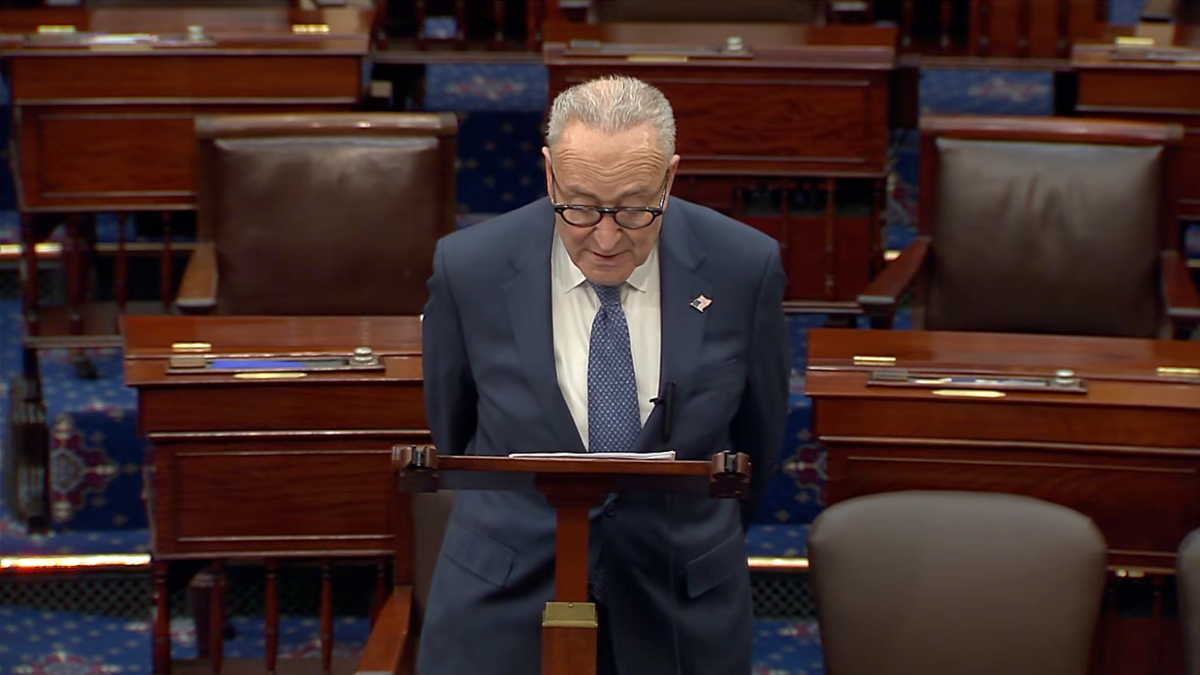
In sum, Democrats accuse the SAVE America Act of violating civil rights, particularly those of minorities. Senate Minority Leader Chuck Schumer, D-N.Y., said this with more inflammatory language: “I have said it before and I’ll say it again, the SAVE Act would impose Jim Crow-type laws to the entire country and is dead on arrival in the Senate.”
But the SAVE America Act’s voter ID requirement mirrors those of many other activities. A photo ID is required to board an airplane and rent a car. A photo ID is regularly required to stay at a hotel. And a photo ID is required to purchase a home.
What makes these transactions special, however, is not their photo ID requirements, but that the areas in which these requirements occur have also been foundational in America’s civil rights movement.
Among the series of Supreme Court rulings on civil rights and transportation are Morgan v. Virginia (1946), which ruled unconstitutional state segregation laws on interstate bus routes; Browder v. Gayle (1956), which ended intrastate bus segregation; and Boynton v. Virginia (1960), which ended segregation in bus terminals. These rulings and others secured equal access to transportation; however, if, as the Democrats argue, an ID requirement abridges civil rights in voting, where does this leave transportation now?
Accommodation was also a civil rights battleground. The Civil Rights Act of 1875 granted blacks equal right of access in public accommodation. But the Supreme Court declared the law unconstitutional in 1883 (in a consolidated case, called the Civil Rights Cases); it was not until Heart of Atlanta Motel, Inc. v. United States (1964) that the Supreme Court ruled the Civil Rights Act of 1964’s anti-discrimination provisions fully extended to all. Is today’s common ID requirement for checking into a hotel an abridgement of this?
Housing is another example. Richard Rothstein’s 2017 book The Color of Law details the decades of nationwide infringements in housing, and the 1968 Federal Fair Housing Act was considered a huge civil rights victory over these kinds of infringements. Does the ID requirement for a home purchase undermine this?
While these notable examples have rich civil rights histories, there are many other transactions in the U.S. that require photo IDs.
The purchase of firearms from a licensed dealer requires photo identification, and such restrictions on gun ownership are part and parcel of the leftist arsenal in its assault on the Second Amendment. Are these “progressives” seeking to particularly curtail minorities’ ability to purchase firearms?
Banking also typically requires photo ID. Democrats have long complained about racism in the nation’s banking system. In fact, Sen. Elizabeth Warren’s brainchild, the Consumer Financial Protection Bureau (CFPB), largely owes its existence to the accusation that America’s financial system treats minorities worse. One of CFPB’s favorite weapons in its heyday was a zealous application of “disparate impact,” which was used to go after financial transactions that produced unfavorably differential outcomes when these coincided with race — even when the outcomes were unintended.
The entire body of civil rights history deals with differential treatment based on race. This is also the very charge that Democrats are leveling against the SAVE America Act: Its photo ID requirements subject minorities to differential treatment. To hear those like Schumer who shout “Jim Crow,” this supposed “differential impact” not only correlates with race but is intended to do so.
How then are all areas where a photo ID is required not also racist abridgements of rights? These are hardly esoteric activities; many occur precisely where civil rights were pursued and civil rights history was made. Are these then being abridged right under Democrats’ noses, with their complicity, and, in the case of gun purchases, with their insistence?
If the requirement for photo IDs is racist in one area, then these are racist abridgments of rights in all areas. If so, should these be any less opposed than the SAVE America Act’s photo ID requirements? Should Democrats’ own logic compel them to pursue legislative remedies to these civil rights infringements? Perhaps this can be their next reason for a government shutdown, following their shutdowns over demands for increased spending and now in pursuit of decreased immigration law enforcement.
The one thing you cannot expect — and this is in direct contrast to civil rights history, which focused on a judicial strategy — is for Democrats and other leftists to file lawsuits against these other photo ID requirements. They will not, because these are patently not civil rights violations any more than the SAVE America Act’s requirement is.
Democrats do not want the specious nature of their charge of racism to be revealed, let alone adjudicated. Instead, they will only pursue their charges in the court of public opinion, where there is no burden of proof.