President Trump's Justice Department has taken California's ballot fight to the Supreme Court with Election Day hours away.
The emergency application asks the justices to require California officials to segregate approximately 20,000 disputed mail ballots while the federal government's underlying voter-eligibility case proceeds.
The request does not ask the Court to throw those ballots out today. It asks officials to keep them identifiable so they are not permanently mixed into the count before the legal dispute can be resolved.
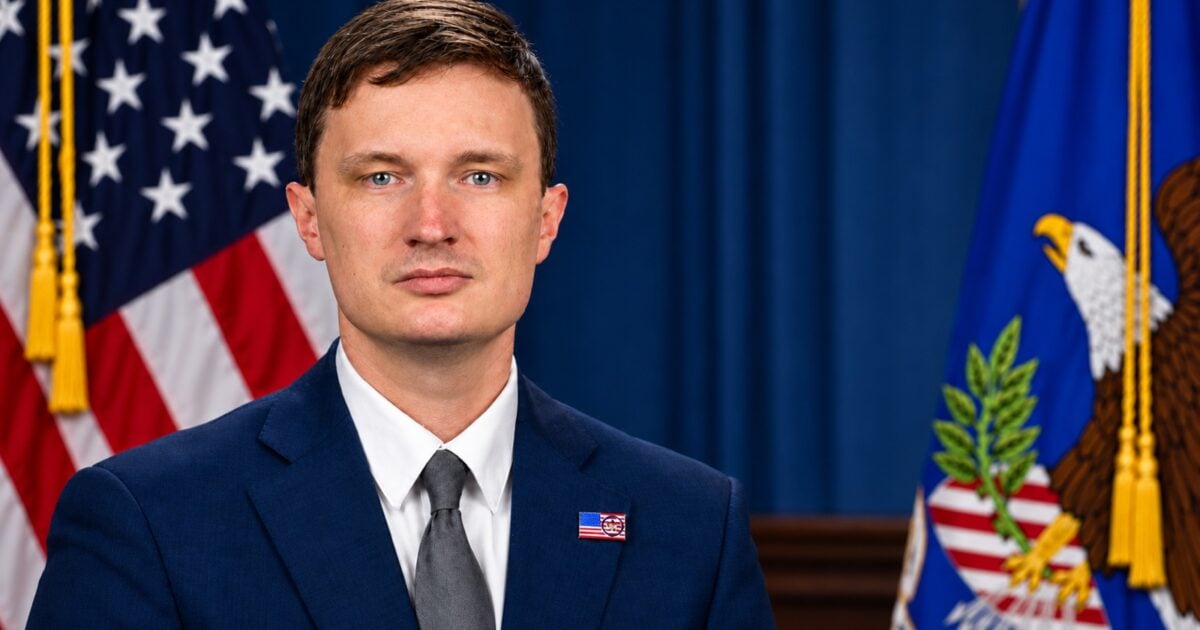
Acting Deputy Attorney General Trent McCotter announced the filing Monday:
California has refused to work with the Federal Government to protect against noncitizen voting, which dilutes lawful votes, so @TheJusticeDept has filed an emergency application with the Supreme Court to require California to segregate mail-in ballots associated with more than… pic.twitter.com/dZJLyIvd2q
— Acting Deputy Attorney General Trent McCotter (@PADAGMcCotter) November 2, 2026
The Associated Press reports that the Trump administration went to the Supreme Court one day before the election after lower courts declined to order the ballots set aside. The federal filing concerns roughly 20,000 mail ballots connected to voters whose citizenship status the government disputes.
The requested remedy is narrow but time-sensitive: preserve the ballots separately while the courts decide the merits. Segregation would not itself determine whether any voter is eligible, whether any ballot should count, or whether the government's underlying allegations are correct.
That distinction is central to the case. The administration argues that once the ballots are opened and mixed with all other votes, the disputed ballots cannot later be identified if the federal government ultimately prevails.
California has opposed the emergency demand, and both the federal district court and the appeals court refused to impose the requested separation before the election. The Supreme Court application now puts the immediate preservation question before the nation's highest court without resolving the broader lawsuit.
Axios reports that Solicitor General D. John Sauer signed the emergency application after the district court and the 9th U.S. Circuit Court of Appeals rejected the administration's request. The filing argues that commingling creates an irreversible problem because the specific disputed ballots cannot be recovered later.
The Justice Department's position is that preserving the status quo requires separation now, before processing eliminates the ability to identify the ballots. California's victory in the lower courts means no segregation order was in place when the administration sought emergency Supreme Court intervention.
The case arrives amid a larger federal-state fight over voter-roll information and noncitizen registration allegations. The administration says California has not supplied the cooperation needed to resolve the eligibility questions; state officials have resisted the federal legal theory and the requested emergency remedy.
The justices are therefore being asked to decide an urgent procedural issue under intense time pressure. A segregation order would preserve options for later review, while denial would allow election officials to continue processing ballots under the lower courts' existing rulings.
U.S. Attorney Bill Essayli framed the government's Supreme Court request in voting-rights terms Monday:
United States citizenship confers particular rights. The most fundamental is the equal right to vote and have that vote counted. California cannot continue counting noncitizen votes. Today we seek a Supreme Court emergency injunction to preserve American elections for American… https://t.co/1cZYHB6AX0
— F.A. United States Attorney Bill Essayli (@USAttyEssayli) November 2, 2026
Essayli's statement reflects the government's allegation; it is not a judicial finding that 20,000 noncitizens voted. The courts still have to sort out the evidence, the legal authority, and the eligibility of the voters at issue.
A day earlier, Essayli argued that California could resolve the citizenship dispute by checking the federal database it already uses for Medi-Cal applicants:
This debate over noncitizens on California’s voter rolls could be resolved in under a day if California simply used the same federal database it has relied on for 40 years to confirm Medi-Cal applicants’ citizenship.
— F.A. United States Attorney Bill Essayli (@USAttyEssayli) November 1, 2026
California has raised no issues with this database for…
California officials dispute the accuracy and legal significance of the federal list, and lower courts have declined to impose the requested emergency remedy. That leaves the Supreme Court to decide whether preserving the ballots separately is warranted while those factual disputes remain unresolved.
The Supreme Court's immediate task is practical: decide whether the ballots must remain recoverable while the legal battle continues. With Election Day upon the country, the window for any meaningful preservation order is closing fast.
Whatever the justices decide, the ruling should be read for what it actually does. A decision on segregation determines whether evidence is preserved; it does not, by itself, establish that every challenged voter is eligible or ineligible.
Source link