The numbers tell a story of political conviction, demographic change, and a community that refused to follow the prevailing tide.
The 2026 FIU Cuba Poll surveyed Cuban-American adults in Miami-Dade County. Sixty-eight percent intended to vote Republican in their congressional districts. Seventy-seven percent supported maximum pressure on Cuba's communist government. Those findings came despite widespread disapproval of the administration's deportation policies affecting Cubans without criminal records.
Florida's gubernatorial contest was decided by 107,695 votes. Byron Donalds received 50.02 percent; David Jolly, 48.71 percent, according to Florida Election Watch. The margin was narrow enough to make every constituency consequential.
The Cuban vote saved Florida.
Consider the political movement elsewhere in the electorate. The Associated Press Voter Poll surveyed more than 100,000 voters nationwide. Roughly six in ten Hispanic voters supported Democratic congressional candidates. Nine in ten Black voters did the same, a substantial increase over the share who supported Kamala Harris in 2024. Among Black men, Republican support fell from roughly one-quarter for Trump in 2024 to about one in ten in this year's House races. Seven in ten voters under thirty supported Democrats, reversing the near-even division between Trump and Harris two years earlier.
These were national congressional voting patterns, not Florida gubernatorial totals. They nevertheless establish the broader movement: several constituencies that had shifted toward Republicans in 2024 moved back toward Democrats in 2026.
Florida's Hispanic electorate revealed an especially important distinction. An October N+ Univision poll found Hispanic voters favored Jolly over Donalds, 48 to 43 percent. Cuban voters in that same survey favored Donalds, 51 to 42 percent. Puerto Rican voters favored Jolly, 51 to 35 percent.
Florida's Hispanic electorate was not a single political constituency. Cuban voters maintained a Republican preference, while Puerto Rican voters favored the Democratic candidate.
The election results reinforced that contrast. Miami-Dade County went Democratic, with Jolly receiving approximately 53 percent of the gubernatorial vote. Yet the Miami Times' post-election analysis found that Hispanic-majority precincts continued to favor Republicans. Jolly, meanwhile, carried majority-Black precincts by approximately 70 percentage points. The county moved left, but many of its Hispanic-majority precincts continued to favor Republicans.
Precinct results cannot identify every Cuban voter's ballot. They do, however, demonstrate that Republican support endured in important parts of the county's Hispanic electorate.
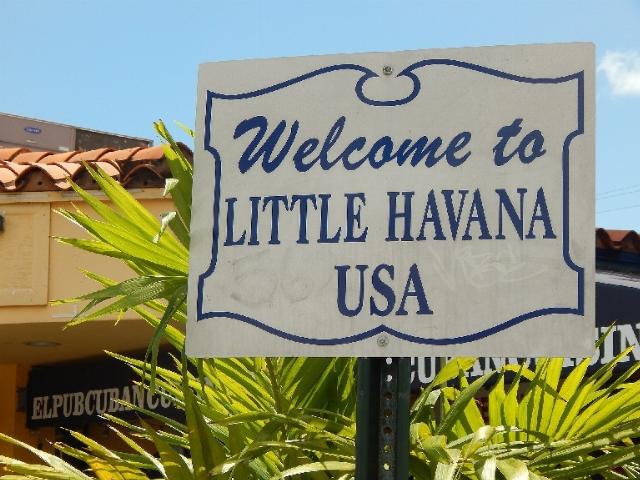 There is a reason for that continuity, and it goes deeper than party registration.
FIU sociologist Guillermo Grenier, director of the Cuba Poll, told WLRN, "The Republican brand has simply become too deep a part of the Cuban voter identity here." His observation captures something election analysts sometimes overlook. Political identity can be shaped by experience across generations, not simply by the immediate political climate.
An Al Jazeera report traced that relationship to the Republican Party's sustained engagement with Cuban exiles during the Reagan years. Grenier described the process as political socialization that became part of the community's inherited outlook. Even new arrivals, he observed, quickly learn that the Republican Party is regarded as the party of Cuban Americans.
That allegiance is not blind. The FIU poll found substantial opposition to the administration's treatment of Cuban migrants. Yet disagreement over immigration policy did not erase the community's deep opposition to the political system that destroyed its homeland.
We recognize the threat of socialism because our families have witnessed its consequences. We know how the language of equality can become an instrument of confiscation, how promises of prosperity can conceal the machinery of control, and how revolutionary idealism can end in national ruin. These are not lessons we acquired from political debate. They were written into our family histories, often at terrible cost.
Florida offered our families something the old country could no longer provide: a future.
Hialeah, Westchester, Sweetwater, and Kendall became enduring expressions of that second chance. Here, families rebuilt their lives, established businesses, raised children, founded churches, and preserved the traditions of a homeland they could no longer inhabit. Florida gave us the freedom to work, own property, speak without fear, and pass opportunity to our children.
That generosity carries a debt of gratitude. Florida did more than receive us. Its people welcomed us into their communities and gave us the opportunity to become neighbors, employers, employees, and fellow citizens. We repaid that welcome with our labor, enterprise, culture, and determination. We became part of the character of this state.
When the election came, we understood what was at stake. We stood up when it mattered. While other constituencies shifted, Cuban Americans remained a formidable conservative force. We were not casting ballots out of nostalgia. We were defending the principles that made our second chance possible.
Our parents and grandparents wanted their children to inherit a country where government could not dictate what they owned, what they believed, or what they might become. They had lost one homeland. They were determined that we should never lose another.
That inheritance carries an obligation. We are blood sworn to defend this country, its Constitution, and the liberties that gave our families a future. The oath of citizenship was never meant to be a ceremonial formality. It is a promise renewed by every generation entrusted with the American republic.
Florida opened its doors when our families needed refuge. We transformed that refuge into a home, and when its future was contested, we stood to defend it. The Cuban vote was an essential part of the coalition that kept Florida in Republican hands. That contribution deserves recognition. The gratitude that drove us deserves a lifetime.
And we stood together, strong, to defend the home you created for us.
Image: Osseous
Source link