A Baby Boomer who says young Aussies are spoilt has told them to give up clubbing and luxuries if they want to buy a home.
Canberra retiree Anne Meade, 79, delivered the blunt advice ahead of an expected Melbourne Cup Day interest rate rise that could push home ownership further out of reach.
The former Commonwealth public servant said her generation scrimped and saved to pay off their homes without financial help from their parents.
'If you couldn't afford something, well, you didn't go out and buy it and be paying it off with a huge interest. You waited until you had money,' she told The Senior.
'You didn't go out and go clubbing and that sort of thing.'
Her comments come as the Reserve Bank of Australia is tipped to lift the cash rate for the fifth time in 2026 on Tuesday, taking it to 4.85 per cent, its highest level in 18 years.
The expected increase comes despite Australian property prices falling for a seventh consecutive month.
Interest rates were about to reach a record 17.5 per cent when Ms Meade bought her unit in 1989 on a 'modest' income.

Retiree Anne Meade, 79, says young Aussies can buy a home by being frugal with their money

She called on young Aussies to give up luxuries such as clubbing. Pictured: Two young Aussies at a music festival
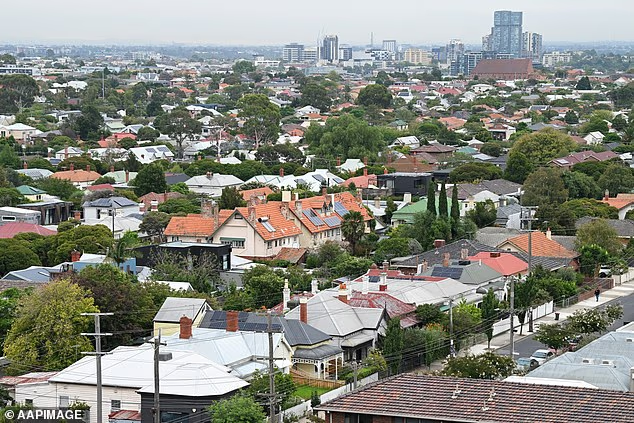
The interest rate is tipped to go up for the fifth time this year on Tuesday
Drawing on values instilled by her parents, she lived within her means by cutting back on non-essentials.
'I was used to being careful, not frugal, but careful with my money,' Ms Meade said.
She conceded that not having children also helped financially.
But prominent real estate agent Tom Panos said baby boomers who argue borrowers today have it easy compared with those facing 17.5 per cent interest rates in the early 1990s are overlooking the reality of modern mortgage debt.
While borrowers in the early 1990s faced sky-high interest rates, Panos said mortgage debt now consumes a far greater share of household income, leaving many families struggling with repayments as well as soaring costs for essentials.
'A guy said to me yesterday, "Tom we had 17.5 per cent interest rates, what are these people going on about?"' he recounted.
'I was there, I was in that market and I remember what it felt like.
'I remember I was just starting out in real estate, forced sales, mortgagee sales, phone calls, pressure on families, businesses going shut. Brutal.
'But I can tell you what I'm seeing families carrying today, and I can tell you it's harder than what people think.

While borrowers in the early 1990s faced sky-high interest rates, Tom Panos (pictured) said mortgage debt now consumes a far greater share of household income
Join the discussionAre young buyers facing tougher hurdles than past generations or just less willing to make sacrifices?
'4.6 per cent on a giant mortgage is more painful.'
Panos said the pain felt by millions of Australians came not from the interest rate itself, but from the share of household income being swallowed by mortgage repayments.
He said homes in the early 1990s were far cheaper relative to incomes, meaning households carried significantly less debt despite much higher interest rates.
For example, in 1990, Sydney's median house price was about $187,000. A buyer with a 20 per cent deposit would have needed a mortgage of about $150,000. Even with interest rates around 17 per cent, the interest bill was roughly $25,000 a year.
Today, Sydney's median house price is about $1.7million. An 80 per cent mortgage would be around $1.36million. At a mortgage rate of about 6.4 per cent, the interest bill alone would be around $87,000 a year — showing how today's much bigger mortgages can hurt even when rates are far lower.
'The debt loads were lower. The average family home was not carrying a mortgage that is eight or nine times their household income,' he said.
Australians are drowning in debt, with households owing the equivalent of 178 per cent of their annual disposable income in June 2026, among the highest levels since records began in 1977.
Panos said today's borrowers were also being squeezed by rising prices for almost everything, from petrol, groceries and electricity to school fees.
'There's no breathing room and unlike the late 80s and 90s, which was a sharp, brutal period, households today have been carrying this pressure for a few years,' he said.
'Yesterday was another turn of the screws. The RBA says it's fighting inflation, fair enough, inflation hurts everyone. But the bill is landing on mortgage holders, small business owners and young people.
'The people with cash get higher interest, the people with debt, they're getting smashed.
'This is not a competition about who had it tougher, it's about recognising the reality of today. The mortgage is so much bigger, and that's why the pain is so much deeper.'
Source link