When Karl Bushby set off on a mission to walk home from the southern tip of South America, his son Adam was eight years old and he believed he would be back within 12 years.
Instead, the former paratrooper's journey would consume almost half his life, carrying him through jungle war zones, across frozen seas and into repeated battles with border officials, while the little boy he left behind grew up and became a father himself.
Today, after 28 years and an estimated 75 million steps, Bushby, 57, is preparing to reach his mother's front gate in Hull, where his adventure will end with a reunion with the family who have spent decades waiting for him.
Among them is his 12-year-old granddaughter, whom he has spoken to through video calls but never met in person, and Adam, now 36, who has visited his father just four times during the expedition.
For his son, the pride in Bushby's achievement has always existed alongside the pain of growing up without him: 'There were parts of my life where you just need your dad for it,' he told the Yorkshire Post.
Bushby's homecoming brings to a close a journey that began in another century, before smartphones and social media transformed the way travellers could keep in touch with those they had left behind.
What started as a seemingly impossible line drawn on a map became the Goliath Expedition, an undertaking whose obstacles would include the 2008 financial crash, the pandemic and the geopolitical upheavals that repeatedly closed his route home.
He received a welcome in Hull's Queen Victoria Square at about 11am, where Lord Mayor Councillor Maria Coward greeted him outside City Hall before a brief private reception.
Afterwards, he will continue towards his mother's home, completing the final stretch of a journey whose destination has remained the same even as the world around him has changed.
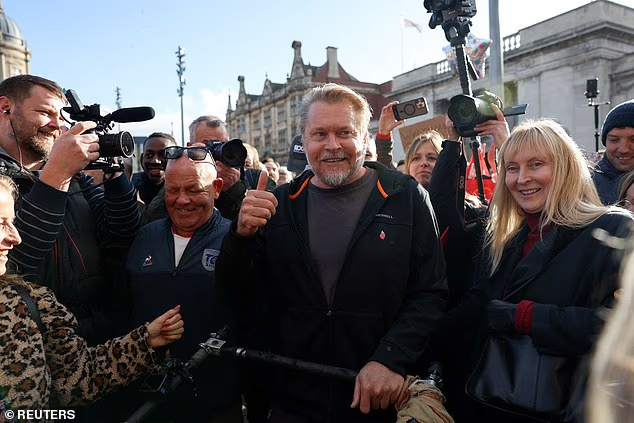
Karl Bushby returns to his hometown of Hull this morning after a 28-year walk around the world
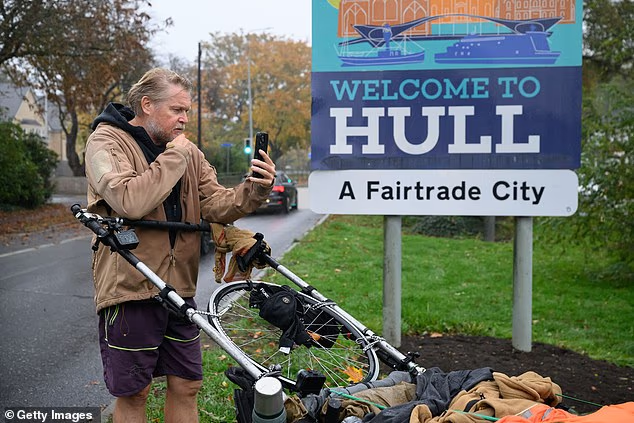
Karl Bushby finally reaches the boundary of the City of Hull on Sunday after his 28-year walk around the world
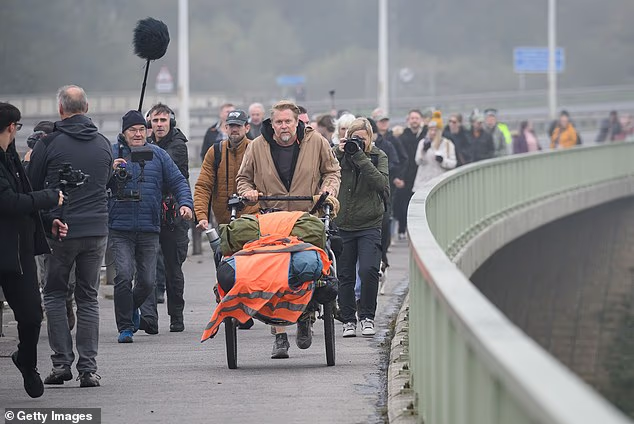
Bushby is surrounded by members of a documentary crew and supporters as he crosses the Humber Bridge, ahead of today's finish line
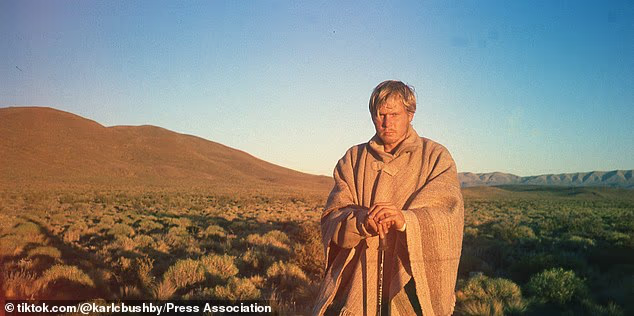
Bushby in Argentina in 1999
The idea had taken hold while Bushby was still a soldier, after his father Keith sent him a birthday card recounting an argument about whether it was possible to walk from London to New York by crossing the Bering Strait.
Studying a wall map, Bushby followed the route across Europe and Asia, into Alaska and then south through the Americas, extending the challenge to the bottom of South America.
By October 1998 he had left Hull, travelling via the Falkland Islands to Punta Arenas in Chile, where he began walking north on November 1 with about £500 and a trailer carrying his equipment.
His rules were simple, although living by them would prove anything but: he could not use transport to advance along the expedition route, and he would not return home until he could get there under his own steam.
His rough calculations suggested the undertaking would take 12 years, while friends and relatives suspected he might get the idea out of his system and return within weeks.
Even his equipment seemed to offer an early warning about what lay ahead, with the trailer he called 'The Beast' breaking down on the first day.
The determination that kept him moving had been forged against a childhood in which he often felt he was failing.
Born into a military family, Bushby struggled at school with dyslexia, which was diagnosed when he was 13, and left at 16 without qualifications before joining the Junior Parachute Company.
His father had served in the SAS and his younger brother Adrian also pursued a military career, but Bushby's own entry into Army life was far from straightforward: it took him five attempts to pass the training before he was accepted.
He later married a woman from Northern Ireland, also named Angela, with whom he had Adam, although the marriage ended before the expedition and his former wife and son returned to Belfast.
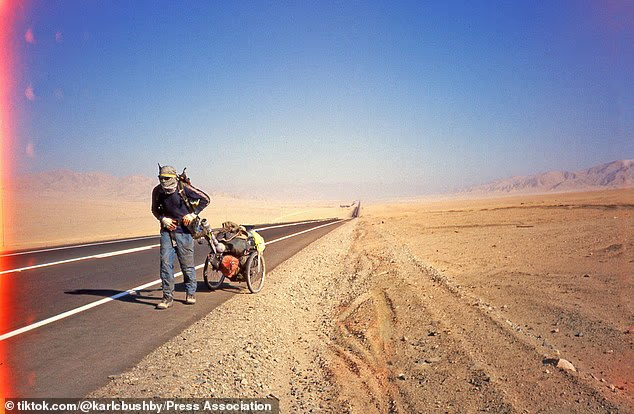
Bushby in Chile in 1999
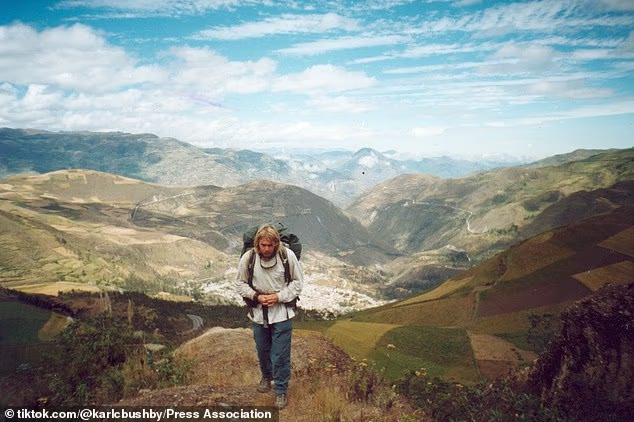
Bushby in Ecuador in 2000
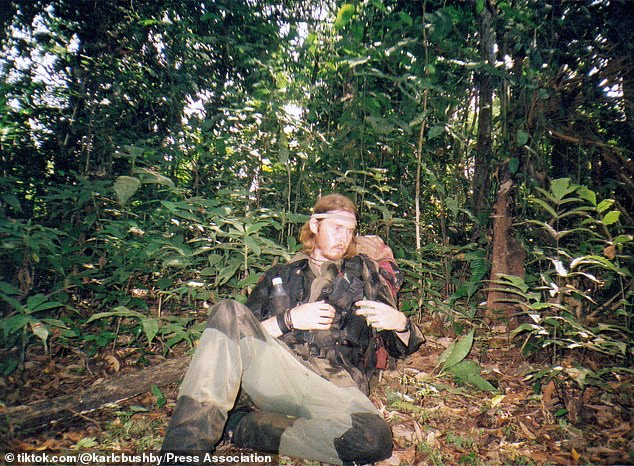
Bushby at the Darien Gap in Panama in 2001
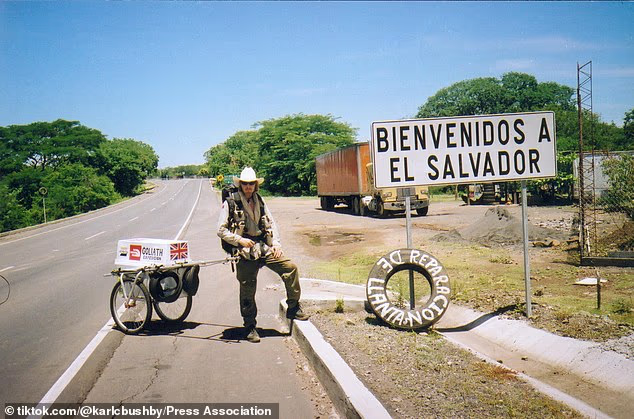
Bushby in El Salvador in 2001
For Adam, his father's departure began a childhood shaped by an adventure so unusual that other children sometimes refused to believe his explanations of where his dad had gone.
A reunion in Alaska in 2004, when he was 14, helped him understand that Bushby would not be returning until he had finished what he had started.
Over the years, letters gave way to phone calls and video conversations, allowing father and son to remain in contact even as the milestones accumulated at home.
Bushby missed school years, birthdays, Christmases and the birth of his granddaughter, while Adam grew accustomed to sharing news without knowing how quickly a reply might come.
Bushby has acknowledged that those closest to him paid a price for his ambitions, saying that the burden of separation becomes more difficult to carry as the years pass: 'It gets heavier over time,' he said, warning would-be adventurers that journeys lasting longer than five years could profoundly affect their families and relationships.
His advice to others was to go and have their adventure, but keep it within a reasonable timescale - a limit his own expedition had long since exceeded as he continued trying to find a way home.
Back in Hull, his mother Angela followed his progress through newspaper cuttings collected in scrapbooks, enduring the long silences and alarming reports familiar to the families of those who venture into dangerous places.
Last December, she said she had seen her son only three times since he left, but his age and achievements had done little to alter the way she thought of him.
'He's still my little boy,' she said, explaining how recognition of his dyslexia had helped him find ways around the difficulties that had overshadowed his school years.
For his eventual arrival, she had prepared a greeting that would be familiar to any son returning later than expected: '…and what time do you call this, Karl?'
Keith, meanwhile, became an important source of practical support, providing weather updates from Hereford as his son tackled the Bering Strait in 2006.
When Bushby finally reached the Russian side, he rang his father with an exuberant declaration of 'Terra firma, terra firma' - relief that was understandable after the dangers of crossing between continents on sea ice.
Accompanied by fellow adventurer Dimitri Kieffer, Bushby had negotiated the frozen waters between Alaska and Russia, only to discover that arriving alive did not mean he would be permitted to continue.
Russian authorities detained the pair because they had entered away from an official border crossing, turning a remarkable physical achievement into a bureaucratic battle that threatened the expedition's future.
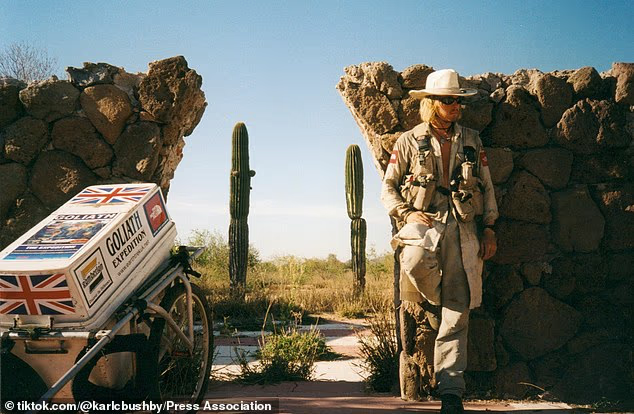
Bushby in Mexico in 2002
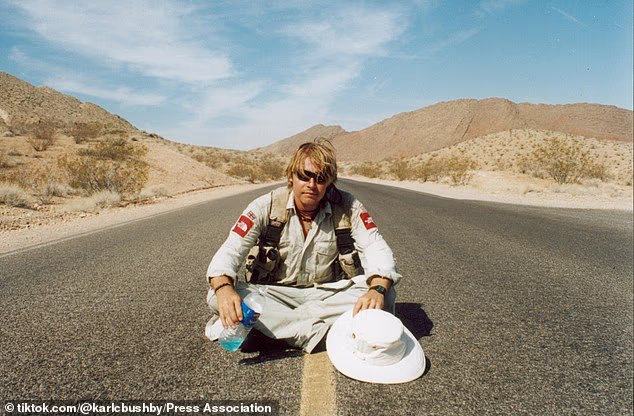
Bushby in Nevada, USA, in 2003
It was far from his first experience of surviving a dangerous landscape only to find himself behind bars.
In 2001, after passing through the Darién Gap between Colombia and Panama, he was detained for 18 days while officials established who he was and what he was doing in a restricted border region affected by conflict involving FARC guerrillas, the Colombian military and Panamanian police.
The crossing had required him to think as much about avoiding attention as finding a route through the jungle.
Fearing that a foreign traveller with expensive outdoor equipment would be an obvious kidnapping target, he dyed his hair and skin, reduced his clothes to tatters and carried his possessions in sacks, hoping to pass as someone living on the streets.
Elsewhere, the expedition brought threats at gunpoint, a near encounter with a polar bear and an ordeal in Alaska in which he was buried by snow.
Yet Bushby has been equally conscious of the less dramatic hazards that rarely make an adventurer's story: sunstroke, exhaustion and the traffic passing close beside him on busy roads.
In his account, the repeated near misses with vehicles could be as frightening as the more spectacular dangers, while the problems that kept him stationary sometimes proved harder to overcome than anything he encountered on foot.
He claimed that almost half his time away had been spent resolving difficulties involving visas, politics and sponsorship.
The financial crash cost him potential backers, and Russia's later refusal to extend his visa prompted a response that would have seemed extraordinary from almost anyone else: he undertook another long walk.
Travelling across the United States to the Russian embassy in Washington, he turned his predicament into a public campaign that eventually helped secure permission to resume his route.
By 2017 he had reached Mongolia, but the onward journey through Central Asia would bring further delays as the pandemic closed borders and political tensions restricted his options.
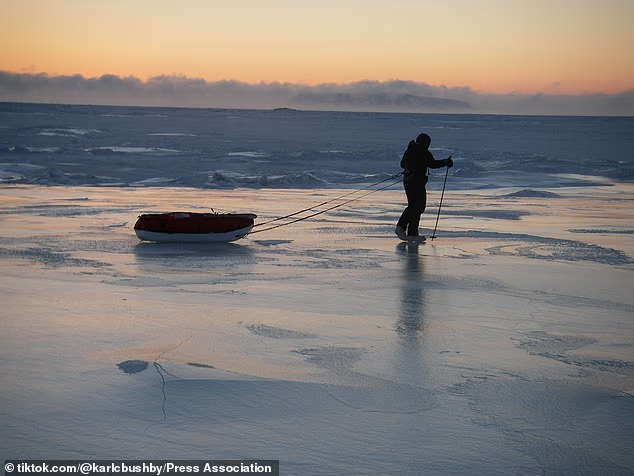
Bushby in walking on the coast north of Nome, Alaska, in 2006
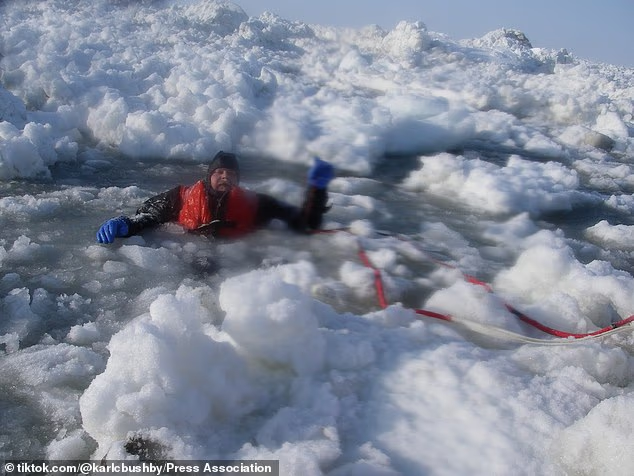
Bushby in crossing the Bering Strait in 2006
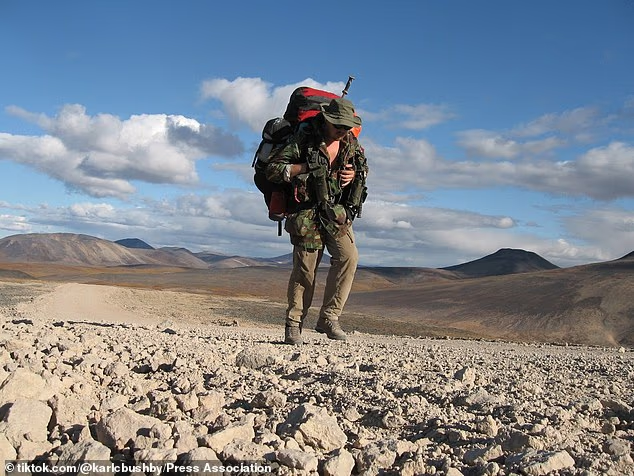
Bushby walking on the road to Valinisty Mine in Russia, in 2008
When the intended land route became impossible, the Caspian Sea offered a daunting alternative.
In 2024, Bushby and fellow long-distance walker Angela Maxwell, whom he had met years earlier while crossing the Gobi Desert, undertook a 288km crossing from Kazakhstan to Azerbaijan, supported by safety boats and joined by two Azerbaijani swimmers.
Neither walker regarded themselves as a natural swimmer, and the challenge required them to cope with rough seas, strong winds and the mental strain of spending weeks on the water.
They swam in sessions, resting and sleeping aboard the support boats, where games of dominoes provided a distraction when conditions allowed and keeping dinner down became a challenge when they did not.
Even after reaching western Europe, Bushby faced one final obstacle between himself and Britain.
His request to walk through the Channel Tunnel's service tunnel was refused, leaving him to attempt another supported swim, this time across the English Channel.
After approximately 20 hours in the water over three days, he came ashore at Shakespeare Beach near Dover on October 5, where his father was among those waiting alongside filmmaker Werner Herzog, who is directing a documentary about the journey.
Britain was finally beneath his feet again, although reaching Hull remained the condition on which his long-awaited return depended.
For all the risks and frustrations, Bushby's account of his travels has been shaped by the people who helped him continue.
Strangers offered food, water and money, cared for him when he was ill and sought him out after reading about his progress, sometimes travelling considerable distances to find him beside the road.
Their generosity crossed economic boundaries, with support coming from people who had little to spare as well as those able to provide more substantial help.
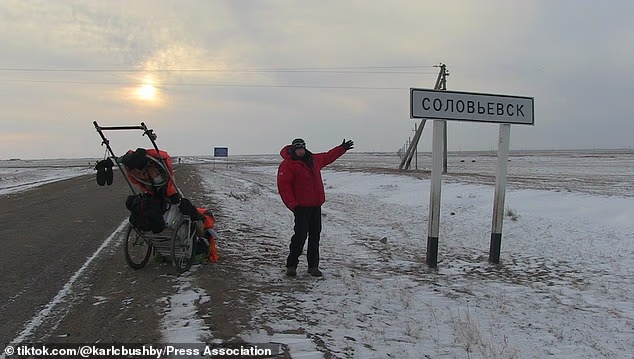
Bushby in Southern Russia in 2016
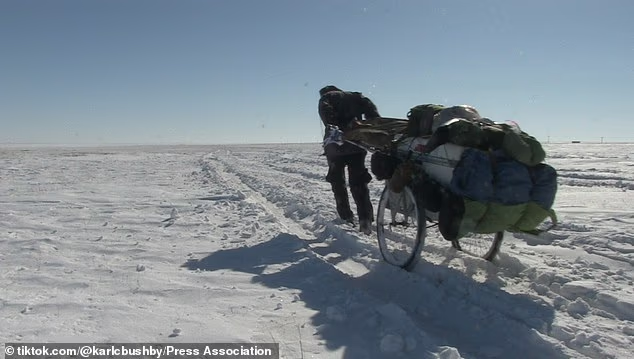
Bushby in Mongolia in 2016
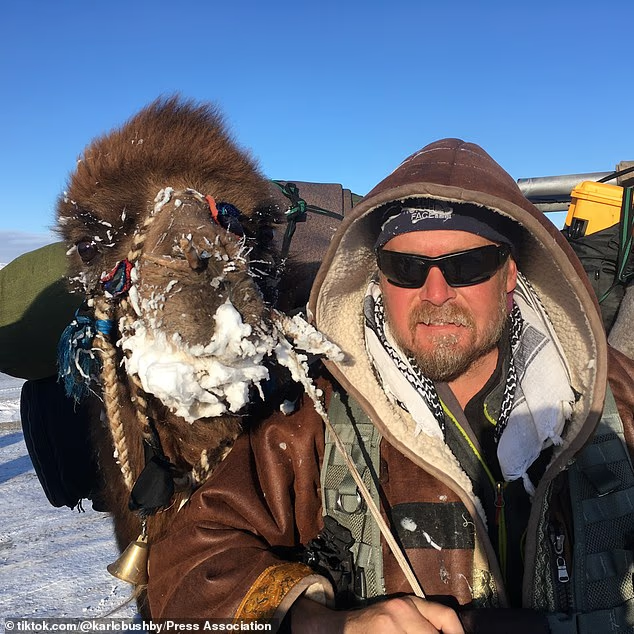
Bushby in Mongolia in 2017
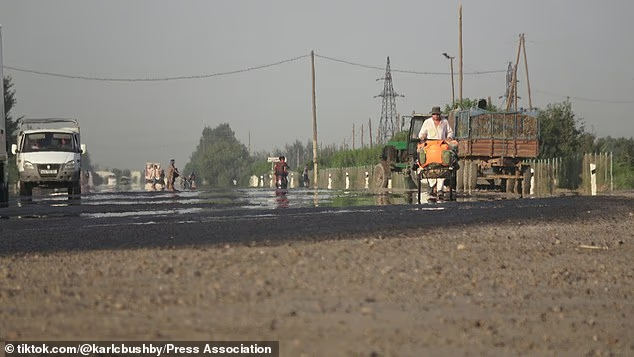
Bushby in Uzbekistan in 2019
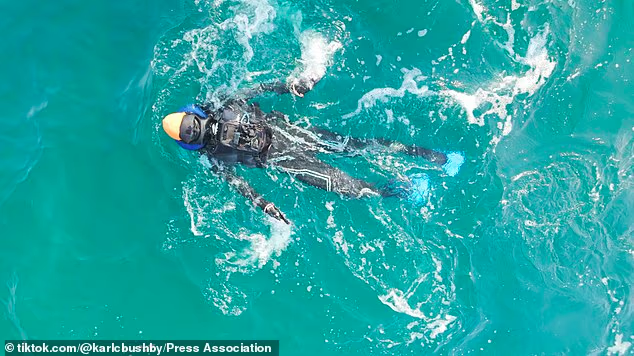
Bushby in crossing the Caspian Sea in 2024
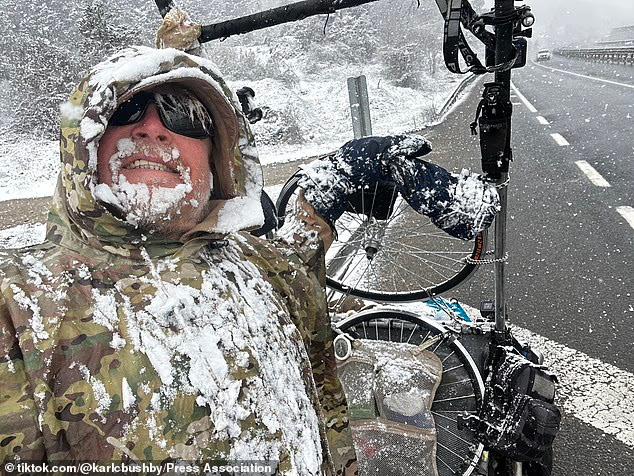
Bushby in Turkey in 2025
In Chile, one family became so close that he regarded them almost as another family, while the conversations and friendships formed along the route offered companionship in a life otherwise defined by departures.
Those departures carried their own cost: Bushby has fallen in love twice during the expedition and lost both relationships as he continued walking, losses he has described as among its hardest experiences.
The prospect of finishing has nevertheless brought uncertainty alongside relief.
After 28 years spent organising his life around the next stretch of road, Bushby must now work out what follows the mission that has sustained him for so long.
For today, however, there is still a destination ahead: a front gate in Hull, a mother waiting to embrace her son, and a family reunion that has been almost three decades in the making.
Source link