It is rare that a leader of a major political party doesn't get their own way on internal matters - it is rarer still that the power struggle makes its way out into the glare of the public.
But that is where we are.
Simon Harris forced his Executive Council to consider again a motion on the party's centre-right credentials.
Multiple sources have confirmed that he repeatedly asked that it be debated at Fine Gael's ard fheis this weekend.
Last night the Tánaiste lost out in this power struggle.
The Executive Council rebuffed repeated efforts by Mr Harris to get a motion added to the agenda of the ard fheis.
Mr Harris is a man under pressure and he knows it. He made a bags of how he handled the fallout from the Patrick O'Donovan RTÉ post-Budget bunfight.
He was forced to reject reports that he had briefed anonymously about Mr O'Donovan's health or that he had attempted and failed to fire him.
To say his behaviour has raised eyebrows within the Leinster House bubble is somewhat of an understatement.
There is exasperation and frustration within Fine Gael.
And then, as if by magic, last week Mr Harris happened upon a new political direction.
A speech he gave to Fine Gael supporters and businesspeople hit out at spending by NGOs. He said he wanted to see this kind of spending monitored much more closely.
He also criticised the advert by the Dublin Rape Crisis Centre which warned grandparents they perhaps should not always hug their grandchildren.
It all had a distinctly right-wing flavour.
Conveniently, Public Expenditure Minister Jack Chambers had already proposed establishing a public service efficiency taskforce to look at public sector spending.
Mr Harris will simply include NGOs in this new taskforce if he gets his way.
A neat way, then, to arrive back onto the political scene after a tough political period for the man from Greystones.
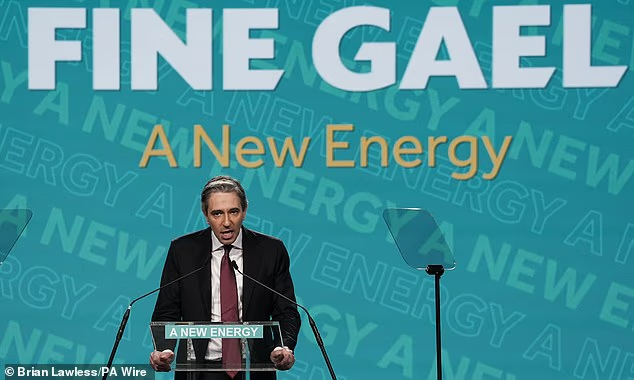
Fine Gael leader Simon Harris is a man under pressure, and he knows it...
This new positioning came conveniently just days before Fine Gael published a damning report on its own prospects.
The internal report said the party's very viability was at stake, and the voters didn't know what it stood for.
In parallel, the motion from Fine Gael's young Turks was making the rounds.
It called for the party to affirm itself as a Christian democratic party, a centre-right party of old, essentially.
The motion was briefed to the media, journalists were told the grassroots wanted to see it debated and the phrase 'woke left' was bandied about in relation to Fine Gael.
It had been rejected for debate by the governing body of Fine Gael, the Executive Council, partly, we understand, on the grounds that not every motion can make it onto the agenda, and partly because the motion didn't fit neatly into any of the relevant themes under which motions are arranged.
But Mr Harris spied an opportunity. He asked for the motion to be considered again.
The Executive said no. But Mr Harris asked again. However, the Executive was not for turning.
The fact that Mr Harris did not get his own way on an internal party matter and was rebuffed twice is a sign that he is not as strong in the party as he would like to portray.
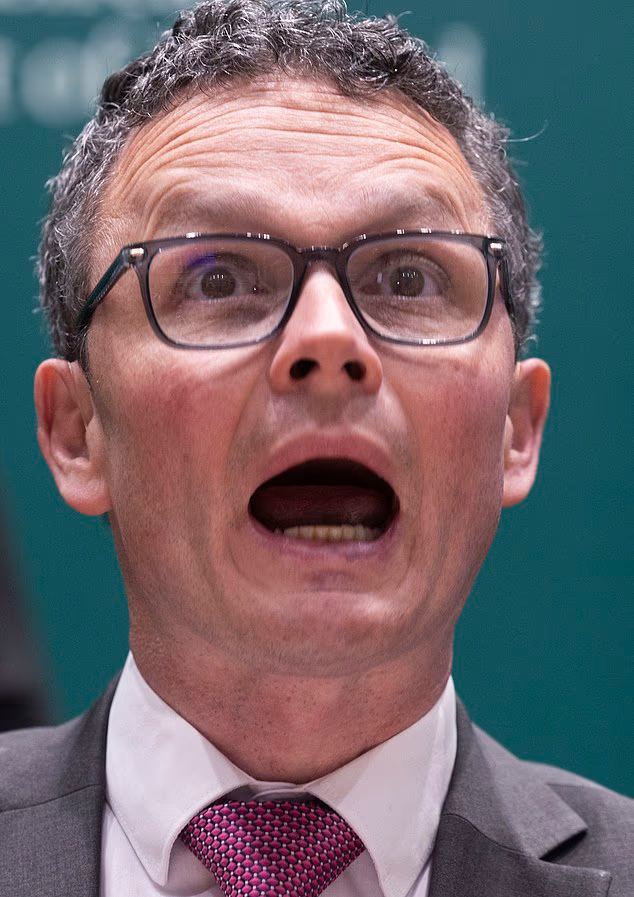
How Mr Harris handled the post budget fallout of Patrick O'Donovan's decision to not fun RTÉ at promised levels is only one of a litany of ways in which he has exasperated his party of late
In fact it is downright embarrassing for the leader of Fine Gael, the Tánaiste and Finance Minister, to not be able to convince his own people to do something as simple as put a motion down for debate at the party's ard fheis.
Mr Harris has perhaps the most finely tuned political antenna in Irish politics. It got him to where he is today. But sometimes that political antenna is too sensitive and it leads him into trouble.
While no backbench TD or minister I have spoken to in recent days has suggested that he is in trouble, outside of the parliamentary party the mutterings are a bit louder.
The party is directionless, say some; Mr Harris has lost the membership, say others.
The irony is that just as Mr Harris seeks to take a rightward turn, the American midterms showed the woke left may not be dead yet.
And the centre may yet hold in France and other EU member states when they go to the polls next year.
While not a direct comparison, Irish politics has tended to be several years downstream of wider American and European political culture.
Harris will be acutely aware of this, and that the soft left in Ireland will seek to build on the gains made by the more leftwing Democrats.
But it appears that Mr Harris has already made a strategic decision about the future of Fine Gael.
Whether he is the one to lead the party in this new direction is another question entirely.
Source link