Ministers have admitted they sought legal advice over calls for a public inquiry into the Peter Murrell scandal – but they are refusing to release the information.
The SNP Government used four separate Freedom of Information (FOI) exemptions to keep the details secret after being asked for detail of its work responding to calls for a public inquiry into the former SNP chief executive, who was jailed for stealing cash from party funds.
It disclosed that some of the withheld documents relating to the preparation of First Minister John Swinney's parliamentary response are covered by legal professional privilege.
Officials also cited exemptions covering personal data, 'free and frank' policy discussions and the effective conduct of public affairs.
Scottish Tory justice spokesman Stephen Kerr said: 'John Swinney cannot keep hiding behind legal technicalities while the SNP's biggest financial scandal remains shrouded in secrecy.
'Scots deserve to know what the First Minister is so desperate to keep under wraps and who is being protected by this wall of silence.
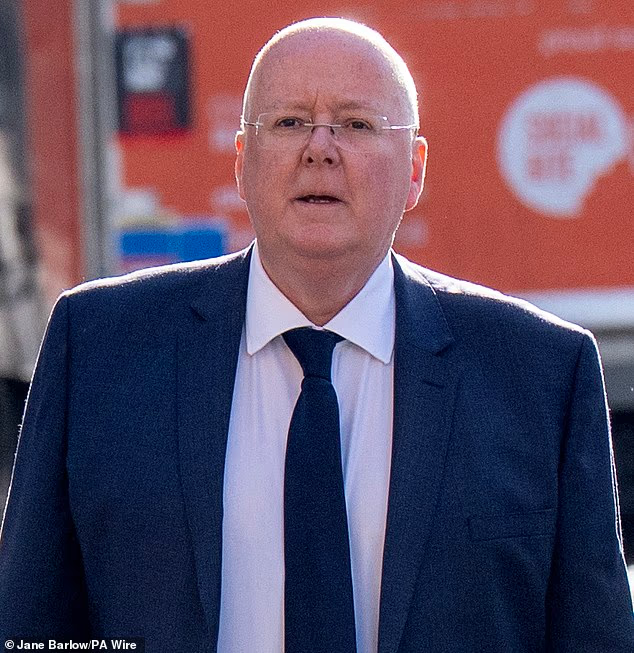
Former SNP chief executive Peter Murrell was jailed for embezzling cash from the party
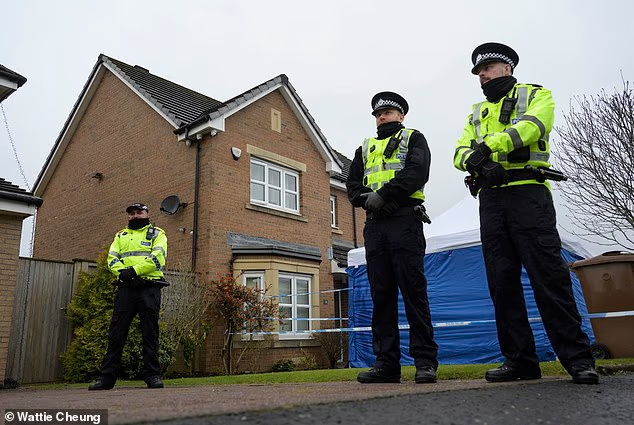
The SNP have used Freedom of Information exemptions to withhold information about the investigation into Mr Murrell
'Peter Murrell abused his position at the heart of the SNP, and the public will not accept a cover-up or a cosy stitch-up by the party that allowed this scandal to happen.
'Only a full public inquiry can get to the bottom of this rotten affair and expose who knew what, and when.'
An FOI response from the Scottish Government sheds light on how ministers handled calls for a public inquiry into the criminal case involving Murrell.
Officials have refused to release documents relating to the preparation of Mr Swinney's response in the Scottish Parliament on May 26, but in doing so they confirm that some of the material consists of legal advice.
The response states that an exemption applies because 'it is legal advice and disclosure would breach legal professional privilege'.
The Government said there was a strong public interest in preserving confidential communications between lawyers and ministers so that legal advice can be given freely and candidly.
It also argued that disclosure would inhibit internal discussions and damage the process used to brief the First Minister ahead of First Minister's Questions.
Officials rely on four separate FOI exemptions to withhold the information – legal professional privilege, third-party personal data, free and frank exchange of views, and effective conduct of public affairs.
The documents relate to briefing prepared for Mr Swinney before he ruled out a public inquiry in Holyrood.
On May 26, Mr Swinney repeatedly rejected calls for a public probe into the Murrell affair, arguing that the issues had already been fully examined by Police Scotland and prosecutors.
Responding to opposition demands for a wider investigation, the First Minister said there had been an 'extensive police investigation' lasting several years in which 'every relevant aspect' of the case had been examined by the authorities.
He argued that process had already resulted in criminal proceedings against Murrell.
Mr Swinney told MSPs he did not believe a further inquiry would uncover anything that had not already been established through the criminal investigation.
He said the case had been subject to a 'five-year forensic police investigation' which had identified criminality and was being dealt with through the courts.
Murrell, 61, the husband of former First Minister Nicola Sturgeon, pleaded guilty earlier this year to embezzling more than £400,000 of party funds.
Prosecutors said he had stolen the cash and used it to fund buying a wide array of goods including a motorhome.
He was later sentenced at the High Court in Edinburgh.
The case reignited political demands for a wider public inquiry into how the missing funds went undetected and who within the party knew about concerns surrounding the finances.
Earlier this month, the Mail revealed Murrell faces paying back his legal aid funding amid damning evidence of the extent of his wealth.
Taxpayers have footed a bill of nearly £5,000 in defence counsel fees for the fraudster.
The former party chief executive now faces having to pay the money back after the Scottish Legal Aid Board withdrew funding.
Scottish Tory leader Russell Findlay said the 'affluent crook, along with Scotland's wealthy organised criminals, shouldn't get a single penny of taxpayers' money to pay their lawyers'.
A Scottish Government spokesman said: 'The Scottish Government provides access to information, including through responding to Freedom of Information requests.
'Information can be withheld from responses for a variety of reasons including when it is subject to legal confidentiality and the effective conduct of public affairs.
'This is appropriate and in line with the Freedom of Information (Scotland) Act 2002.
'As the First Minister has previously stated, he does not believe that there is a case for an independent inquiry or a parliamentary inquiry into this issue, because that work has already been done by the police.'
Source link