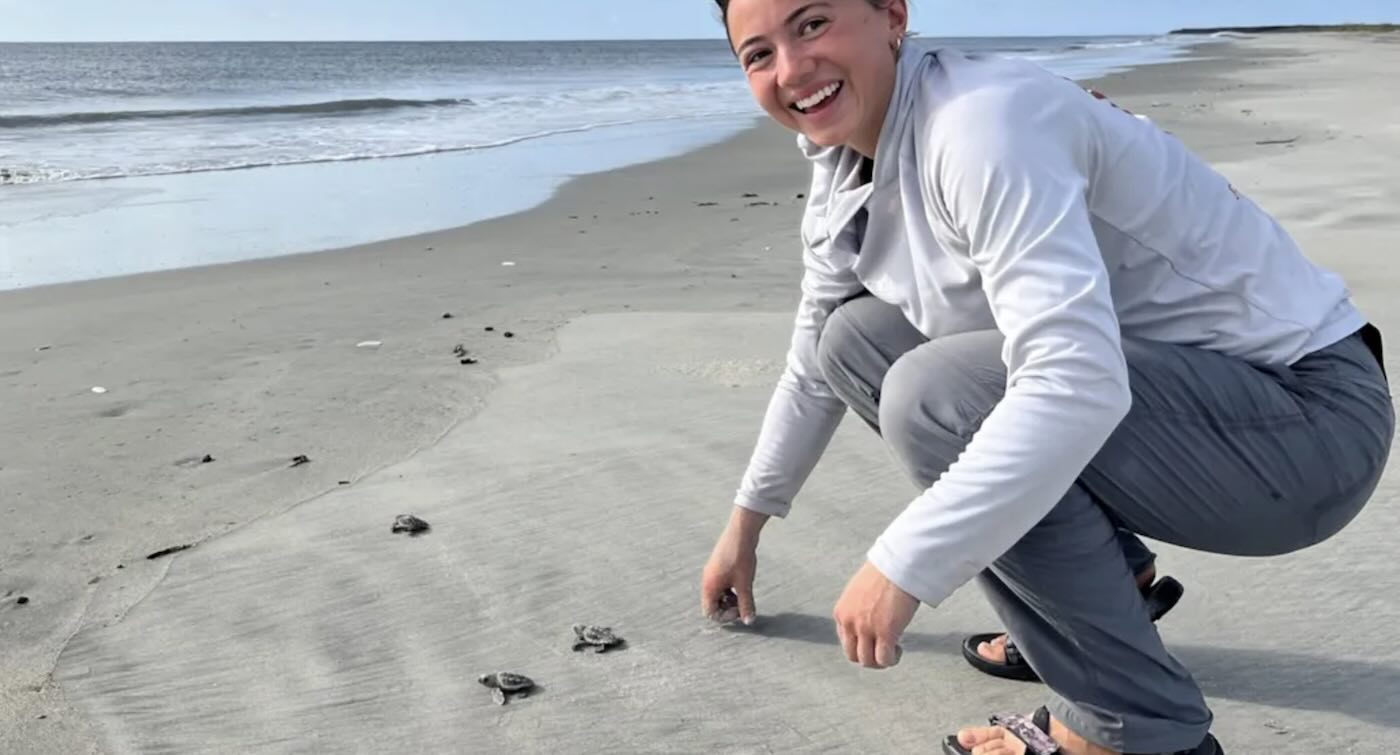
Loggerhead sea turtle nests along the Atlantic coast in the US have set a new 37-year record, topping every annual count for beaches in the state of Georgia, going back to 1989.
The state's Department of Natural Resources calls it "a slow but steady rebound" for the animal listed as threatened under the Endangered Species Act in 1978.
According to the Georgia Sea Turtle Cooperative, the nest count passed 4,110 last week—the most since 1989, when that group of volunteers, researchers, and staffers, coordinated by the DNR, began counting nests all along the state's barrier island beaches.
In the last five summers, the record has been broken twice. The previous high was 4,071 nests in 2022—which is almost double the goal originally set in a recovery plan hatched by humans for these beloved, big-headed reptiles.
Wildlife officials are 'encouraged' by the progress of the species' restoration for a couple reasons. As big as they are—300 pounds—they develop very slowly.
"Loggerheads are a long-lived species and don't reproduce until they're 30-35 years old,"