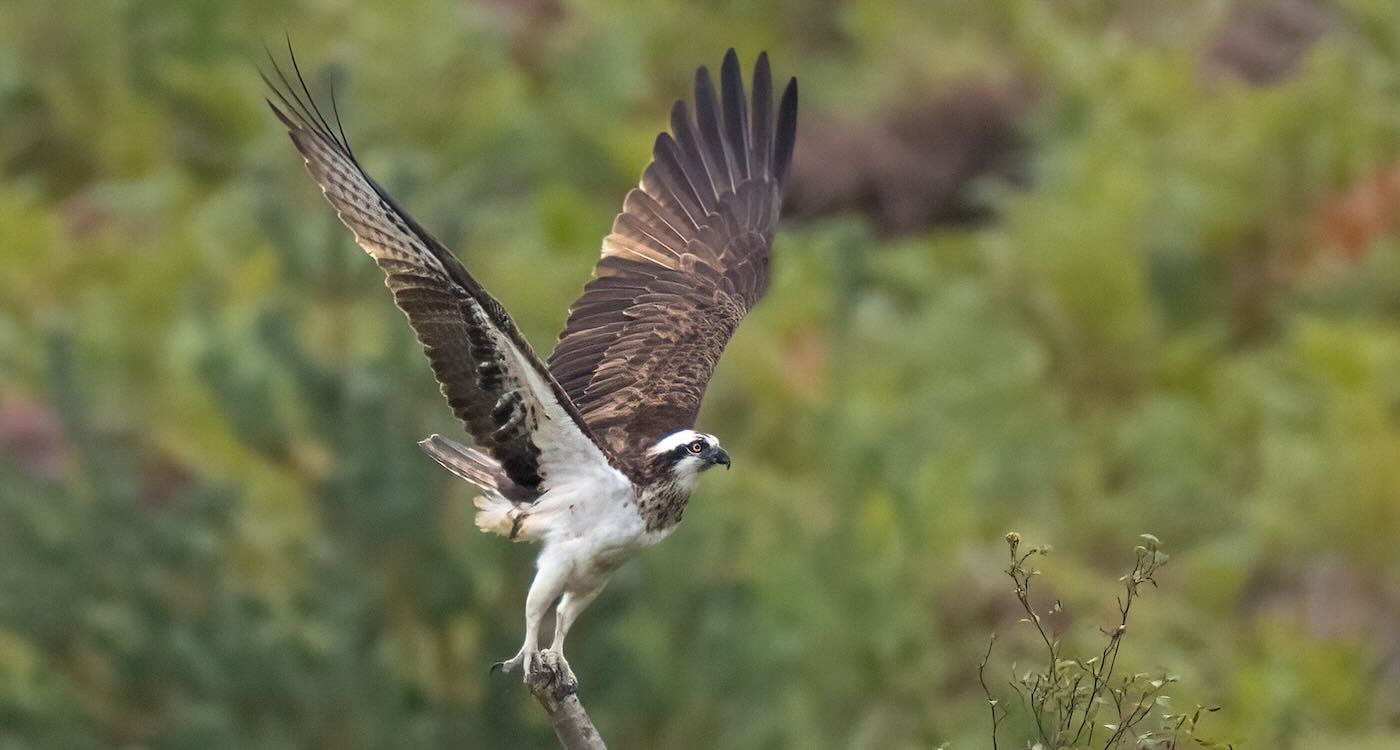
Ospreys are recovering in Britain thanks to "pioneering pairs" who prefer to nest away from the main population, according to new research.
It could be key to increasing the proliferation of the raptors, which first became extinct in the British Isles in 1916 before recolonizing in 1954.
Researchers looked at a rare long-term dataset covering 54 years of recolonization of ospreys in northern Scotland.
They examined the distribution and density of nests, and the patterns of settlement to understand how ospreys spread and what drives spatial recovery.
The study, published in the Journal of Animal Ecology, was led by Bouremouth University PhD researcher Brittany Maxted working with the charity Birds of Poole Harbour, and The Roy Dennis Wildlife Foundation which monitor ospreys in parts of Northern Scotland.
"Ospreys usually like to nest in areas where there are already other ospreys," said Ms. Maxted.
"Most males also exhibit natal philopatry, which means they tend to breed close to their own birthplace.
"Together, these factors lead to very slow population spread for such a large bird.
"However, in Scotland we noticed that a small