It is a question a close friend and former student of mine in Ukraine would despise.
Well, she's Georgian, really, but has lived in Kharkiv for years and speaks Russian fluently.
Its very premise, she might say, lends credence to Putin's so-called "Special Military Operation," which claims to "denazify" Ukraine, aka Novorossiya, and bring it back into the Motherland.
Indeed, Putin revealed as much when he stated, "I have said many times that I consider the Russian and Ukrainian peoples to be one people. In this sense, all of Ukraine is ours."
Yet many Ukrainians do speak Russian, and Ukrainian itself can be viewed as a Russian dialect.
I shan't delve into the sociolinguistic debate over dialect versus language, let alone Surzhyk, the kind of pidgin between Russian and Ukrainian. The distinction is politically charged, academically contested, and rarely straightforward.
Suffice to say that both tongues belong to the broader East Slavic family.
Still, language is not merely a marker of identity. It can also be a tool of power, a means of passing, and a way of concealing one's loyalties.
And, when imperialism and linguistic identity collide, as they often do, I find myself returning to literature, particularly stories of imperial intelligence work, cultural fluency, and divided loyalties.
From Kipling to Fleming: 007 and Konspiratsia
My favorite book is Rudyard Kipling's Kim, set against the backdrop of the Great Game — the 19th-century struggle for influence between the British and Russian empires in Central Asia.
Kim, the protagonist, is the ultimate chameleon: fluent in multiple languages, shifting identities for intelligence work, yet torn between his devotion to his Tibetan lama and the British Empire.
I also adore Ian Fleming's From Russia with Love, in which 007 works alongside Darko Kerim, the head of MI6's Istanbul station, to beat the Russians; Kerim could leap off the pages of Kipling!
Fleming's Soviet antagonists are SMERSH (Smert Shpionam, "Death to Spies") and the MGB (Ministry of State Security); successors in spirit to the Tsarist agents of Kipling's world.
Beyond Bond and Kim, however, Moscow really does operate within a tradition of konspiratsia.
That is, the Russian tradecraft of maintaining absolute secrecy, hiding true intentions, operating undercover, and protecting internal security structures from exposure. Cue influence operations.
Of course, the historical continuity is not quite as neat as Fleming's fictional world might suggest, but the underlying principle remains relevant: information, perception, and identity can be as consequential as conventional military power.
The connection to language is clear: when Russia portrays Ukraine as Novorossiya, linguistic and cultural affinities are turned into arguments against the Ukrainians' right to define themselves.
Such narratives become instruments of cultural subversion, used to undermine Ukraine's distinct identity and political legitimacy. Former Soviet satellite states know this all too well.
This brings me right back to that question, the one that drives my Georgian friend up the wall.
Are Ukrainians really just Russians? Or is entertaining the very question konspiratsia in action?
Yet the question cannot be settled by examining Moscow's narratives alone; Ukraine's own history, and the competing national memories of the region, complicate the picture.
Eastern Europe: A History Written in Blood
Russian barbarism is nothing new: the mass rapes committed by Stalin's drunken Red Army as they marched their way across Europe at the end of the Second World War illustrate this.
Perhaps it's no surprise that when he went to occupied Berlin, General Patton was quoted in The National Guardsman as remarking: "I think we've been fighting the wrong people all this time..."
But Ukrainian nationalism comes with its own deeply troubled past, too. The SS Galicia Division, collaborationist police formations, and other wartime actors occupy distinct, troubling places in the history of the Holocaust and the German occupation of Ukraine.
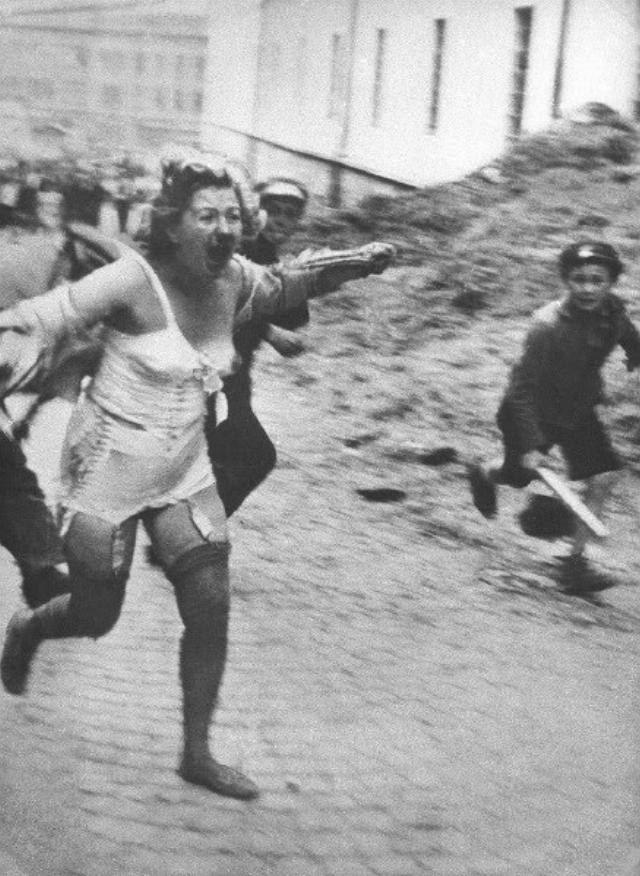
Public Domain: A Jewish woman chased by Ukrainian men and youth during the Lviv pogroms of 1941
The memory of the Soviet Holodomor also remains central to Ukrainian historical consciousness.
This complex identity is further layered by older regional histories, particularly in the west. Take Lviv: once known as Lemberg under the Austrian Empire, it was long a German-speaking city.
Likewise, several of Ukraine's westernmost oblasts formed part of Austria's Königreich Galizien und Lodomerien along the Tsarist Russian border; regions once home to large Polish communities.
Polish communities thar were later systematically massacred by the Ukrainian Insurgent Army (UPA) during the Second World War, in a campaign associated with the nationalist movement's ambition to establish an ethnically Ukrainian state. The UPA is still admired in Ukraine today.
Granted, Poland gained vast swathes of defeated Germany in return (Brandenburg, Schlesien, Pommern, Ostpreußen), yet that scarcely tempers the tragedy of mass murder and displacement.
Eastern Europe's history is painfully familiar: full of victims and competing national memories.
Questions of language, land, and identity there have long been answered in blood. We know this.
But what of the present day? Voices from the Margins and Liminal Spaces
Perhaps my real focus is eastern Ukraine, the old Tsarist realm of Novorossiya, where language, national identity, and political allegiance become particularly entangled. And, to grasp the complexity, it helps to move beyond historical grievances and listen to the people themselves.
At a language exchange in hot, dusty Hanoi, I met a Russian-speaking man from the Donbas — Luhansk, perhaps — with ash-blond hair and grey-blue eyes. He seemed on edge around Britons.
Later, when we were handed flag stickers to show where we were from, he chose Ukraine's, though he squirmed under the well-meaning expressions of sympathy he received. Eventually, he tried explaining to an effusive Vietnamese girl that he wanted a Russian flag stuck right beside it.
While teaching in Vietnam, I met several other Russians, colleagues mostly, who spoke with grief about Alexei Navalny, whose anti-corruption campaign was met with imprisonment and death.
In Montenegro, conversely, I met an odious Russian baffled by the outrage over Ukraine. To his mind, he argued, it was no different from the Anglo-American invasions of Iraq or Afghanistan.
As for my friend in Kharkiv, she once told me how she and her travelling companion had been accosted at a border crossing in western Ukraine and angrily berated for speaking Russian.
Her experience is a vivid reminder that language can become a test of belonging even among citizens of the same country. Yet it also illustrates the tension at the very heart of my question.
Speaking Russian does not settle whether someone is Ukrainian, Russian, or both in some sense.
I suggest Ukrainians are no more Russian than Austrians are German or the Irish are British.
But then again, aren't Austrians pan-German? And Northern Ireland certainly feels British. Moreover, borderlands like Donetsk and Luhansk — much like Ulster — are deeply liminal spaces.
Kipling's Kim suggests it depends on where your loyalties lie, though even these can be divided.
Still, there is no escaping one's blood for Kim, no matter the languages he speaks. Or is there?
It feels like a dreadful copout, but I leave the verdict to the reader.
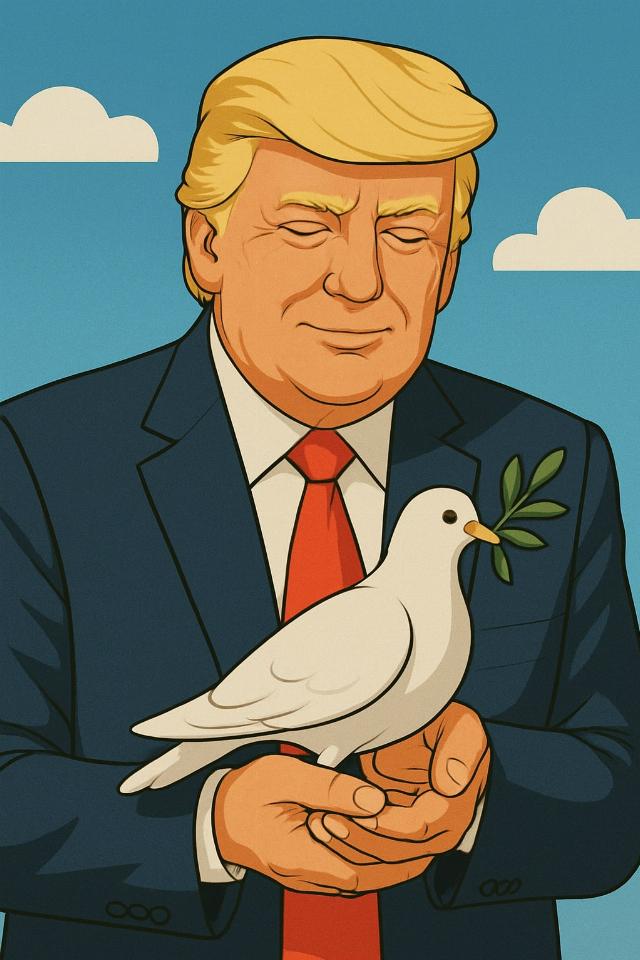
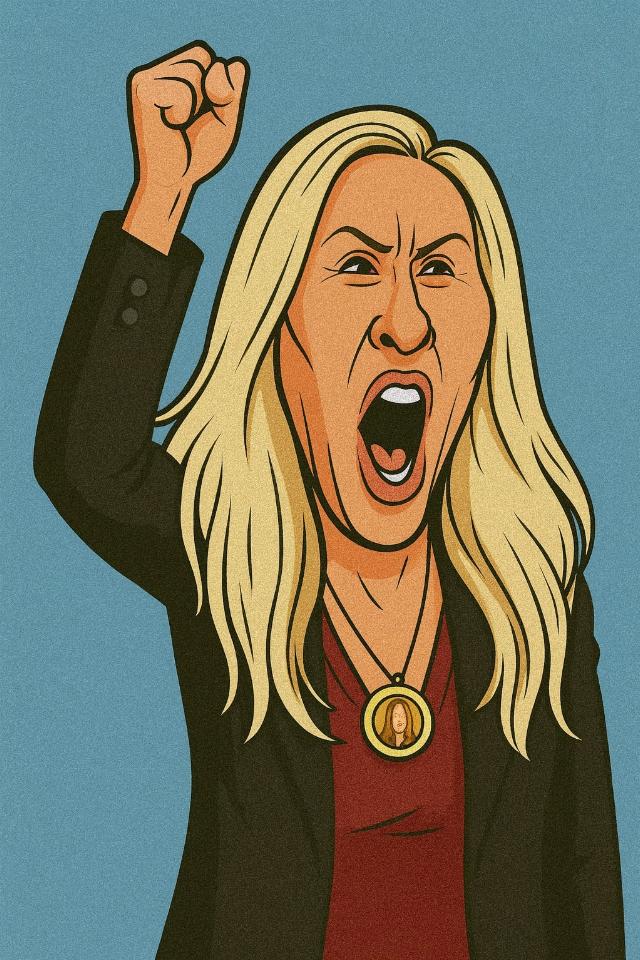
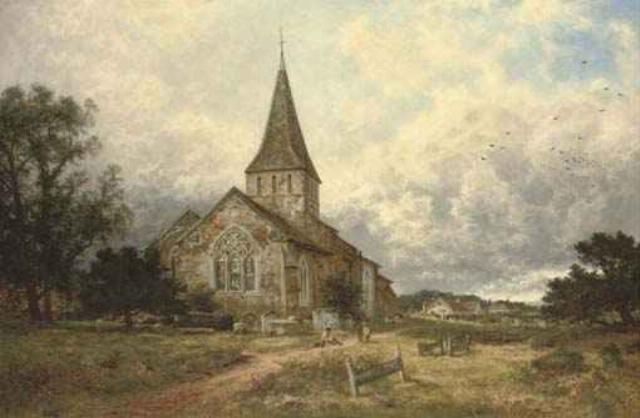
Image generated by ChatGPT.
Source link