Every election season, politicians manage to rediscover the average American voter. Suddenly, they develop an interest in visiting our neighborhoods, listening attentively to our concerns about rising expenses, and promising that
things will be different — if we're willing to elect them. For a few months, ordinary citizens actually become the center of Washington's attention.
Unfortunately, once the election is over, all that extra attention disappears, along with the apparent willingness to listen to the heartfelt pleas of the very people who put them in office.
Perhaps I am old-fashioned, but I have often wondered why we accept a standard of accountability from our elected representatives that we would never tolerate in our personal or professional lives. We expect people to honor their commitments, and when they fail to do so, we seldom hesitate to ask for an explanation. Sometimes, we even apply a little pressure to get one. Why should public office be different?
With the November midterms just around the corner, I think that question deserves more than another round of carefully crafted campaign speeches.
An October 15 AP-NORC survey found that eight in ten voters want substantial change or an overhaul of how the country is run. One in ten expressed optimism about American politics. Those findings suggest dissatisfaction that reaches well beyond the ordinary complaints we hear during election season.
An October 8 Pew Research Center report found that 21 percent of Americans rated national economic conditions as excellent or good. Nearly three quarters expressed serious concern about gasoline and energy prices.
Behind those numbers are families struggling to stretch their paychecks and retirees watching their fixed incomes disappear under the weight of rising expenses. Meanwhile, working Americans are left wondering why financial security remains so elusive, particularly when Washington always seems to find the money to address the interests and needs of countries thousands of miles from our shores.
To plead surprise over our dissatisfaction with Washington would be disingenuous at best. Americans have complained about the shortcomings of politicians for generations, and with good reason. But frustration alone is hardly evidence of a political crisis, nor does it necessarily mean people will stop voting. I would argue that the more troubling question is whether we have become so accustomed to broken promises that we no longer expect anything different.
Sadly, if we have reached this level of apathy, we may be overlooking a far more troubling issue: We have allowed elections to become the primary occasion for demanding accountability from those entrusted with public office. We are in serious trouble if we no longer recognize that the responsibility to answer to the American people does not end when the election is over.
Let's consider for a moment what happens when a candidate promises to lower the cost of living. Voters hear the pledge; weigh it against competing proposals; and cast their ballots with the understanding that, if elected, the candidate will make a good-faith effort to lower costs.
But what happens a year later, when prices remain high? Did the candidate genuinely attempt to fulfill that promise, only to encounter circumstances beyond his control? Or was the promise little more than a carefully rehearsed talking point, conveniently forgotten once the election was over?
There is a considerable difference between failing to fulfill a promise despite one's best efforts and never seriously attempting to fulfill it in the first place.
Regrettably, for the average voter struggling to make ends meet, explanations for a candidate's failure to fulfill a campaign promise may offer little comfort. After all, families must contend with the reality of rising expenses, not the promises made during a carefully orchestrated campaign. Clearly, no elected official can guarantee results. But the inability to guarantee success should not eliminate the responsibility to account for one's efforts.
Here is one proposal worth considering: Members of Congress should publish an annual report identifying their principal campaign commitments and explaining what, if any, action they have taken toward fulfilling them. The report should be accessible to constituents, written in plain language and supported by voting records, legislative proposals, and other verifiable information. If a commitment has not been fulfilled, the representative should explain why.
This proposal would not require creating another federal bureaucracy. Congressional offices would use existing channels to provide an annual accounting of campaign commitments, with links allowing voters to examine the underlying record for themselves. A documented record would provide a more useful starting point than another campaign advertisement. Voters would not be forced to wait until the next election to discover whether the promises that secured their votes were ever seriously pursued.
Perhaps voter fatigue is not a reflection of apathy at all. Perhaps it is a warning that Americans are tired of being asked for their votes without being given a meaningful accounting of what happened to the promises that earned them.
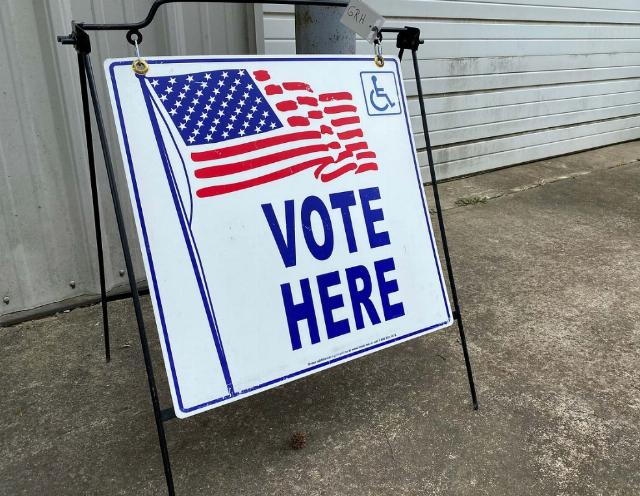 Image via Pixabay, Pixabay License.
Source link