As Australians brace for another interest rate rise this afternoon, Anthony Albanese is whooping it up overseas. Jim Chalmers will be left at home explaining the latest hit to household budgets.
The Treasurer has made his fair share of mistakes. Allowing the absent PM to escape responsibility for the economic woes upon us would be another one.
Albo enjoys the authority to approve spending, veto savings and determine how much political pain his government will tolerate. As we heard from 'sources close to the Treasurer' last week, Jim gets overruled regularly when it comes to such decision-making.
Yet increasingly it is Chalmers who is left to explain the consequences.
The Reserve Bank of Australia will announce its latest cash-rate decision at 2.30pm on Tuesday, with markets widely expecting another quarter-point increase.
Albanese is in Antigua and Barbuda attending a Commonwealth leaders' summit, leaving Jim Chalmers at home to manage the political fallout.
When there is money to announce, Albo is always available, keen to take the credit. When there is bad news that needs to be delicately explained away, he often goes missing.
It's an uncomfortable arrangement for Chalmers, and the recent ATO debacle highlighted how swiftly Albo is prepared to throw Jim under the bus to elevate himself by way of comparison.
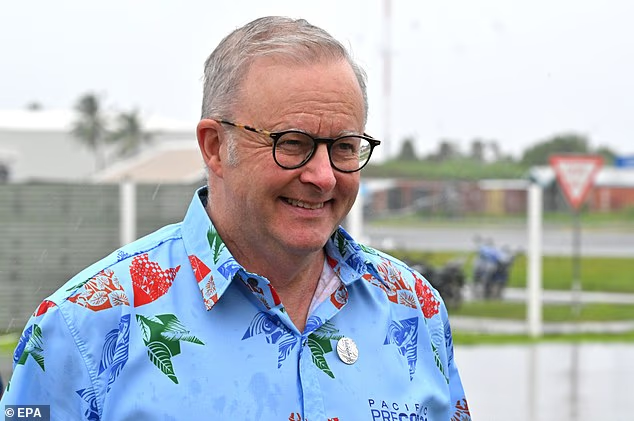
When there is bad news that needs to be delicately explained away, Anthony Albanese often goes missing (file image)
Australia's annual inflation rate reached 4.3 per cent in September, with underlying inflation at 3.6 per cent. Those are troubling numbers, well above the RBA's target band of 2-3 per cent.
But the international energy shock is very real. Treasury says headline inflation across the G7 economies increased by about 1.5 percentage points (on average) between the start of this year and September.
Chalmers didn't manufacture that problem. Nor does the broader economic picture necessarily support the caricature of a country uniquely mismanaged. Australia's September unemployment rate was 4.7 per cent, below the latest OECD average of 5 per cent.
Treasury also notes that our public debt and deficits remain relatively low compared with other advanced economies. Although we do have to note the steep trajectory as debt continues to grow.
But International comparisons offer little comfort to voters struggling at the supermarket checkout, and today's expected rate rise is only going to add to that pain.
Context matters when judging a treasurer. If we're going to hold Chalmers accountable for domestic decisions, we should distinguish those decisions from forces beyond his control.
His clearest vulnerability is spending.
There is an important qualification here. The argument that Chalmers simply failed to unwind pandemic spending misses what actually happened. Federal payments fell from 31.3 per cent of GDP in 2020/21 to 24.3 per cent in 2022/23, below their 24.5 per cent share before the pandemic.
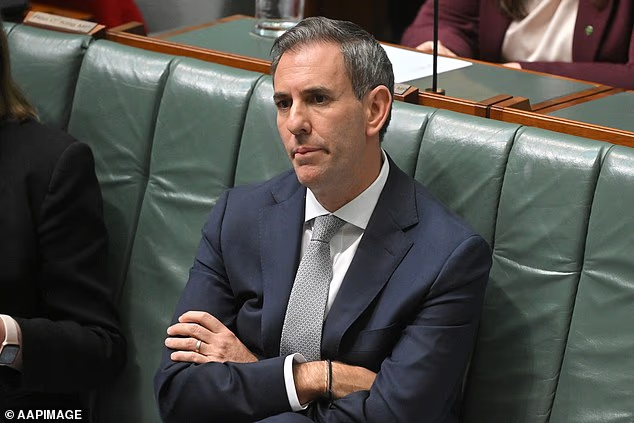
Increasingly it is Treasurer Jim Chalmers who is left to explain the consequences (file image)
Then spending climbed again. It reached 26.2 per cent in 2024/25, with the budget forecasting 26.8 per cent this financial year.
The stronger criticism is that, having emerged from the emergency of the pandemic, the government allowed spending to expand again and again, without sufficient offsetting restraint.
Why? Because it had an election to win, and one-off tax windfalls pushed two budgets back into surplus, which gave Labor the political opportunity to spend up big and get away with it.
But chickens always come home to roost.
Even worthy government spending programs compete for workers, materials and services just as private spending does.
When the economy's capacity is stretched, insufficient budget restraint leaves interest rates carrying more of the adjustment. Borrowers then bear a disproportionate share of the pain.
Chalmers needs to own that criticism. His name is on the budgets after all.
But he's not the PM, and that's who bears the ultimate responsibility for the government, good or bad.
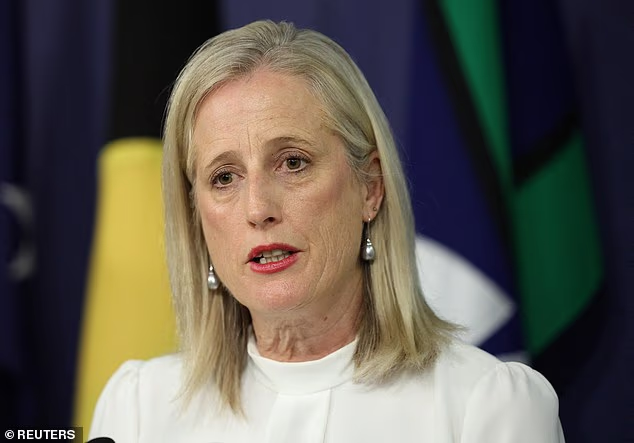
Chalmers also has a Finance Minister, Katy Gallagher (pictured), whose political loyalties lie firmly with Albo
Paul Keating would hardly have meekly accepted being left to carry the economic pain while Bob Hawke claimed all the credit for fixing problems. He understood that a treasurer's authority was something to defend and preserve, not something a prime minister could be trusted to preserve independently.
Chalmers also has a Finance Minister, Katy Gallagher, whose political loyalties lie firmly with Albo. Spending restraint requires her support as well as the PM's. We often forget how important the lower profile finance minister is to budgeting.
If neither Albo nor Katy will help impose spending discipline, blaming the Treasurer becomes a convenient exercise in passing the buck.
A treasurer can propose savings, but delivering substantial restraint requires a PM willing to defend unpopular choices, disappoint constituencies when it's necessary to do so, and tell colleagues that their priorities can't all be funded.
Albo can't reserve the right to limit his Treasurer's options and then leave him carrying the consequences.
Which brings us to that now infamous business dinner. Addressing the Australian Chamber of Commerce and Industry a few weeks ago, Albo explained the government's intervention over the ATO's proposed withdrawal of credit card payments by referring to a text message he received from its chief executive, Andrew McKellar.
'Andrew did text me last Thursday morning, and by Friday morning we had an announcement.'
There was the PM, presenting himself as accessible, responsive and capable of getting things fixed. Undoing the Treasurer's mistakes, seemingly.
The Reserve Bank of Australia will announce its latest cash-rate decision at 2.30pm on Tuesday, with markets widely expecting another quarter-point increase
The next morning, Chalmers was left explaining his place in the story. He said he had discussed the issue with Albo on the Wednesday, before McKellar's text, and that they had already agreed to intervene.
The dinner remarks were a classic Albo humble brag that was strained in its relationship with the truth of what really happened. The PM could have credited his Treasurer, but instead his account invited the impression that business needed to contact the PM directly to get things done. To fix mistakes Jim makes.
Whether calculated or careless, that weakens Chalmers considerably.
Business leaders notice where authority really resides. So do departmental officials, ministers and government backbenchers. A treasurer who must continually demonstrate that he remains relevant to decisions being made has less authority to make the next difficult one when it's needed.
His leadership prospects compound the problem. Push back publicly and an economic disagreement becomes evidence of ambition. Remain disciplined and the impression that he has been diminished goes unanswered.
Chalmers is entitled to be judged on his spending record, for better or worse. He's also entitled to expect his Prime Minister to accept responsibility for their shared decisions.
If mortgage holders face another rate rise this afternoon, as they surely will, the Treasurer should answer for the government's contribution to their predicament. So should the Prime Minister.
Source link