Burgers, curries and fish suppers are among a haul of products sold in Scotland that used different meat and ingredients from those advertised.
Tests carried out by safety watchdogs uncovered a vast array of dishes and drinks that didn't match up to their labels.
Among the infractions were incidents of booze that didn't have enough alcohol, sausages sold with as much as five times more fat than advertised, and takeaways that didn't match up to the menu.
Watchdogs found what should have been lamb curries and kebabs were actually made with beef, pork or chicken, as well as battered haddock that turned out to be whiting.
Most of the incidents did not involve deliberate fraud. However, a batch of bottles of alcohol sold as 'Glen's Vodka' were found to be counterfeit and actually contained 'potentially lethal isopropyl alcohol'.
Three premises were reported to prosecutors in Scotland following the discoveries.
The details – obtained from councils as well as government agency Food Standards Scotland (FSS) – show instances of substitution, adulteration and mislabelling between April 2024 and March 2026.
However, the names of the premises, or even the type of business operated there, were not disclosed.
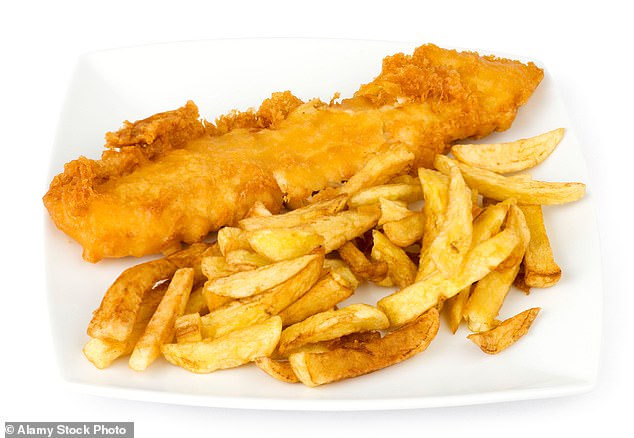
Officers found instances when meals sold as battered haddock had turned out to be whiting
Midlothian Council recorded a case in which a company was said to have 'adulterated' gin that it sold to customers.
South Lanarkshire Council recorded several incidents, including products wrongly advertised as being made with Stornoway black pudding or Scotch beef.
The officers also found gin that turned out to have a lower alcohol percentage than advertised, while some outlets sold booze that was stronger than it should have been.
Fat content was an issue recorded by several councils, including South Ayrshire. Officers there found a steak slice that was advertised as 'reduced fat'.
However, analysis showed that it contained almost 22g of fat per 100g, 'significantly higher' than the 4 per cent declared on its label.
Details provided by FSS showed that several dishes, including curries, burgers, kebabs and mince that should have been made from lamb, were instead composed of beef or pork.
In another instance, a council in the north of Scotland analysed a 'pork burger' that didn't have enough meat 'to be called a burger', with 'cranberries and red onion chutney used to bulk it out'.
In Angus, a product sold as 'fresh haddock' was found to have been made using frozen fish while 'homemade ice cream' was said to have been shop bought.
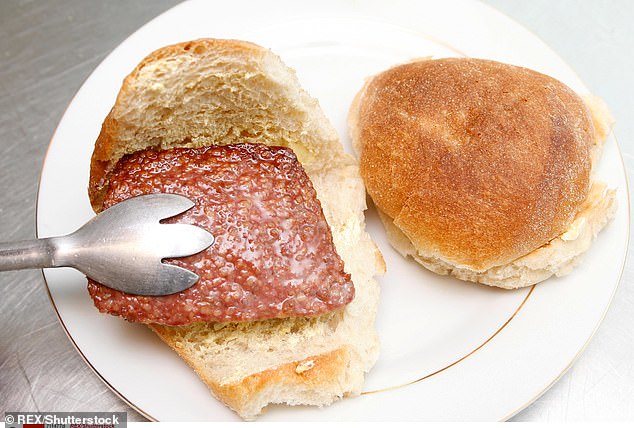
A steak slice that was advertised as 'reduced fat' was found to contain almost 22g of fat per 100g, 'significantly higher' than the 4 per cent declared on its label
Officers also found whisky being sold that had 'lower alcohol by volume than claimed'.
A spokesman for FSS said: 'Consumers have a right to expect that the food they buy is accurately described and labelled.
'The vast majority of food businesses in Scotland comply with food standards and labelling requirements.
'However, instances where products are found not to match their description, ingredients or composition are taken seriously by enforcement authorities.
'The examples highlighted represent a relatively small number of non-compliant products identified through targeted and routine sampling activity.'
Source link