Microsoft's AI tool ignored warnings from hundreds of women who blamed traumatic labour on the pursuit of a normal birth ideology in the NHS, it is claimed.
Mothers who suffered harm when giving birth gave their evidence to a government-commissioned review of maternity care in England led by Baroness Valerie Amos.
The review said it considered more than 10,500 submissions including transcripts of interviews and panel discussions, testimonies, and reports of poor care.
Many of the testimonies contained devastating accounts from mothers denied pain relief, who had caesarean sections refused and had concerns about their babies dismissed because they believed doctors and midwives wanted them to have a natural birth.
But when Lady Amos published her report into maternity care in June it concluded: 'We did not find that normal birth ideology was currently widespread.'
Now it has been revealed that the inquiry team used Microsoft's AI tool Copilot to help analyse the evidence quickly and produce summaries, which advisers then relied upon to produce their final report.
Among the evidence was 40 pages of accounts from women who suffered harm at Oxford University Hospitals Trust (OUHT).
The first page of their report alone contained two mentions of normal birth ideology while other examples included women who were told to 'trust their body' or have a 'normal birth at all costs'.
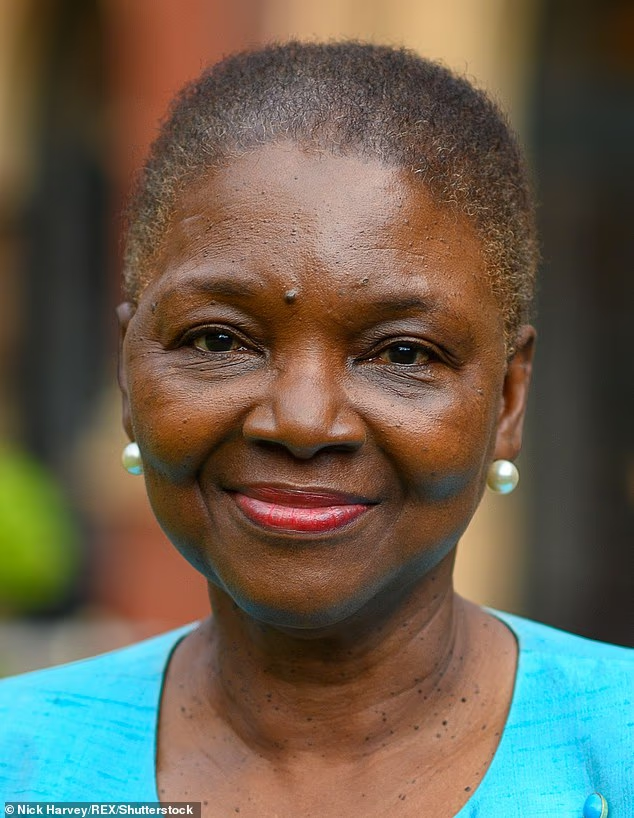
Mothers who suffered harm when giving birth gave their evidence to a government-commissioned review of maternity care in England led by Baroness Valerie Amos (pictured)
But when the inquiry's advisers were provided with the AI summaries these references to normal birth ideology were not included - and as a result it did not form a central part of the review's discussions.
It is not known exactly what prompts the AI was given to review the evidence but NHS England confirmed in response to a Freedom of Information request that the tool was asked to identify themes to reflect what people had said and to produce summaries.
'Normal birth' ideology
For more than a decade the Royal College of Midwives encouraged women to have a vaginal delivery without any medical interventions, such as pharmaceutical pain relief or forceps.
It argued that this was better for women and babies.
The normal birth promotion policy was dropped in 2017 and the RCM has since apologised for it.
NHS England also used to discourage trusts from performing caesarean sections, encouraging them to limit such procedures to around 20 per cent of births, but dropped the use of targets for caesareans in 2022.
Investigators and advisers working for the review were told on multiple occasions about concerns over normal birth ideology and it was raised at four evidence panels.
Dr Bill Kirkup, an obstetrician who chaired inquiries into Morecambe Bay and East Kent maternity units, resigned from the Amos inquiry team in protest at its failure to recognise the role of natural birth ideology in contributing to harm.
He told the Sunday Times: 'Whether [its omission from AI summaries] was deliberate I don't know, but we do know, from families, who have the transcript of their interviews, that it was raised more than once in those conversations.
'Advisers never saw those transcripts or the written evidence submitted by families, the work was entirely based on the output from the AI tool.'
Dr Kirkup claimed there was a 'conspiracy of silence' in the NHS over natural birth ideology.
Even after the use of AI had stripped out mentions of natural births it had been raised in meetings with experts on the review but this too was ignored, he added.

The Amos inquiry team used Microsoft's AI tool Copilot to help analyse the evidence quickly and produce summaries, which advisers then relied upon to produce their final report
Dr Kirkup has written to the Commons health committee raising concerns and in turn it is writing to Lady Amos and Baroness Merron, the maternity minister, demanding they clarify what the committee was told and how the AI was used.
In July, Lady Amos gave evidence to MPs on the Commons health committee and said: 'We were not able to find the evidence of normal birth ideology.'
What the report instead found was 'examples where failure to recognise problems and escalate them appropriately resulted in harm'.
And that for some women 'their individual preferences, concerns or changing clinical circumstances were not always fully recognised.'
Mothers and other experts immediately questioned why criticisms of normal birth ideology had not been recognised.
Rebecca Matthews, who co-founded the Oxford group of mothers that lobbied for OUHT to be included in the review, obtained the admission that AI had been used to summarise submissions to the inquiry.
Ms Matthews, 40, who suffered a traumatic birth at the John Radcliffe hospital in 2016, after initially being denied a caesarean section despite suffering pre-eclampsia, has written to health secretary Yvette Cooper saying: 'This AI system relied on descriptive, thematic analysis which appears to have resulted in normal birth ideology, raised repeatedly by Oxford families in evidence panels, not being reflected in those summaries.
'This means that the harm in Oxford has never been properly analysed.
'Lessons cannot have been captured, and women and babies in Oxfordshire remain at risk.
'Behind the statistics are families with experiences we should not recognise in a modern NHS.'
Former health secretary Jeremy Hunt said it is 'deeply troubling' that the inquiry may have overlooked the dangers of normal birth ideology because AI was not asked to look for it.
He added: 'This is an issue that needs to be acknowledged and addressed, not met with defensiveness and denial.'
Baroness Amos did not respond to a request for comment.
Source link