Northerners are falling behind southerners when it comes to basic maths skills, with millions living in areas where adults struggle most with numbers, a damning new report has revealed.
A stark north-south divide has emerged in the nation's numeracy skills, with almost nine in ten adults in northern England living in areas identified as needing the greatest support.
By comparison, fewer than one in five adults in the South live in areas with similarly poor numeracy levels.
Hull has been named the worst city in England for maths skills, followed by Nottingham, Stoke-on-Trent, Sunderland and Liverpool.
And the findings make uncomfortable reading for Prime Minister Andy Burnham, whose own constituency of Makerfield ranks among the country's poorest-performing areas for numeracy.
The research, published by independent charity National Numeracy, has prompted calls for urgent Government action amid warnings that poor maths skills are costing the UK economy an estimated £25billion every year.
It comes as around half of working-age adults are estimated to have the numeracy skills of an 11-year-old, while more than a quarter of pupils leave school without a maths GCSE.
The charity analysed data from 379 local authority districts across Great Britain to identify the areas where adults are most likely to lack confidence and skills when dealing with numbers.
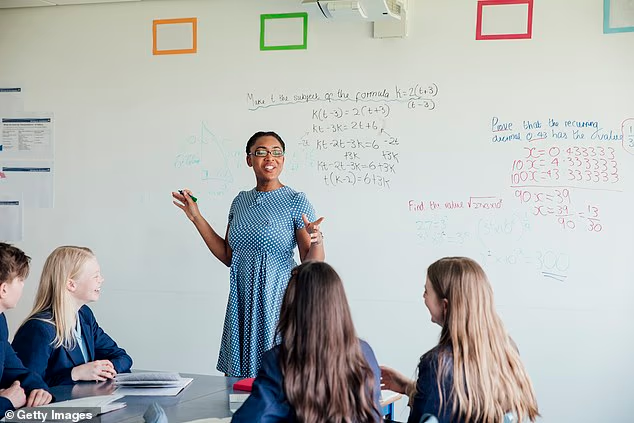
A stark north-south divide has emerged in the nation's numeracy skills, with almost nine in ten adults in northern England living in areas identified as needing the greatest support (stock)
Its findings revealed that more than 10.6million adults in the North – equivalent to 88 per cent – live in areas falling within the category of greatest need for numeracy support.
In the South, the equivalent figure is almost four million, or just 17 per cent.
The divide is particularly pronounced in the North East, where every local authority falls within the half of areas identified as most in need of help.
In the North West, 33 of the region's 39 local authorities are in the same category, covering 84 per cent of its adult population.
Meanwhile, in Yorkshire and the Humber, 15 of 21 local authorities are among the worst-performing half, accounting for 88 per cent of adults.
But the picture is dramatically different in the capital, where Barking and Dagenham is the only London borough to fall into the category, representing just two per cent of the city's adult population.
In the South East, the equivalent figure is 14 per cent.
Hull topped the list of cities with the lowest numeracy skills, scoring 100 on the charity's index, where a higher score indicates a greater likelihood of poor numeracy.
Nottingham and Stoke-on-Trent were joint second with scores of 99, followed by Sunderland on 98 and Liverpool on 97.
Leicester, Wolverhampton, Doncaster, Manchester and Lincoln completed the bottom ten.
The findings also exposed significant problems across the Midlands, where 79 per cent of adults in the East Midlands and 70 per cent in the West Midlands live in areas identified as needing the greatest support.
Other cities featuring among the 20 worst for numeracy include Bradford, Salford, Wakefield, Newcastle upon Tyne, Preston, Sheffield, Birmingham and Derby.
The report also places Mr Burnham's Makerfield constituency at 515th out of 650 parliamentary seats, putting it towards the bottom of the national rankings.
National Numeracy is now urging the Prime Minister to make tackling the divide a priority, arguing that improving people's confidence with everyday maths could boost employment, wages and economic growth.
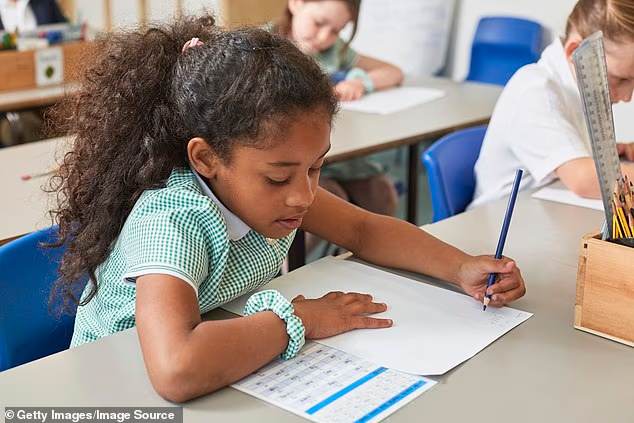
It comes as around half of working-age adults are estimated to have the numeracy skills of an 11-year-old, while more than a quarter of pupils leave school without a maths GCSE (stock)
The charity warned that struggling with numbers can affect everything from understanding a payslip and comparing supermarket prices to managing household bills and applying for jobs.
More than a third of adults experience anxiety about maths and numbers, while poor numeracy can leave people more vulnerable to debt, unemployment and fraud.
Sam Sims, chief executive of National Numeracy, said: 'These figures expose a divide that demands urgent attention. Millions of adults across northern England live in communities where the need for numeracy support is greatest.
'Building people's confidence and skills with numbers can help attract investment, create jobs and boost earnings and productivity.
'Targeting support where the need is greatest could help drive more equitable regional growth and fuel social mobility.'
He added: 'Andy Burnham knows the North and the inequalities its communities face. As Prime Minister, he has an opportunity to put everyday maths at the heart of closing that gap.'
The charity is calling for sustained investment in the worst-affected communities, greater powers for local leaders to direct support where it is needed and closer partnerships between employers, education providers and community groups.
Its appeal comes ahead of Number Confidence Week, which begins tomorrow and runs until November 8, just days after Chancellor John Healey delivered his first Budget.
Mr Sims added: 'Where you live should never determine your opportunity to thrive with numbers.'
Source link