Jim Chalmers has been labelled Labor's poorest-performing senior politician in a new survey of voters.
The latest Newspoll published in The Australian on Sunday showed just 24 per cent of those surveyed were satisfied with the job he is doing as Treasurer, while 40 per cent were dissatisfied, 16 per cent neutral, and 20 per cent had not heard of him.
Not far behind was Climate Change Minister Chris Bowen at 19 per cent satisfied, even lower than Chalmers, but he fared better in dissatisfaction at 32 per cent, which was likely helped by the fact 33 per cent of voters didn't know who he was.
Penny Wong was the most recognisable senior Labor minister among voters and had a 38 per cent satisfied rating.
Defence Minister Richard Marles and Health Minister Mark Butler were the least recognised by voters with 54 per cent of respondents not having heard of either.
Labor has continued to take a battering in the primary vote at just 27 per cent, while One Nation was ahead on 28 per cent, and the Coalition has made up some ground on 21 per cent.
The Greens has 13 per cent and the other parties made up 11 per cent.
Labor's lowest primary vote in a Newspoll on record is 26 per cent back in 2011 when Julia Gillard was prime minister.
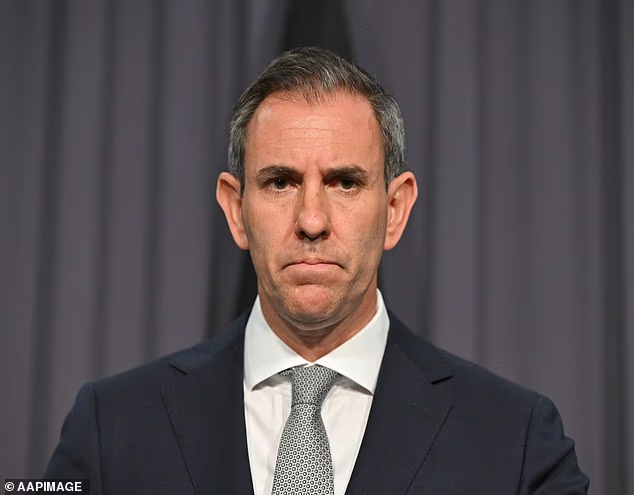
Jim Chalmers had 40 per cent of voters dissatisfied with the job he is doing as Treasurer
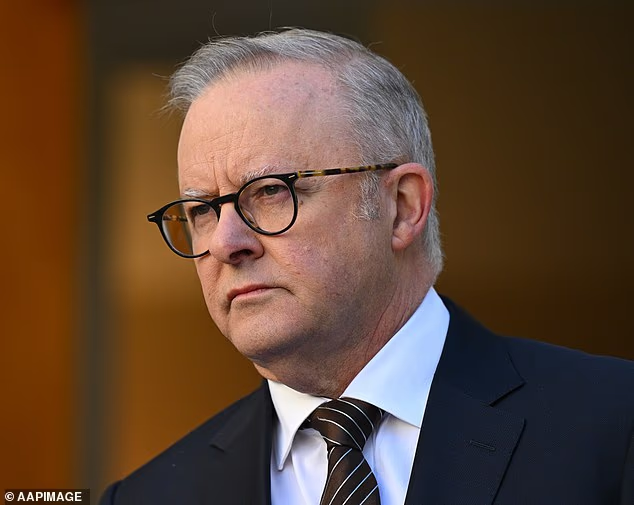
Labor under Anthony Albanese is 1 per cent off its lowest primary vote in a Newspoll on record
The survey polled 1,200 voters between Monday and Thursday last week.
In terms of preferred prime minister, the Newspoll respondents had Anthony Albanese at first with 44 per cent, followed by Pauline Hanson at 30 per cent, and Angus Taylor at 26 per cent.
Dr Chalmers' poor polling is amid the ongoing cost of living crisis and his difficulty in taming inflation, which has led to a series of crippling interest rate rises.
Financial punters are betting there will be another on Melbourne Cup Day.
The Reserve Bank will meet on Monday and Tuesday and hand down its rate decision about an hour before the big race gets underway.
Both the bond markets and most economists have backed a rate hike after hot inflation figures and hawkish commentary from governor Michele Bullock over the last month.
The Middle East oil shock and surging artificial intelligence investment have further exposed Australia's already supply-constrained economy.
The central bank's preferred measure of inflation - the quarterly trimmed mean - came in at one per cent in September, above the bank's forecast of 0.8 per cent.
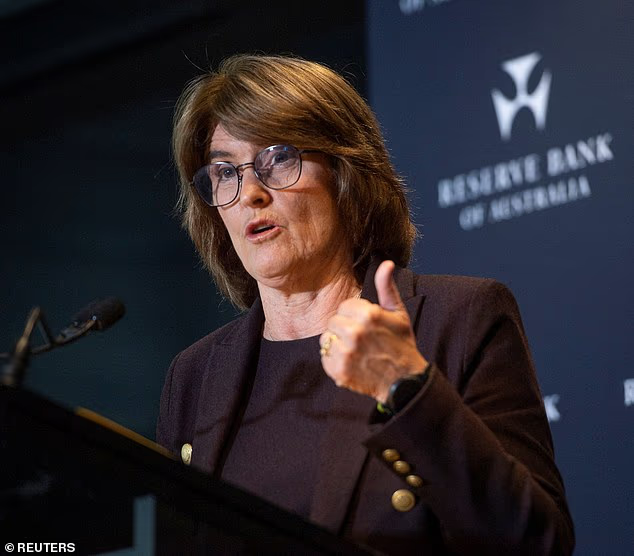
RBA Governor Michele Bullock is expected to raise the interest rate again on Tuesday
That's the 20th consecutive quarter underlying inflation has been above the midpoint of the Reserve Bank's 2-3 per cent target band.
Recent remarks from Reserve Bank officials show the bank is increasingly worried about how persistent inflation has been.
'Although the jobs market is showing clearer signs of weakening, and falling housing prices are starting to feed through to stalling growth, we see the RBA prioritising the high inflation challenge and hiking in November,' HSBC chief economist Paul Bloxham said.
Mr Bloxham estimated a recession was a fifty-fifty chance and predicted the unemployment rate to tick up to 5.1 per cent.
Unlike the post-Covid pandemic years, the Reserve Bank is in no mood to shield households from the worst impacts of its inflation fight.
A fifth rate rise this year would bring the cash rate to 4.85 per cent - the highest level since 2008.
It would also mean a household with a modest $600,000 mortgage would pay an extra $456 on monthly interest repayments compared to January this year, according to financial comparison site Canstar.
The decline in borrowing capacity, stretched affordability and Labor's curbs on property investor tax breaks have hit house prices.
The housing downturn is on track to be the deepest on record and property data firm Cotality will provide another snapshot on Monday.
Home values fell 1.1 per cent in September.
While consumer confidence has plunged, helped by rising rates and falling house prices, household spending has held up relatively well.
The Australian Bureau of Statistics reported spending was up 6.8 per cent in the 12 months to August.
NAB expects another strong monthly rise of 0.8 per cent when September figures are released on Monday.
Join the discussionHow should Australia¿s leaders be tackling the cost of living crisis and rising interest rates right now?
Source link