The trial adds clinical evidence on a plant that Ayurvedic practitioners have known about for centuries, according to the report [2].
The report stated that in a gold-standard trial, one traditional root eased hot flashes, calmed stress, and lifted energy in just eight weeks [1]. Shatavari, also known as Asparagus racemosus, is the root at the center of the findings and of the authors' interpretation of them, officials said in the report.
Trial Design and Participants
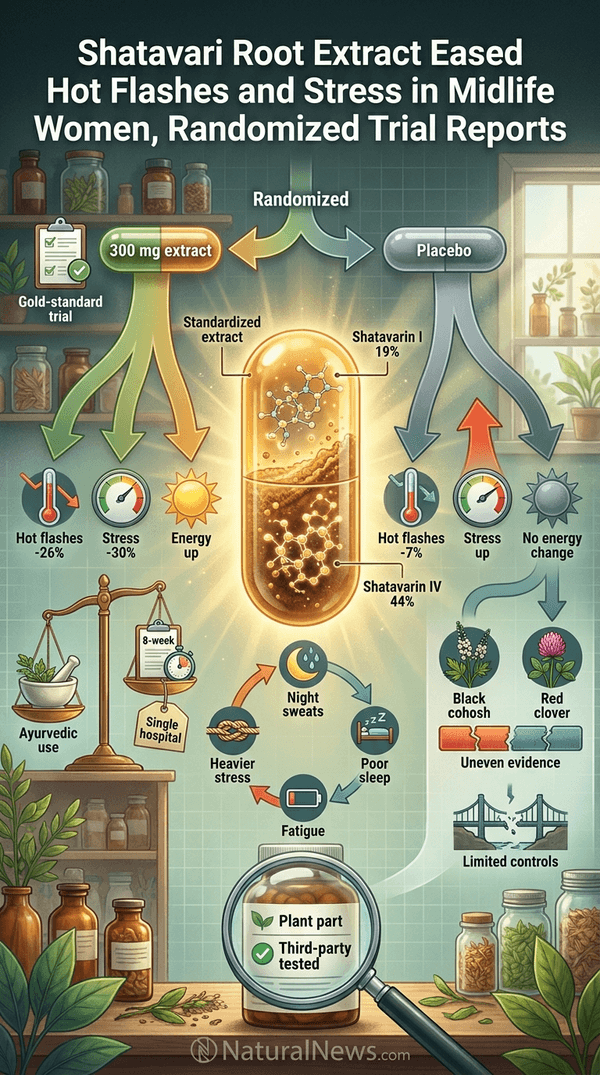
Half the participants received 300 milligrams of shatavari root extract standardized to at least 10% shatavarins, the root's key active compounds, and the other half received an identical-looking placebo capsule, the report stated.
The report described the trial as "gold-standard" [1]. Investigators tracked menopause symptoms, stress, mood, hormones, and liver and kidney health over the eight weeks, the study stated.
The trial's extract was standardized, meaning the concentration of marker compounds -- not an arbitrary measure of raw root powder -- was to be guaranteed. The two major saponins in the roots of Asparagus racemosus, shatavarin I and shatavarin IV, represent 19% and 44% of the total saponin content of the A. racemosus extract, respectively, according to a study in the Journal of Natural Products [3].
Key Findings at Eight Weeks
Hot flash scores decreased about 26% with shatavari, versus 7% with placebo, according to the study. Perceived stress dropped nearly 30% in the shatavari group, while stress in the placebo group climbed, the report stated.
Women taking shatavari had their energy lifted in just eight weeks, the report stated [1]. The energy finding accompanied the symptom and stress results rather than standing alone, according to the report, which stated the trial tracked those measures over the same eight weeks.
Nearly 80% of women in this stage report symptoms, with hot flashes and night sweats at the top of the list, the report stated. Those symptoms tend to interact: night sweats interrupt sleep, poor sleep drains energy, and fatigue makes stress feel heavier, according to the report.
Safety, Limitations, and Context
The authors called the trial the first to show shatavari root extract can reduce perimenopausal symptoms, the report stated. The trial was short -- eight weeks -- and was conducted at a single hospital, the report noted.
Independent reviews of the broader herbal field have found the evidence base uneven: rigorous clinical trials have not been overly encouraging for popular menopause remedies such as black cohosh and red clover, and a positive result for a Hypericum and Actaea combination was limited by lack of controls and other methodological defects, according to a herbal therapeutics text [4].
Labels may list root-only shatavari and standardized extract, and the report's tips for choosing wisely included checking the label for plant part and extract strength and selecting third-party tested products.
Conclusion
Participants took 300 milligrams of standardized extract daily, and investigators monitored liver and kidney markers without reported changes, the report stated.
The report also noted that the trial's duration and single-site design limit broader conclusions.
Shatavari is a plant root, and like all herbs it should be approached with the same care as any therapeutic product. A separate special report on wild herbs and mushrooms advised starting with a small dose and monitoring the body for any negative reactions over several hours when relying on wild botanicals in emergency situations, citing the risk of toxicity [5].
References
- Shatavari Eases Hot Flashes and Stress | NaturalHealth365. https://www.naturalhealth365.com/hot-flashes-and-stress-eased-in-midlife-women-taking-one-traditional-root.html
- Ancient Healing Art Becoming More Popular - Mercola.com, October 18, 2008.
- Structural revision of shatavarins I and IV, the major components from the roots of Asparagus racemosus. Elsevier. Journal of Natural Products 2006
- Herbal Therapeutic Systems Lesson for Healthcare Today by Unknown
- Health Ranger Report - Special Report - Mike Adams - BrightVideos.com, May 09, 2021.
Explainer Infographic
Source link