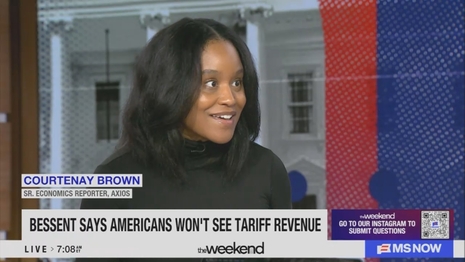
49 of 96 Trump Headlines on Apple News Were Negative, 0 Positive
Luis Cornelio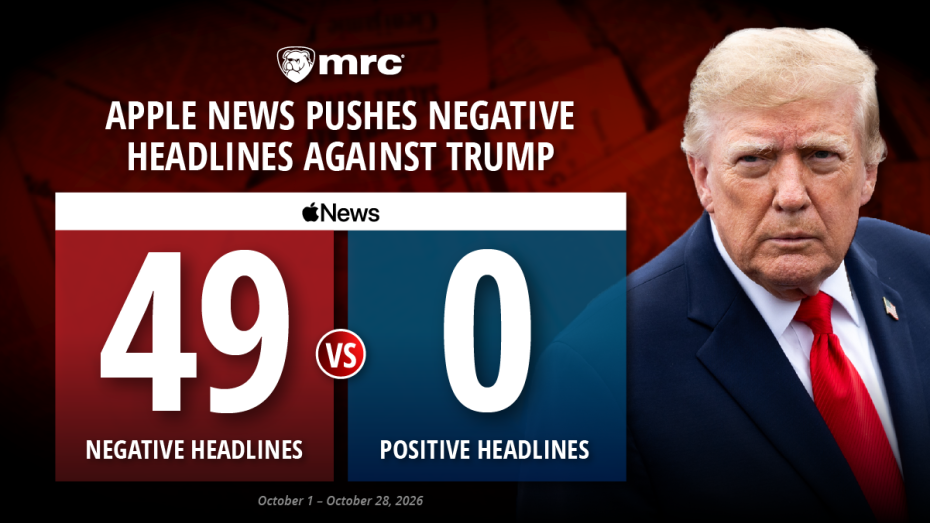
Fresh off an analysis showing that Apple News repeatedly promoted negative headlines about Republican-aligned issues, a new MRC analysis found that the negative framing extended to headlines that directly mention President Donald Trump. From Oct. 1 through Oct. 28, MRC reviewed Apple News's top 20 stories and found 96 stories in total with Trump's name in headlines: 49 headlines framed Trump negatively, and none framed him positively.
Of 96 Apple News headlines mentioning Trump, 49 (51%) were negative, 47 (49%) were neutral, and zero were positive. Every headline MRC researchers identified as politically slanted went in the same direction. The MRC found that Apple News has promoted a headline that tied Trump to anti-Semitism or subordinate to Russia. Other headlines promoted his administration's legal setbacks, alleged failures to control prices and the outrage its policies have generated, all products of Apple News's leftist tilt. In contrast, Apple News overlooked numerous available headlines that presented Trump, his administration and their policies in a positive light.
MRC President David Bozell said in response to these findings, "Ninety-six Trump headlines. Forty-nine negative. Zero positive. Apple's editors choose the top stories by hand, and the scoreboard shows what they chose. Somebody at Apple owns the zero."
MRC's Key Findings:
- Of 96 headlines that included the word "Trump" across Apple News during the review period, 49 had discernible political bias, all of which were negative toward Trump; 47 were neutral; zero were positive.
- Overall, the 49 negative headlines portrayed Trump as having used an antisemitic slur, facing judicial setbacks and Republican opposition, making concessions to Russia and leading negative economic policies.
- Tellingly, Apple News had ample opportunities to promote headlines that provided an alternative, positive perspective of Trump across a full spectrum of outlets. Apple News editors did not include any stories with positive headlines.
Apple News's "Trump" Headlines — A Negative Slant on Foreign Policy, Economy and Other Issues
MRC reviewed the top 20 stories that Apple News promoted each morning from Oct. 1 through Oct. 28, for four weeks before the midterms, to identify all headlines that included the president's name: "Trump." MRC found 96 headlines in total. A sentiment assessment of the 96 headlines amounted to 49 negative, 47 neutral and zero positive.
Among the headlines promoted by Apple News was one that characterized Trump as antisemitic: "Trump uses antisemitic slur in defending Sen. Roger Marshall at rally in Kansas."
Of the negative headlines, a sizable portion targeted Trump's foreign policy, particularly on Russia-Ukraine. His attempts to end the war were framed as deferential to Russia, with some headlines highlighting congressional opposition to potential peace deals. Examples include:
- "Six senators call for Trump administration to 'immediately reverse course' on Russian diesel plan," by The Associated Press, promoted Oct. 12.
- "Trump's waiver of sanctions on Russia stirs bipartisan outrage," by The Washington Post, promoted Oct. 18.
One headline, from ABC 7 Los Angeles and promoted Oct. 6, repeated the false claim that Trump suggested allowing Iran to "take out" Los Angeles and San Diego.
Amid the dispute between Trump and Ukrainian President Volodymyr Zelenskyy, Apple News promoted headlines that emphasized Zelenskyy's defiance and Ukraine's position in the dispute.
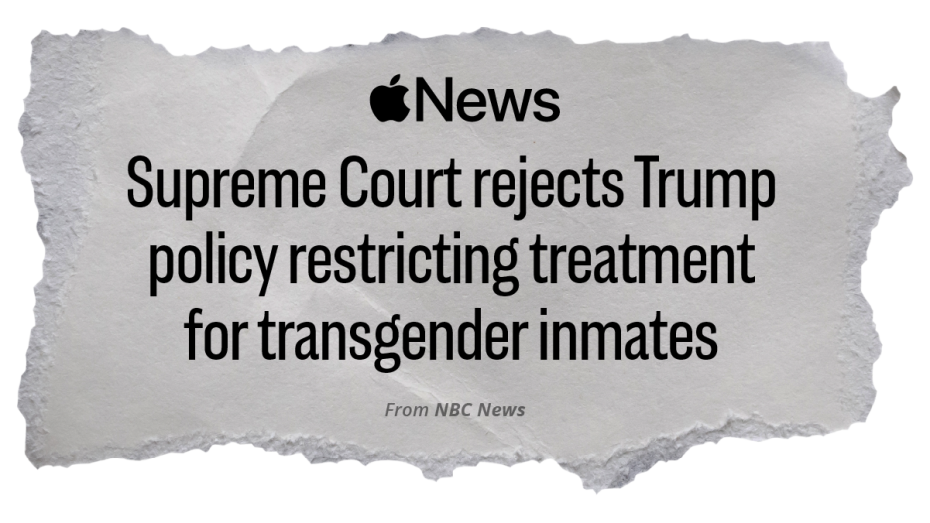
Another portion of the headlines overwhelmingly focused on legal setbacks and judicial opposition, with some using phrases such as "Judge orders," "Supreme Court rejects," "'Furious' judge extends order," "judge rejects" and "judge blocks."
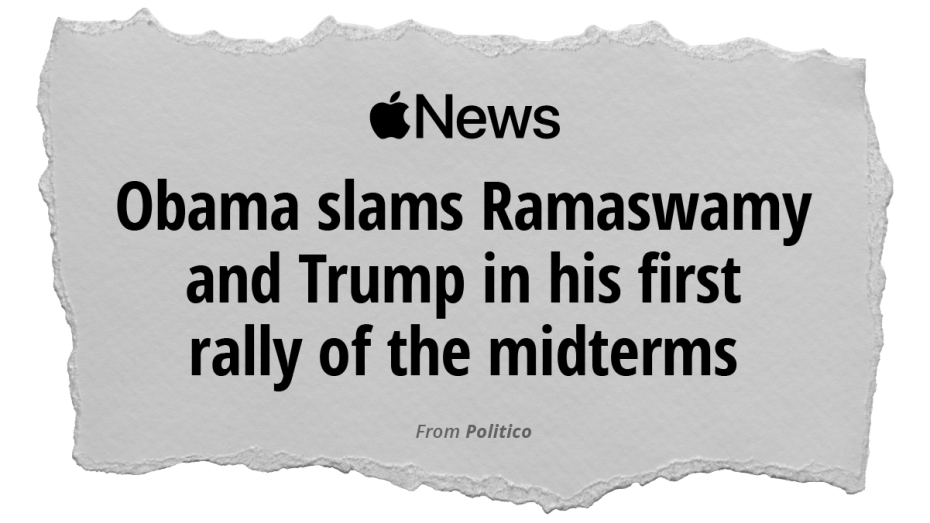
Other headlines spotlighted Republican divisions and political opposition to Trump, including Apple News's own headline "Trump's surprise deal with Putin sparks Republican outrage" by Apple News and promoted Oct. 12, and "Obama slams Ramaswamy and Trump in his first rally of the midterms" by Politico and promoted Oct. 25.
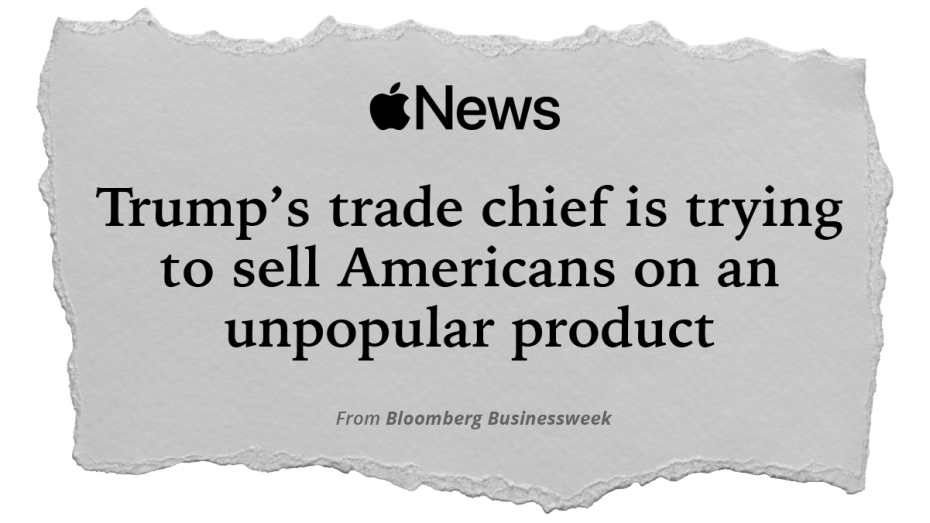
Other headlines portrayed Trump's economic messaging as disingenuous and some of his policies as unpopular, with headlines reading: "A 'golden age' vs. 'we're working on it': Trump and Vance give different pitches on the economy," "Trump's Trade Chief Is Trying to Sell Americans on an Unpopular Product," "Trump plans to loosen methane rules for low-producing, high-emitting oil wells."
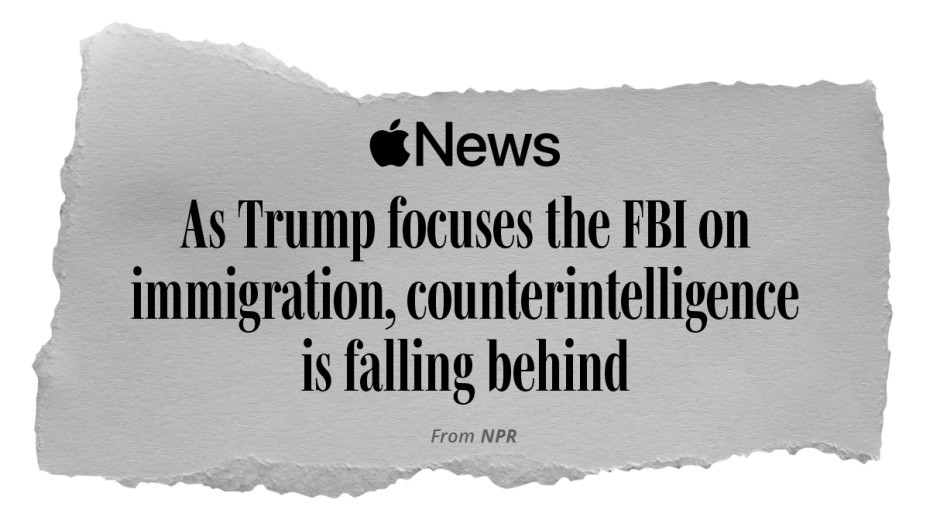
Trump's policies were also framed as controversial. One headline attributed researchers' departures from the United States to "Trump's funding cuts and politicization" of science. Another claimed that as Trump focused the FBI on immigration, counterintelligence was "falling behind." Yet another declared, "White House Turmoil Erupts as Trump Axes Zacharia, Backs Wiles."
For many negative headlines, MRC identified alternative headlines from outlets whose content is also available on Apple News, but which the app did not promote. These headlines offered more favorable perspectives on Trump's record, from the economy and crime to foreign policy and judicial rulings, and could have provided some much-needed balance to the app.
Some alternative headlines on the economy that Apple News could have highlighted:
- "Blaming Trump for your debt? What the Federal Reserve data really expose," by the Washington Examiner, published Oct. 15.
On foreign policy:
- "Russia releases American teacher imprisoned on Ukraine mercenary charges after Trump pressed Putin," by Fox News, published Oct. 21.
- "Trump celebrates US prisoner Stephen Hubbard's release from Russia — as Witkoff shares first freedom pics," by the New York Post, published Oct. 21.
On crime:
- "Crime's way down thanks to Trump — Dems will fight to send it back up," by the New York Post, published Oct. 27.
- "DOJ survey shows 'historic' 25% decrease in violent crime between 2024 and 2025," by the Washington Examiner, published Oct. 26.
On judicial rulings:
- "Supreme Court Hands Trump Admin 7-2 Win in Political Ad Dispute," by Newsweek, published Oct. 15.
- "Appeals court sides with Trump on indefinite illegal immigrant detention policy," by the Washington Examiner, published Oct. 23.
Apple News's negative headlines about Trump are consistent with a broader pattern of coverage that overwhelmingly favored the political left, particularly ahead of November's high-stakes midterm elections.
Apple's bias in the story headlines it selects to highlight has landed the tech giant in hot water with the Federal Trade Commission. On Feb. 11, FTC Chairman Andrew Ferguson issued a formal warning to Apple CEO Tim Cook, pointing out that the company must be careful not to deceive its users and iPhone owners regarding the news it promotes.
Today I sent a letter to Tim Cook expressing my concerns about allegations that Apple News has, unbeknownst to its users, systematically promoted news articles from left-wing news outlets and suppressed content from conservative publications. pic.twitter.com/xXCxNgRbpc
— Andrew Ferguson (@AFergusonFTC) February 11, 2026
Ferguson urged Cook to "conduct a comprehensive review of Apple's terms of service and ensure that Apple News' curation of articles is consistent with those terms and representations made to consumers and, if it is not, to take corrective action swiftly."
Unlike competitors Google News and Microsoft's MSN, which rely more heavily on algorithms, Apple News manually curates its top stories, effectively giving human editors considerable influence over which stories and outlets receive prominence and which ones get buried.
MRC Free Speech America interns Madison Van Zant and Preston Hoffman contributed crucial research for this report.
Methodology: MRC reviewed the top 20 stories promoted by Apple News each morning at approximately 8:30 a.m. from Oct. 1 through Oct. 28. MRC researchers reviewed and identified the headlines of stories with the president's name "Trump" in them. Headlines about other Trump personalities (e.g., First Lady Melania Trump) were excluded. MRC then analyzed the headlines, examining how the issues were framed, whether crucial context was excluded, which perspectives were emphasized or excluded, which sources and viewpoints were given prominence through quotes and whether potentially inflammatory language was used.
Source link