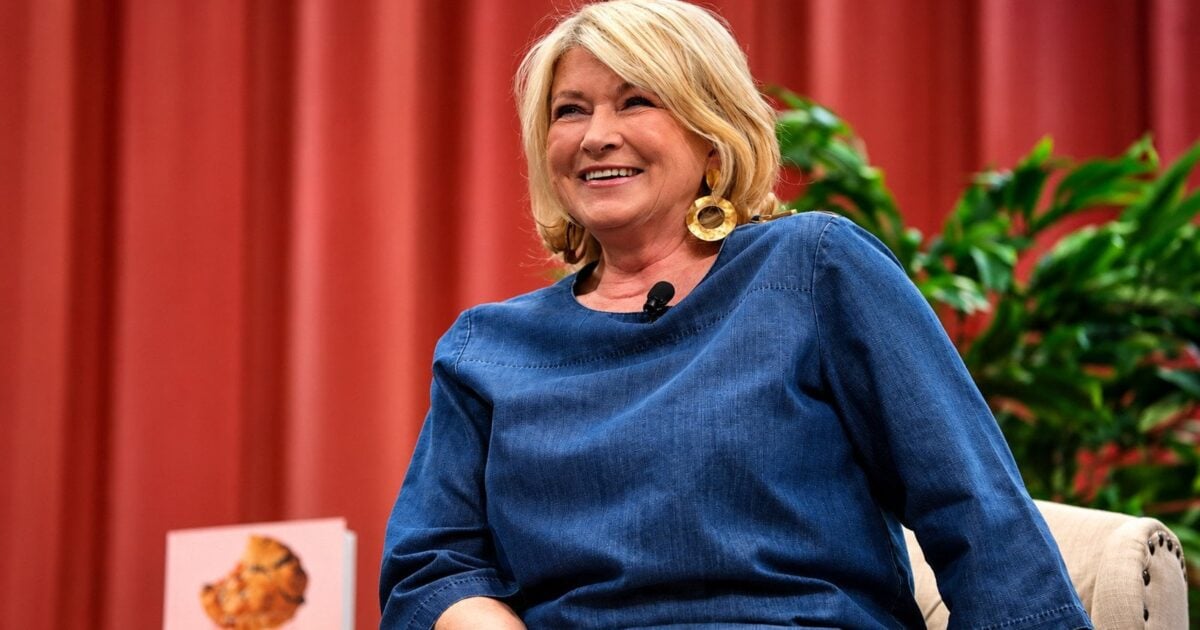
Martha Stewart built an empire by teaching America how to make nearly everything look tasteful.
Her Halloween costume did not make the cut.
Stewart deleted a social-media post that appeared to show her dressed as a homeless person after the image triggered a wave of criticism online.
The costume included layered clothing, a knit cap and a cardboard sign asking for food and help.
That was enough to turn a Halloween post into a very public lesson about the distance between clever intentions and how a message actually lands.
Here is the post that first sent the story racing across social media:
Martha Stewart shared photo seemingly dressed up as a homeless person for Halloween.
— Pop Base (@PopBase) November 1, 2026
She has since deleted the post. pic.twitter.com/PzTX1BoDhK
Mediaite reported that Stewart removed the post after critics accused her of treating homelessness like a costume. The outlet also highlighted the explanation she offered after the backlash: she said the idea was intended to draw attention to homelessness, not mock people living through it.
The report placed the deletion and explanation in the same fast-moving timeline. Screenshots of the costume were already circulating by the time the original disappeared, so removing it stopped Stewart from amplifying it on her own account but could not erase the public debate.
Her statement then shifted the story from what she wore to whether an awareness campaign can succeed when the presentation itself becomes the controversy.
That explanation changes the intent. It does not erase the reaction.
Homelessness is not an abstract theme for millions of Americans. It means sleeping in cars, cycling through shelters, losing medicine and identification, trying to keep a job without a stable address, and wondering whether the next night will be safe.
When an enormously wealthy celebrity borrows that hardship for Halloween—even to make a point—the symbolism can overwhelm the message.
Stewart said she was distressed that the costume offended people and stressed that causing offense was never her intention.
Her response was quickly shared online:
Martha Stewart addresses her homeless person Halloween costume in statement to Page Six:
— Pop Base (@PopBase) November 1, 2026
“I am distressed that my Halloween costume yesterday, which was intended to bring more awareness to the very serious subject of homelessness, has offended people, which was never my… pic.twitter.com/ljjmLGzaPs
TheWrap reported that Stewart described homelessness as a serious issue, said she had supported efforts in that area, and pledged to continue trying to make a difference. The report also noted that she deleted the original image rather than leave it circulating on her own account.
The outlet's account adds important context to the apology: Stewart did not claim that critics misunderstood the photograph and leave it at that. She acknowledged that people were offended, said that result was never intended and connected her explanation to future work.
That gives the public something concrete to judge beyond a carefully worded statement—whether the attention generated by the episode is followed by visible help for people without stable housing.
That was the sensible move.
There is no reason to pretend a bad idea becomes a good one because the person behind it meant well.
There is also no reason to pretend this one costume defines Stewart's entire life or charitable record.
Both things can be true at once: the image was tone-deaf, and her explanation may have been sincere.
The internet often has trouble holding those two thoughts together.
One side wants a celebrity permanently condemned. The other wants the criticism dismissed because there was no malicious intent.
But intent and impact are not interchangeable.
A person can try to raise awareness and still choose a clumsy, demeaning way to do it.
This post captured the deleted image as the controversy accelerated:
Martha Stewart’s Halloween costume.
— Yashar Ali 🐘 (@yashar) November 1, 2026
She has since deleted the post. pic.twitter.com/cGDfAh8mVb
The Daily Beast likewise reported that the original post disappeared amid mounting criticism and that Stewart's follow-up emphasized awareness and charitable commitment. Across the coverage, the basic sequence is consistent: costume, backlash, deletion, explanation.
The criticism focused on the contrast at the heart of the image. Stewart is one of America's best-known lifestyle entrepreneurs, while the handwritten sign and layered clothes invoked people facing a night in a car, shelter or on the street.
Viewers saw a wealthy celebrity borrowing the symbols of that hardship. Instead of directing attention to a program, shelter or policy, the photograph made Stewart's choice the entire story.
That is why the backlash spread so quickly across platforms before Stewart had a chance to explain what she says she was trying to accomplish.
That sequence is more revealing than another round of celebrity outrage.
Stewart's brand is built on presentation. She understands better than most that presentation changes how people receive a message.
If the goal is to focus attention on homelessness, there are better ways to do it.
Show the work of a shelter keeping families together. Highlight veterans trying to get permanent housing.
Promote organizations helping people replace documents, find jobs or move into apartments.
Use a giant platform to introduce the public to people doing the hard work every day.
Those choices center the issue. A costume centers the celebrity.
Stewart appears to understand that distinction now, which is why the post came down and the explanation went up.
The best next move is not a longer apology tour.
It is action that makes the original claim about awareness believable.
Turn the attention into money, volunteer support and practical help.
Then let the work speak louder than the costume ever could.
This is a Guest Post from our friends over at 100 Percent Fed Up. View the original article here.
Source link