President Trump's Justice Department is putting real money behind its promise to restore law and order.
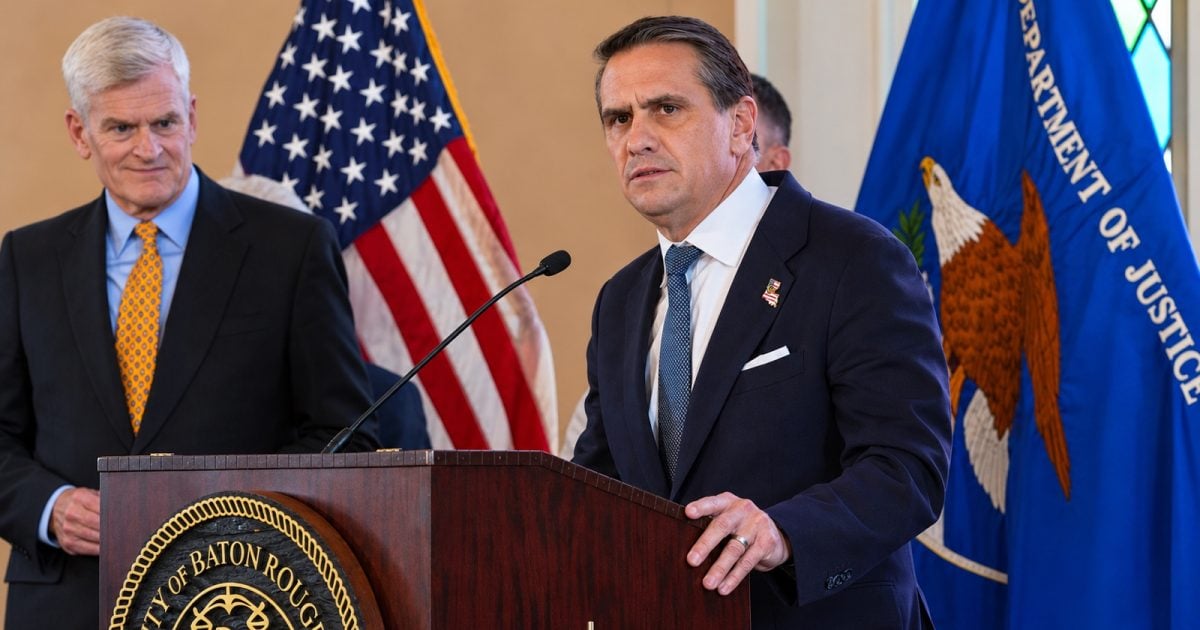
East Baton Rouge Parish has been awarded exactly $63,532,285 through DOJ's Model Cities Initiative — one of the biggest public-safety investments in the city's history.
The three-year award has a defined mission: expand police capacity, strengthen investigations and prosecutions, modernize crime data and intelligence, and put more resources behind the people confronting violent offenders on the street.
The Justice Department announced the final award Thursday:
Yesterday, the Justice Department awarded East Baton Rouge Parish more than .5 million through its Model Cities Initiative, a flagship effort to reduce violent crime, restore law and order, and strengthen public safety in communities across the country. East Baton Rouge Parish… pic.twitter.com/mj6EYeZ1E6
— U.S. Department of Justice (@TheJusticeDept) November 5, 2026
The Justice Department says East Baton Rouge beat out nearly 50 American cities because of its interagency partnerships and comprehensive plan to bring law enforcement, local government and community organizations into one coordinated strategy.
The need is not theoretical.
According to DOJ, Baton Rouge's homicide rate has averaged roughly three times that of large American cities over the past two decades. From 2021 through 2025, police responded to more than 1,300 nonfatal shootings, more than 12,000 shots-fired calls and more than 1,200 armed robberies.
The program was launched in June to build on violent-crime reductions DOJ says it has already seen through coordinated federal-local operations in places such as Memphis and Washington, D.C. East Baton Rouge is one of four jurisdictions chosen for this round, and DOJ says each winner must now work with the department to finalize a measurable local implementation plan.
Attorney General Todd Blanche said aggravated assaults jumped a staggering 320% over that same period — and made clear the administration is finished tolerating it:
It was an honor to be in Baton Rouge today to announce @TheJusticeDept’s investment of nearly million into the city through the Model Cities Initiative to enhance public safety and reduce violent crime.
— Attorney General Todd Blanche (@AGToddBlanche) November 4, 2026
From 2021 through 2025, police in the city of Baton Rouge responded to… pic.twitter.com/RHnpnkJDHl
The scale of the award matters, but so does the structure.
DOJ describes Model Cities as a "whole-of-city" approach. Instead of dropping federal dollars into one isolated department, the program is designed to connect police, prosecutors, local officials and community partners around a single public-safety plan.
That means more investigative and prosecution capacity, better crime analytics, stronger frontline readiness and a coordinated push to prevent violence before another family gets the call no family should ever receive.
The City of Baton Rouge says the grant will run for three years and represents one of the most significant public-safety investments in parish history. Mayor-President Sid Edwards said the city was chosen because it had already demonstrated results and presented a plan for more.
Edwards described the federal award as fuel for a strategy that combines enforcement, prevention and long-term capacity rather than a temporary surge.
City officials say the goal is to turn those three funded years into a 30-year return for residents. Baton Rouge will be judged on whether it can identify violent offenders faster, prosecute cases more effectively and keep neighborhoods safer after the grant period ends.
There is also an accountability test here.
WAFB reported that East Baton Rouge originally sought roughly $125 million. With the final award coming in at $63.5 million, local officials still have to decide which proposed enforcement tools, technology upgrades, community services and juvenile-diversion efforts make the final plan.
That is an important distinction: the award is real, but the results still have to be earned and measured.
The local report also says the application contemplated additional officers, specialized prosecution units, upgraded surveillance and data tools, and programs aimed at interrupting violence before it escalates. The reduced award means officials will have to prioritize those ideas instead of treating every proposal as automatically funded.
DOJ says it will work with the parish to finalize and implement that plan. Blanche's message was that Washington will remain a partner — but Baton Rouge now has the responsibility to turn a major federal investment into safer neighborhoods.
.@AGToddBlanche: "Even though our work here in Baton Rouge through the Model Cities Initiative is just beginning, I have every confidence that together we will make this community safer, stronger, and more prosperous for generations of Louisianans to come." https://t.co/4yElawiwT1 pic.twitter.com/D9NV52AeoL
— U.S. Department of Justice (@TheJusticeDept) November 4, 2026
The contrast with New Orleans is hard to ignore.
WAFB reported that Governor Jeff Landry said New Orleans chose not to pursue the grant after objecting to conditions that included cooperation with federal immigration authorities. Baton Rouge applied, built a coalition and won one of only four Model Cities selections nationwide.
Now comes the part that matters most: taking violent offenders off the streets, backing the men and women who enforce the law, and proving that a focused partnership can save lives.
If East Baton Rouge delivers, President Trump's DOJ will have done far more than fund another program.
It will have built a model other American cities can follow.
Source link