ANGER is growing in a community where the local hotel and social heartbeat of the area continues to be used for emergency accommodation.
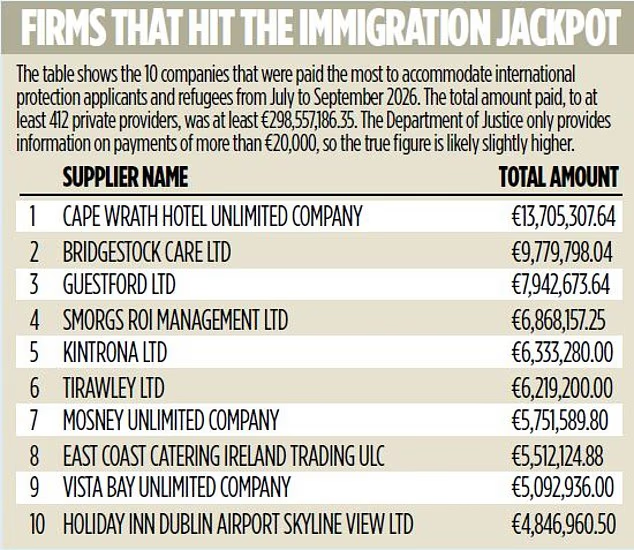
Figures released by the Department of Justice this week show many former hotels – in some cases the only one in an area – are still receiving vast sums to run accommodation centres for refugees and international protection applicants (IPAs).
And local authorities, who are responsible for sourcing accommodation for homeless people, are continuing to enter new contracts with functioning hotels – even when it strips an area of a valuable public amenity.
A recent example is Leixlip Manor Hotel in Co. Kildare, which closed its doors to the public several weeks ago after an agreement was reached with Kildare County Council and Dublin City Council to use it as accommodation for homeless families.
ANGER is growing in a community where the local hotel and social heartbeat of the area continues to be used for emergency accommodation
It becomes the fourth hospitality business in the town to be converted into homeless accommodation, which Kildare North TD Joe Neville branded a 'disgrace'.
Four towns that lost their only hotel to IPAS providers
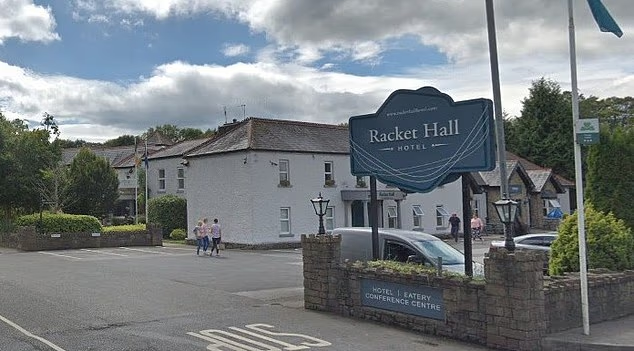
Racket Hall Hotel
Roscrea, Co. Tipperary
Company: Swiftcastle Roscrea Limited
Amount paid Q3 2026: €633,600
The hotel closed suddenly to local business in January 2024, after an agreement to accommodate around 160 international protection applicants. It was the only hotel in Roscrea and had been a popular venue for weddings and other social events.
Merriman Hotel
Kinvara, Co. Galway
Company: MLC Hotel Limited
Amount paid Q3 2026: €918,687
The Merriman accommodated Ukrainian refugees from 2022, then international protection applicants. A number of local residents took legal action against the Government last year, claiming that its use as an accommodation centre had resulted in losses of up to €13.3million to the local area. They also claimed that its use had led to the closure of local restaurants as well as reduced opening hours at local pubs.
Dún a Rí House Hotel
Kingscourt, Co. Cavan
Company: Brimwood Unlimited Company
Amount paid Q3 2026: €357,773
The family-run hotel, the only one in the town centre, closed to the public in 2019 when it was bought by Gaelic football manager Séamus 'Banty' McEnaney's company Brimwood, which has operated several emergency accommodation centres, so the above payment may not only relate to the Kingscourt site. Northern Sound reported last year that it could remain closed to ordinary guests until at least 2028, following a planning-related determination concerning its use.
Dundrum House Hotel
Dundrum, Co. Tipperary
Company: Utmasta Limited
Amount paid Q3 2026: €2,534,550
The former hotel began accommodating Ukrainian refugees in 2022, then international protection applicants from 2024. The wider site, including a golf course, gym, pool, restaurant, bar and on-site guest accommodation, operated until 2025, when 48 people lost their jobs. Ordered to close by early next year by An Coimisiún Pleanála over a series of planning violations.
Mr Neville said 'no one batted an eyelid' when the Leixlip House Hotel was turned into homeless accommodation a decade ago.
But since then Beckett's Hotel and a former Chinese restaurant have also been made into homeless accommodation, for use by Dublin councils.
'It's insane that four of them are in such a small area, and I think it's completely wrong,' the Fine Gael TD told the Irish Mail on Sunday.
Local Social Democrats councillor Nuala Killeen said concerns had been raised locally 'because of the dearth of social infrastructure and businesses in Leixlip village at the moment'.
She said weddings had been cancelled because of the closure of Leixlip Manor Hotel to the public.
The councillor said the public is 'happy for some of their tax to go to supporting vulnerable people', but it should not be at the expense of community amenities and should be cost-effective.
She told the MoS: 'What you have is a profiteering market, so [providers] are profiting on the vulnerability of others and getting paid almost hotel rates. But when you think about eight people in one room, it's not a dignified way to treat people either.'
Kildare County Council confirmed Dublin City Council will contract 35 rooms at the hotel, ten of which will be allocated to local families.
The MoS asked if the Department of Housing – which provides policy framework, legislation and funding to local authorities regarding homeless accommodation – have any policy relating to potential effects on a community when a new centre is contracted.
A spokesman said in response: 'The Department recognises concerns regarding the concentration of emergency accommodation in certain areas and is working with local authorities to address these challenges where possible.
'However, local authorities continue to face significant challenges in sourcing suitable accommodation in suitable locations, close to public amenities and support networks.'
Many hotels continue to be used to house refugees and IPAs, despite repeated commitments from Justice Minister Jim O'Callaghan to stop relying on private providers.
Sinn Féin migration spokesman Matt Carthy said: 'The Government aren't moving quickly enough to ensure that hotels are being returned to their original and stated purpose, and the purpose for which they have planning permission, which is to provide tourist accommodation and a local amenity.'
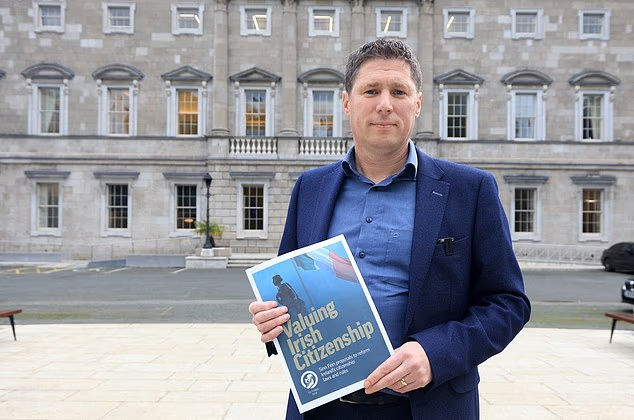
Many hotels continue to be used to house refugees and IPAs, despite repeated commitments from Justice Minister Jim O'Callaghan to stop relying on private providers
The Cavan/Monaghan TD added that tourism has been affected, while communities around the country have been 'deprived of the facility that would have been a focal point for every big event – from the local GAA club winning the county championship to local weddings, christenings, funerals'.
He told the MoS: 'Rather than providing support to those rural hotels, which we know are an important amenity, Government has provided a vehicle whereby the easiest way to make money is to stop being a hotel and engage in an IPAS contract.
'So Government need to accelerate the process of withdrawing from using hotels for and in tandem with that they need to make sure there's a set of policies that ensure rural hotels generally are viable.'
Among the hotels still being paid today are two in Co. Tipperary: the Racket Hall Hotel in Roscrea and Dundrum House Hotel.
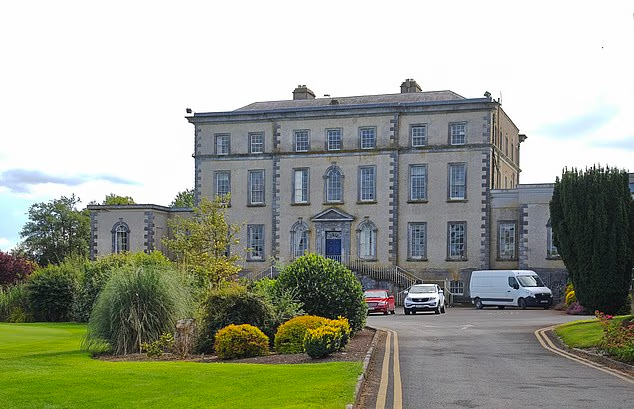
Among the hotels still being paid today are two in Co. Tipperary: the Racket Hall Hotel in Roscrea and Dundrum House Hotel
Tipperary South TD Mattie McGrath said of Roscrea locals: 'If they want to have a funeral dinner now or confirmation or communion or anything, they have to go to a different county.'
The MoS recently reported on the case of Dundrum, which has been ordered to close early next year over planning violations.
Mr McGrath said: 'Its stupidity making these greedy developers rich, who had no interest in humanitarian [causes]. They saw cash registers and money, money, money. They ruined the hotel.'
Clare TD Joe Cooney said the 'return of hotels and other buildings to the traditional role across the county is welcome news for tourism, which is the lifeblood of many of our towns and villages'.
Tipperary South TD Mattie McGrath said of Roscrea locals: 'If they want to have a funeral dinner now or confirmation or communion or anything, they have to go to a different county'
He added: 'We must remember that, behind the changes, are people who have been uprooted from their lives, fled war and hardship, and have built connections here over the last number of years.
'Many of these people have become integral to our communities. They work in our local businesses. Their children have added to the numbers in our schools and play on local teams, and they've contributed in many other ways.'
'Pull factor' risk in asylum return paymentsBy Ken Foxe
Justice Minister Jim O'Callaghan told his department to be cautious advertising enhanced payments to asylum seekers who agree to leave Ireland in case it became a 'pull factor' for others to come here.
Payments under the voluntary return scheme were increased to up to €2,500 for individuals and up to €10,000 for families to encourage people to return home of their own accord.
However, Mr O'Callaghan said officials needed to make clear that the enhanced payments would only apply to people already in the asylum system.
He wrote: 'It is also important that any such advertisement does not act as a pull factor that would attract people here to make IP [international protection] claims in the hope of receiving such an offer.'
Mr O'Callaghan sought details of where and when the increased incentives would be advertised, according to internal department documents.
The Department of Justice initially refused to release the records, which were disclosed following an appeal to the Information Commissioner under Freedom of Information laws.
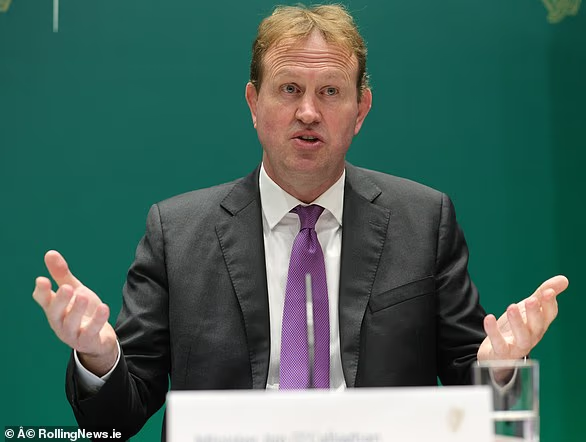
Mr O'Callaghan sought details of where and when the increased incentives would be advertised, according to internal department documents
An internal submission said the new enhanced payments should be used to encourage people to leave the asylum process as early as possible.
In it, officials acknowledged there would be concerns over whether increased payments might instead make Ireland more attractive for asylum applicants.
The document said: 'It may also be necessary to ameliorate concerns that the increase levels of assistance could have the unintended consequence of encouraging unfounded IP claims.
'It should be said, however, that we are unaware of any evidence to support such concerns.'
In discussions, the Department suggested a sliding scale of payments for asylum applicants to leave Ireland.
Higher grants would be available for those who left earlier in the process and lower amounts for those who were closer to their final decision.
In an extensive commentary, Mr O'Callaghan said he agreed that variable rates would be effective.
He wrote: 'I think this increase in financial incentives to encourage VR [voluntary return] is justified when one considers that the cost to the State of accommodating one person for 12 months in IPAS accommodation is currently estimated at c€30,678.
'In fact, the cost to the State is generally circa c€73,155 for the 124 weeks that an applicant's claim is being considered.'
The Minister noted these figures did not account for the provision of healthcare, education, social protection, or other costs involved in the removal process.
The submission said voluntary return was a dignified way for a person to return home without being deported.
It also left open the possibility the person could return legally to Ireland in the future. The submission added: 'The in-kind reintegration grant can help to dilute feelings of shame or failure that can sometimes be felt by a returnee.
'In addition, if successful, the reintegration grant can contribute to income generating activities and thus make the return more sustainable.'
The submission said this would encourage the person to stay at home rather than try to return to Ireland – or another country – 'illegally'.
It also said VR saved money for the taxpayer with a recent enforced deportation of a family-of-three having cost €27,000 in flight costs alone.
It added: 'Enforced removals can be highly litigious. An advantage of VR is that applicants do not submit judicial reviews or subsequent IP applications.'
The submission detailed how other countries in Europe offered deals for asylum seekers to leave.
However, it said 'initial research' suggested Sweden was considering rates of up to €32,000 per person while Denmark, Finland and Switzerland offered a mix of cash and other assistance.
It added: 'Careful calibration and targeting of the rollout of the new supports is a key challenge. Incentivising individuals to take the VR option as early as possible requires a diminishing level of support the longer the stay in the system.'
Source link