Security must be strengthened to guard Scotland's North Sea energy assets against threats from Russian and Chinese vessels, senior Tories have warned.
The Conservatives are calling for offshore energy infrastructure like pipelines which bring gas ashore at the St Fergus terminal in Aberdeenshire to be awarded 'critical' status to help deter hostile states.
The party highlighted growing concerns about Russian and Chinese vessels in UK waters and said any disruption to pipelines could have serious consequences for Britain's economy and energy security.
It is calling for all offshore energy infrastructure to be designated as 'critical national infrastructure', which would allow it to benefit from additional security information and protection.
James Cartlidge, the shadow defence secretary, said: 'The sighting of Russian and Chinese vessels in British waters underlines why we cannot afford to be complacent about the threats to the realm.
'Yet at last week's Budget, Labour again failed to commit to spending 3 percent of GDP on defence. Kicking the can down the road is leaving our armed forces without the certainty they need.
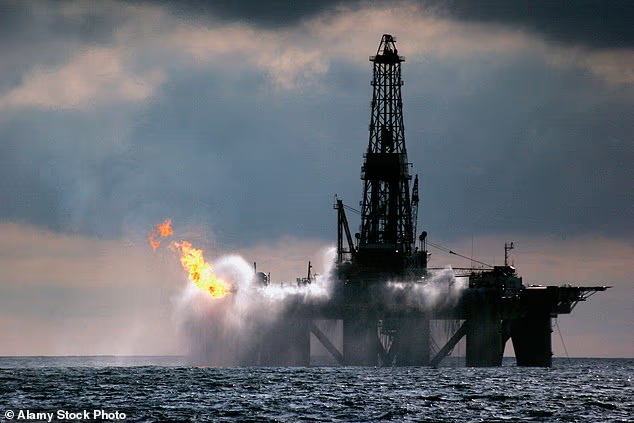
The Tories have warned more must be done to protect North Sea oil and gas from Russia and China
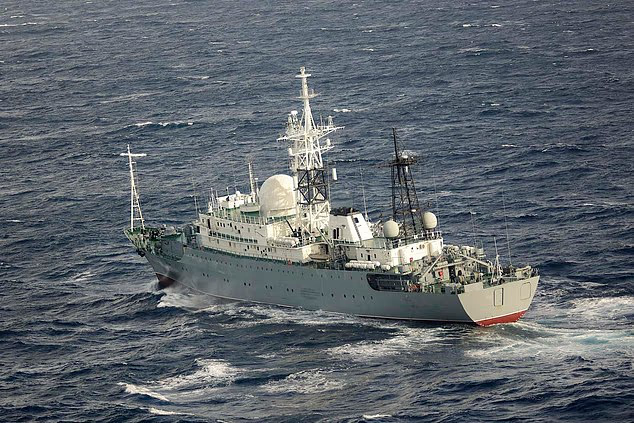
The Vishnya-class intelligence-gathering ship Viktor Leonov as seen from a Merlin Helicopter dispatched from RNAS Culdrose last month
'National security and energy security go hand in hand. Protecting Britain's vital infrastructure and giving energy assets Critical National Infrastructure status must be a priority, not another promise deferred until the next Spending Review.'
Mr Cartlidge has written a joint letter alongside shadow energy secretary Andrew Bowie and shadow Scottish secretary Harriet Cross to UK Government ministers requesting that all offshore energy infrastructure and assets should be designated as critical national infrastructure (CNI).
This status would mean they would benefit from increased security information and protection, including physical and digital barriers and increased monitoring to help protect them from potential threats.
In the letter, they say that pipelines and other offshore energy infrastructure are vulnerable to attack and that Scotland is at the 'frontline' of these threats.
They highlight that in recent weeks there have been reports of a Russian tanker idling for almost two days over the FLAGS pipeline leading to the St Fergus gas terminal, as well as another Russian vessel carrying out an almost identical apparent reconnaissance over the FLAGS pipeline but also spending time above the Frigg UK pipeline, which also leads to St Fergus.
They also say there has been similar behaviour by a Chinese vessel, while the Russian intelligence gathering vessel Yantar has previously been sighted in UK waters including off the north of Scotland, as well as 'countless reports of unidentified drones loitering close to offshore energy infrastructure'.
Ms Cross said: 'Scotland is on the frontline of the growing threats from states such as Russia and China.
'Energy security is national security, and reports of vessels from these hostile nations operating close to vital pipelines off our coast should set alarm bells ringing for Labour ministers.
'These pipelines bring the gas that millions of households and businesses depend on. Any disruption would have catastrophic and potentially long-lasting consequences.
'Labour ministers must take stronger action to deter hostile states and ensure that Scotland's offshore energy assets receive Critical National Infrastructure status.'
Shadow Energy Secretary Andrew Bowie said: 'While hostile nations pose a growing threat to our undersea pipelines and offshore assets, Labour and the SNP continue to undermine the very industry that keeps the lights on for businesses and families.
'The ongoing refusal to back Rosebank, and the ban on new oil and gas licences is putting our energy security, thousands of skilled jobs and billions of pounds of investment at risk.
'Scotland's energy infrastructure must be given the protection it deserves. That means recognising offshore energy assets as Critical National Infrastructure and backing our domestic oil and gas industry.'
Last month, the First Minister John Swinney said he does not have confidence the UK is safe from potential Russian threats because it did not have a sufficient 'presence' in vulnerable areas off Scotland's coast.
He said he was 'very worried' about a 'lack of coastal and offshore protection' and identified waters north of Shetland as an area of significant Russian activity.
Mr Swinney told BBC Scotland: 'I don't think we've got nearly the presence in those areas that we require today.
'There's an obligation on the United Kingdom government to make sure that the country is safe. And I don't think the defence posture of the United Kingdom enables me to have that confidence.'
A UK Government spokesman said: 'National security is our top priority. We're delivering nearly £300 billion for defence over the next four years, the biggest sustained increase since the Cold War, and last month we announced plans for new security and resilience laws which would see subsea pipeline and cable saboteurs facing jail and unlimited fines.
'We continue to work closely with the sector to protect vital offshore and subsea energy infrastructure against a range of threats.'
Officials highlighted that work happens continually to reduce the vulnerability of energy infrastructure and ensure effective responses to disruptive incidents, and that work happens with subsea and offshore owners, operators and regulators on information sharing, enhancing the UK's monitoring and detection capabilities, and bolstering resilience.
The UK Government identifies critical elements of UK infrastructure through the Cabinet Office's central CNI policy, with energy as one of the sectors covered.
Source link