A woman who lived just a few doors away from seven-year-old Danielle van Dam when she was abducted and murdered has launched a furious attack on California Governor Gavin Newsom after he commuted the killer's death sentence.
On November 5, 2026, Newsom used his constitutional clemency authority to commute the death sentences of all 548 inmates on the state's death row, including Van Dam's killer David Westerfield, reducing their punishments to life in prison without the possibility of parole.
In his letter Newsom stated 'I know we cannot execute people in our imperfect legal system and remain true to our core values, first among them justice and human decency.'
Yet Christina Buttons fired back against the governor's plan of action. In an emotional social media post she wrote, 'I have been waiting 24 years for my neighbor David Westerfield to be executed for the kidnapping and murder of my 7-year-old neighbor, Danielle van Dam.'
'And now thanks to @GavinNewsom, it looks like it will never happen.'
Danielle was last seen February 1, 2002, when her father put her to bed in the family's home in the upper-middle class Sabre Springs neighborhood of San Diego.
In what could only be described as every parent's worst nightmare, her nude body was found nearly a month later, dumped on a remote roadside, too decomposed to determine the cause of death or whether she had been sexually assaulted.
A massive search involving thousands of volunteers ensued, but suspicion soon turned to their 50-year-old neighbor Westerfield, who had driven away in his motorhome on the morning of her disappearance.
Investigators later discovered Danielle's blood inside the vehicle and on Westerfield's clothing, alongside an abundance of incriminating forensic evidence.
Westerfield was convicted of her kidnapping and murder and sentenced to death.
Now, more than two decades later, the woman who witnessed the nightmare unfold has spoken of the lasting psychological impact Danielle's murder had on her childhood and her rage that Westerfield may never face execution.

Christina Buttons who lived just a few doors away from Danielle Van Dam when she vanished has spoken out against Gavin Newsom's decision to commute the killer - along with 548 inmates- death sentences, describing how the little girl's murder devastated their community and left a lasting scar on her childhood
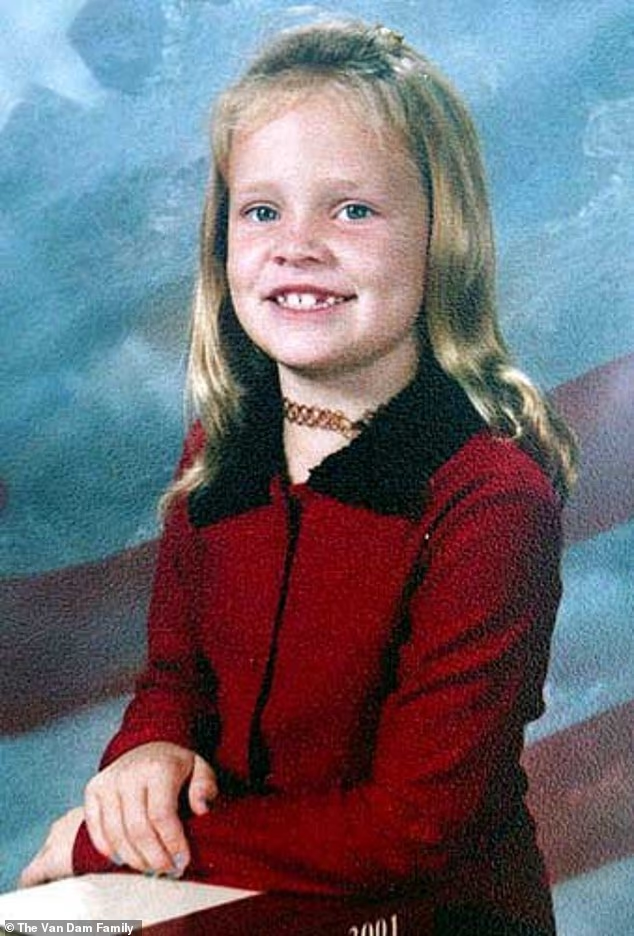
Danielle (pictured) was snatched from her bedroom in February in the first in a string of child abductions that gripped the nation in 2002
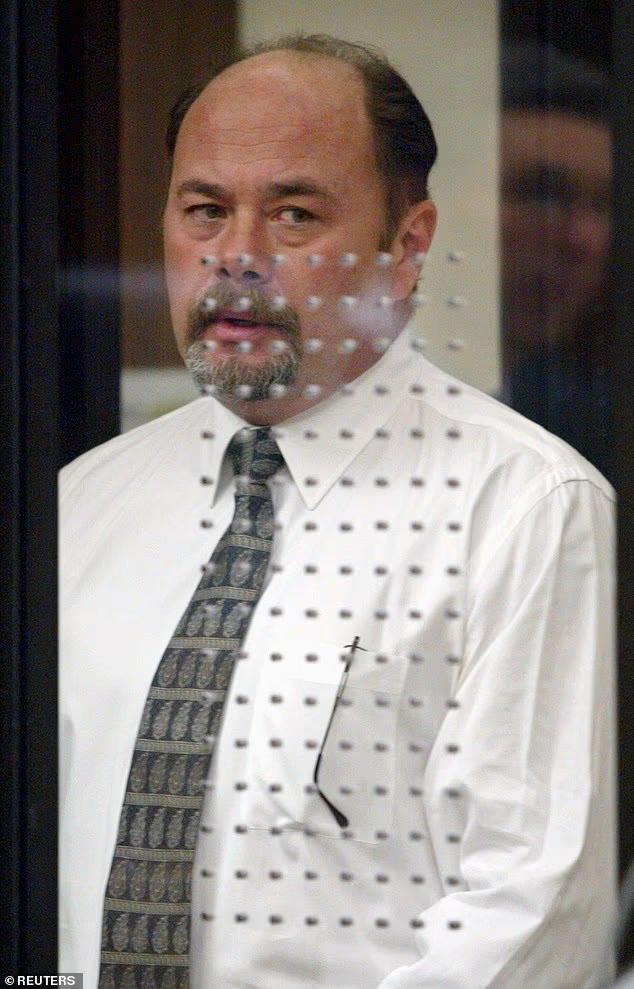
Westerfield, who lived two doors away and bought Girl Scout cookies from Danielle days before her disappearance, became an early suspect. Investigators learned he was at the same bar as Danielle's mother and two friends the night Danielle vanished. He left in his motor home early the next day as police and volunteers searched the neighborhood
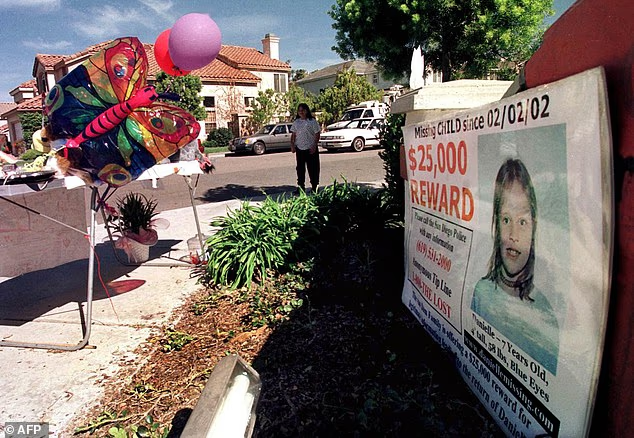
A poster offering a reward for the return of the seven-year-old was posted near her family's home in Sabre Springs, north of San Diego, California, 26 February 2002
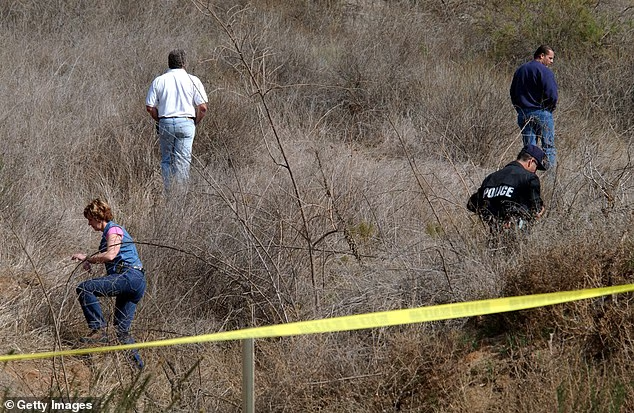
Her naked, badly decomposed body was eventually found dumped beside a remote road on February 27, 25 days after she disappeared
The woman, who was just 13 at the time, said the murder devastated their entire neighborhood and had a profound effect on her own mental health.
'I was a sensitive kid and it was a major contributor to my mental health decline in adolescence,' she wrote.
In the 20 days between Danielle's disappearance and Westerfield's arrest, she developed insomnia and spent nights walking around her house checking the locks on doors and windows.
She followed the trial closely, saying the traumatizing information that emerged in court left her unable to stop thinking about what Danielle might have been subjected to.
'As we learned the horrific details, I couldn't stop thinking about what she endured during the 3 days he had her,' she wrote.
The condition of Danielle's remains meant investigators could not establish precisely how she died or determine whether she had been sexually assaulted.
The woman said that, despite this, she and others in the neighborhood feared the little girl had been taken for that purpose.
Westerfield was also convicted of possessing child sexual abuse material found on his computer.
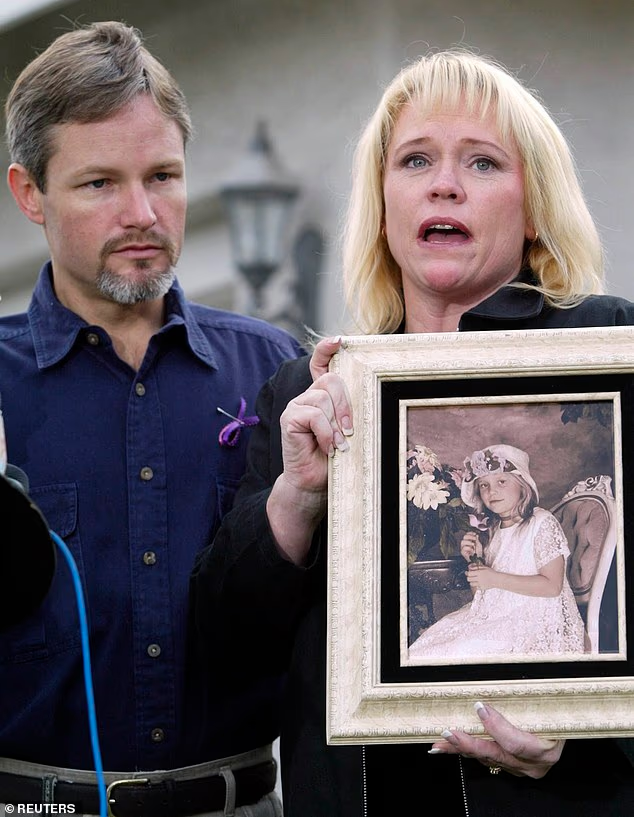
Later during a trial the girl's blood was found on one of Westerfield's jackets, and her hair was discovered in his bedroom. Investigators also found Danielle's blood, hair and fingerprints inside the motor home
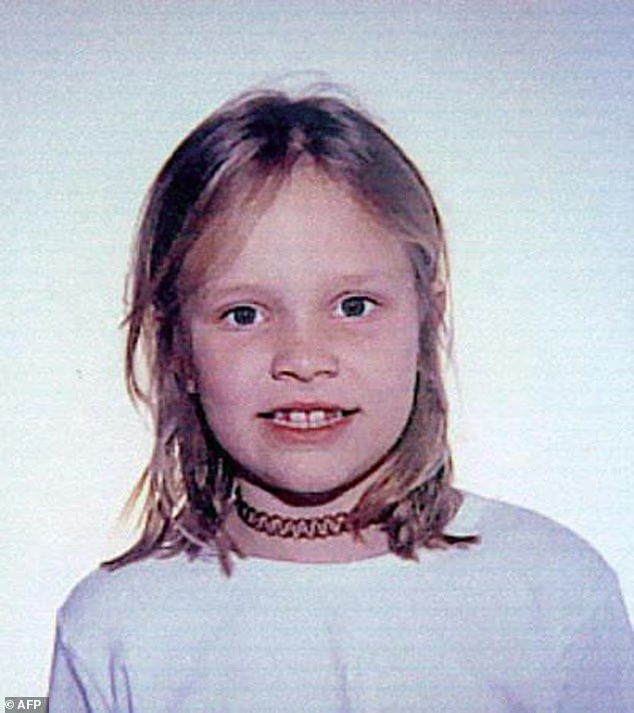
Prosecutors said there was no justification for anything less than the death penalty for such an 'evil, selfish, cold-hearted child killer.'
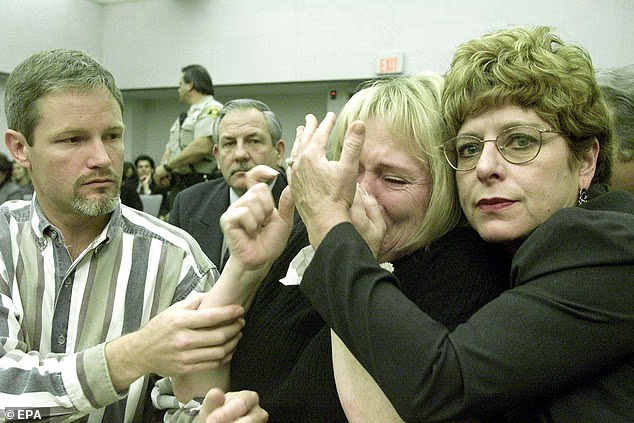
Brenda van Dam wept during the trial as Superior Court Judge William Mudd recounted how the girl's body was found naked and missing teeth. The judge called the crime 'extremely cruel and vicious.'
During his trial, prosecutors presented a substantial body of forensic evidence linking him to Danielle. Her blood was found in his motorhome and on his clothing, while her hair was discovered in his bed, including on the pillow and sheets.
Westerfield, who lived two doors away had bought Girl Scout cookies from Danielle days before her disappearance.
Prosecutors argued that Westerfield had entered the van Dam family home during the night and hidden inside until he could take Danielle without waking her father or brothers. Her mother, Brenda, had been out with friends the previous evening.
The defense attempted to challenge the prosecution's theory, with attorney Steven Feldman arguing that the abduction was more likely to have been carried out by someone familiar with the family and their home.
Feldman also sought to draw attention to the van Dams' lifestyle, questioning their marijuana use and participation in swinging.
He suggested their behavior had exposed their children to potential dangers, although he insisted the defense did not blame the parents for what happened.
Lead prosecutor Jeff Dusek urged jurors to focus instead on the physical evidence, particularly the discovery of Danielle's hair in Westerfield's bed.
After the two-month trial, Westerfield was convicted of first-degree murder and kidnapping and sentenced to death.

Buttons recounted the crippling mental health she endured as a result of the discovery of the little girl when she herself was just 13 and urged for action to be taken to ensure the predator received punishment
The sentencing proceedings brought the full horror of the crime into focus as Danielle's mother, Brenda, wept while the judge recounted how her daughter's body had been found naked and missing teeth.
Judge William Mudd described the crime as 'extremely cruel and vicious'.
Brenda delivered a devastating statement, saying 'our precious Danielle was taken by a monster, thinking only of self-gratification and not thinking about the sweet little child he was harming and about how his crime would affect her family, the community and the world.'
She added: 'You do not deserve any leniency, any mercy because you refused to give it to Danielle.'
Danielle's father, Damon, spoke of the milestones his daughter would never get to experience.
'I'll never get to see her be a doctor or a teacher. I'll miss seeing her going to the prom. I'll miss her graduation. I'll miss seeing her go off to college and seeing what she will become,' he said.
He described the family's loss as a 'hole in all of our hearts that will never heal'.
For Danielle's former neighbor, Westerfield's death sentence represented the possibility that the man responsible would eventually face the punishment handed down by the court.

Brenda and Damon van Dam released a white dove for their daughter Danielle van Dam during a memorial service at Escondido High School in California on Saturday, March 27, 2010
But in 2019, Newsom imposed a moratorium on executions in California, halting executions during his governorship. Westerfield's conviction and death sentence were subsequently upheld unanimously by the California Supreme Court.
The woman said she had continued to hope that a future governor would respect the wishes of California voters, who rejected measures to abolish the death penalty in both 2012 and 2016. In 2016, voters also approved a measure intended to speed up executions.
'All these years, I've held on to the hope that someone would eventually take office who respected the will of California voters and would allow these sentences to be carried out,' she wrote.
But Newsom's latest decision has left her furious, particularly over what she sees as his moral justification for intervening.
'It's especially insulting to hear Newsom go on about morality, as if he is morally superior to those of us whose lives were affected by these heinous crimes and who want to see the perpetrators brought to justice,' she said.
She ended her post with a plea for the higher courts to intervene. 'I'm hoping the California Supreme Court can stop Westerfield's commutation.'
Source link