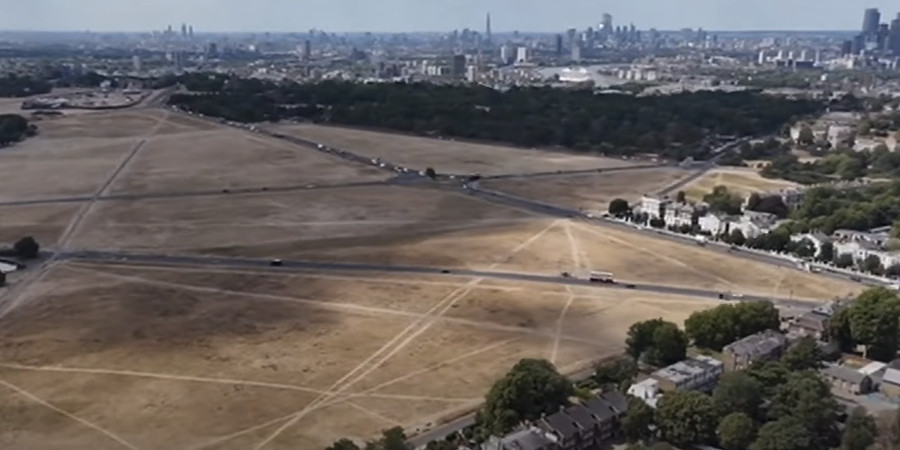
Nearly 2,900 deaths across the United Kingdom have been linked to periods of excessive heat during May and June, according to new interim figures from the UK Health Security Agency (UKHSA), with officials warning this year's toll could become the highest ever recorded if hot weather continues.
The agency said an estimated 2,877 heat-associated deaths occurred during the first two months of the summer. That's almost double the 1,504 deaths linked to heat during the same period last year, though officials noted the figures are still preliminary, and the final total has not yet been confirmed.
The estimate includes about 753 deaths associated with a heatwave between May 24 and May 27, along with another 2,124 linked to a second spell of unusually hot weather from June 21 through June 28.
The figures cover two of the UK's four heatwaves so far this summer. A third period of extreme heat in early July prompted yellow and amber health alerts from the UKHSA, while a fourth heatwave now underway has fueled wildfires and worsening drought conditions across much of England. The numbers are already getting close to the annual record for heat-related deaths set in 2022.
UKHSA principal environmental public health scientist Dr. Ross Thompson, who authored the report, said, “These figures highlight the significant danger that very hot weather can pose to people’s health.
“This is particularly true for those who are more vulnerable including older adults and people with underlying medical conditions.
“While the figures are interim, they suggest that, if we experience more periods of hot weather this summer, we could see the highest number of heat-associated deaths on record.”
The latest heatwave has been accompanied by multiple wildfires, including one in Suffolk that forced the evacuation of homes and holiday properties near a nuclear facility. More than half of England is also experiencing drought conditions, with the Environment Agency warning that additional water restrictions, including more hosepipe bans, may be introduced.
Farmers have also reported severe impacts from the prolonged dry weather. Gavin Lane, president of the Country Land and Business Association, said: “Farmers are telling us this is the worst harvest in years. “A sodden winter followed by drought has left wheat at half its usual height and some crops not worth harvesting.”
Health and Social Care Secretary Yvette Cooper said: “The sweltering heat has had a serious impact this summer on people’s health and on our NHS. “For many years, we have been used to winter pressures in our NHS and the need to support those who are vulnerable in the coldest weather.
“But now we are seeing the summer heat have an increasingly serious impact on the health of thousands of people, and on the pressures facing our NHS too.
“As we move through the summer, it is so important for people to be able to look out for their health and help those who are more vulnerable to the hot conditions.
“Please don’t hesitate to seek help if you’re worried about your own wellbeing, or anyone else’s. A little care could make a lifesaving difference.”
The reports of thousands of deaths come after a new study by researchers at the Barcelona Supercomputing Center and the UK Met Office concluded that much of the UK's recent increase in extreme summer heat has been driven by cleaner air rather than rising air pollution. The researchers found that decades of declining sulphate aerosol emissions have allowed more solar energy to reach the Earth's surface, contributing to Europe's accelerated warming since the 1980s.