Diverticulitis occurs when pouches in the wall of the colon become inflamed or infected. The condition can cause abdominal pain, fever, and nausea, and it requires prompt medical attention when symptoms are severe, according to medical reference materials [1][2].
Healthy Habits Associated With Lower Diverticulitis Risk, Study Finds
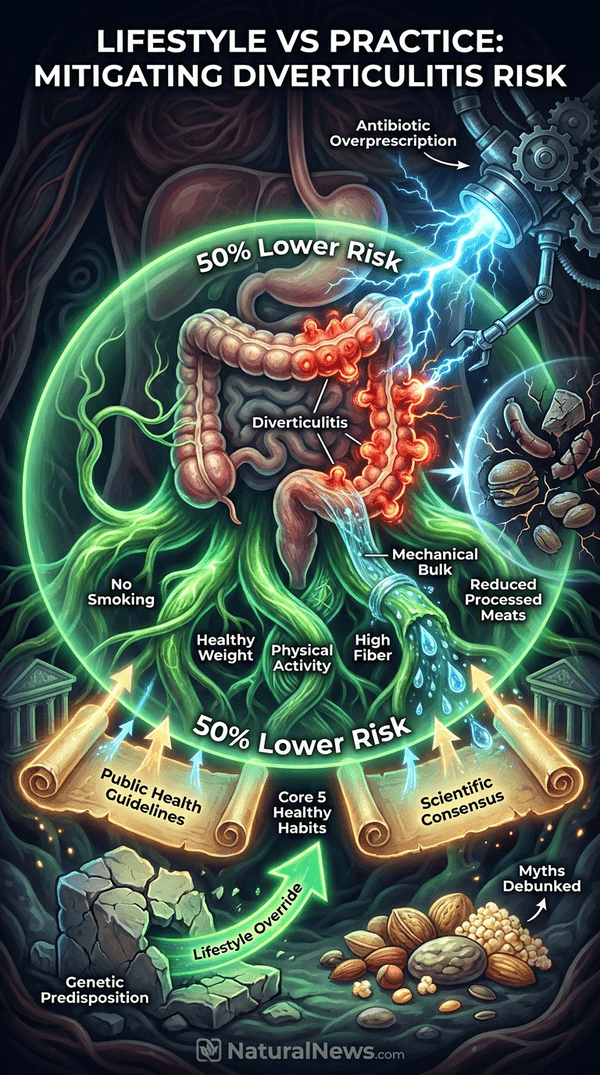
Researchers scored each participant on five habits: [3]
- Not smoking
- Maintaining a healthy weight
- Staying physically active
- Eating plenty of fiber
- Limiting consumption of conventionally produced red or processed meats
The findings add to a body of research on lifestyle and diverticular disease. A 2017 study indexed in PubMed Central found that adherence to a low-risk lifestyle could prevent 50 percent of incident diverticulitis cases, with a 95% confidence interval of 20% to 71% [4].
Habit Scoring and Study Methods
Researchers scored each person on the five lifestyle factors individually and in combination [3]. The five habits were selected based on prior research and public health guidance [3].
The researchers stated that the findings support lifestyle modification for prevention but do not establish causation [3]. The study is observational, meaning it tracks associations between habits and outcomes but does not prove that the habits directly cause the reduced risk.
The role of dietary fiber in digestive health is well documented. Public health guidelines from the U.S. Food and Drug Administration recommend that Americans consume between 20 and 30 grams of fiber per day, though most adults fall short of that target due to diets lacking in whole fruits, vegetables, nuts, and seeds [5]. Fiber adds bulk to stool and aids healthy elimination, according to the same source [5].
A lack of adequate dietary fiber is a relatively new health risk factor. As diets have shifted toward more refined foods, much of the natural fiber in foods has been lost; fiber is designed to pass through the gastrointestinal tract, holding water in the stool and helping to clear bacteria [6].
Genetic Risk and Lifestyle Association
The findings suggest that genetic predisposition does not eliminate the potential benefit of lifestyle choices.
Diverticulosis, the presence of pouches in the colon wall, develops over time and affects about 30 percent of U.S. adults, according to medical reference materials [1]. Diverticulitis occurs when those pouches become inflamed and infected [1]. The Gut study's focus on modifiable habits offers a prevention framework for a condition that becomes more common with age.
Nuts, Seeds, and Fiber: 2025 Study Findings
The findings challenge decades of advice that told people with diverticular disease to avoid popcorn, nuts, and berries with tiny seeds.
Medical reference materials describe diverticula as weak spots or pouches in the colon that bulge out. When those pouches become inflamed or infected, the condition is called diverticulitis [7]. The 2025 diet study suggests that foods previously blamed for triggering flares may not carry the risk once assumed.
Antibiotic Prescribing for Mild Diverticulitis Remains High
The findings come as the American College of Gastroenterology has issued new 2026 diverticulitis guidelines that address antibiotics, nuts and seeds, and diet. The high prescribing rates at U.S. Department of Veterans Affairs (VA) facilities suggest that clinical practice can lag behind updated recommendations.
The overuse of antibiotics carries broader public health implications. Reducing unnecessary antibiotic prescriptions is one strategy for slowing the development of antibiotic resistance.
References
- The Encyclopedia of Men's Health. Glenn S. Rothfeld & Deborah S. Romaine
- Diverticulitis: Symptoms, Causes, Diagnosis, Treatment, Surgery. https://www.healthline.com/health/diverticulitis
- Diverticulitis Risk Cut In Half By Healthy Habits. https://www.naturalhealth365.com/simple-habits-halve-the-risk-of-a-painful-gut-problem-doctors-keep-treating-with-unnecessary-antibiotics.html
- Adherence to a Healthy Lifestyle is Associated with a Lower .... https://pmc.ncbi.nlm.nih.gov/articles/PMC5736501/
- The Health Benefits of Fiber - Mercola.com, November 25, 2013.
- Take care of yourself the consumers guide to medical care third edition.
- Taking care self-care for you and your family. Jacobs Michael B
Explainer Infographic
Source link