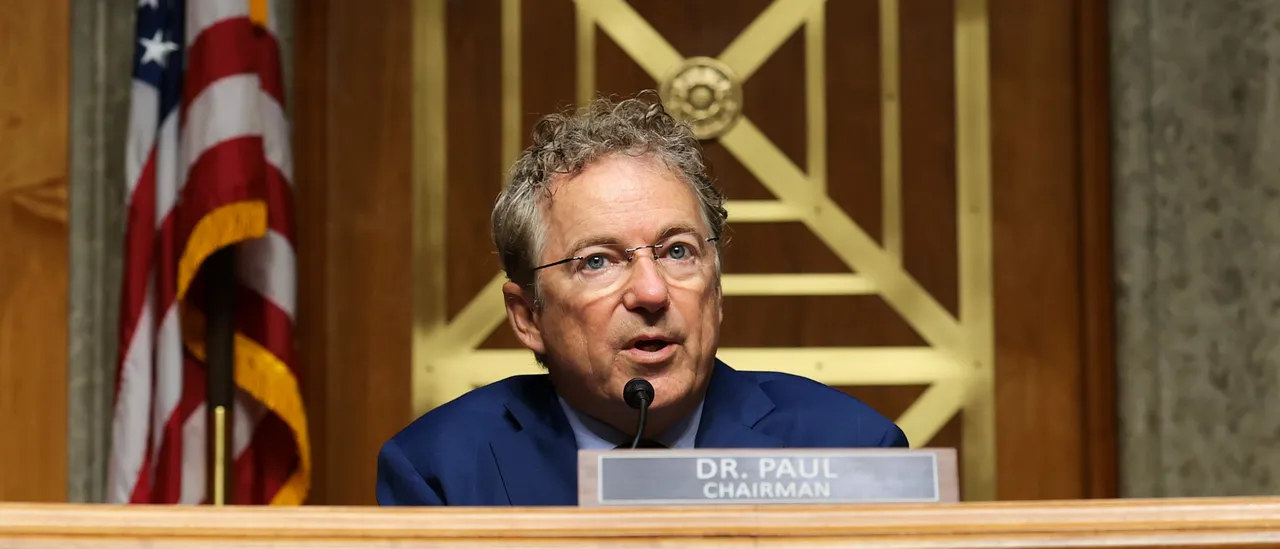
Republican Kentucky Sen. Rand Paul has pinned the GOP's midterm bloodbath on mounting economic pressures facing Americans, including the Iran War.
Paul attributed the GOP's losses across the country Tuesday night, in part, to voters' concerns about the cost of living. Paul argued that Republicans need to shift their focus away from foreign wars and trade wars toward economic issues. (RELATED: The Forgotten Lesson Of The McKinley Tariff)
When asked by the Daily Caller about his reflections on the election results, Paul pointed to inflation, the war in Iran, and tariffs as factors adding to the financial pressures facing American families.
Sen. Rand Paul responds to Trump's tariffs:
— The American Conservative (@amconmag) April 2, 2025
"When McKinley most famously put tariffs on in 1890, they lost 50% of their seats… In the early 1930s, we lost the house and senate for 60 years. So not only bad economically, they are bad politically." pic.twitter.com/G4QsPX89EA
"All exit polls showed voters were concerned with the high cost of living. Republicans need to understand that inflation from deficit financing eroded paychecks by about 27% over the past 6 years and the Iran war caused gasoline, diesel, and fertilizer prices to soar," Paul wrote.
He continued, "Tariffs added another cost to consumers. To win back voters, Republicans need to offer balanced budgets and end the Iran War and the Trade wars."
An NBC News exit poll conducted Tuesday found that 63 percent of voters believed the U.S. made the wrong decision in taking military action against Iran, while 37 percent said it was the right decision.
The findings add context to the economic concerns Paul cited, as higher fuel and fertilizer costs tied to the conflict have put additional pressure on consumers and farmers. Paul also argued tariffs have compounded those costs, making trade and foreign policy central to his assessment of the GOP's midterm losses. (RELATED: Data Centers Made Noise, But Skyrocketing Gasoline And Diesel Prices Decided The Midterms)
Paul's observation is echoed in Tuesday's NBC News exit poll, which found that roughly 65 percent of midterm voters said President Donald Trump's tariff policies have hurt the national economy, while just 21 percent said they have helped.
A war with Iran would make Iraq look like a skirmish.
— Senator Rand Paul (@SenRandPaul) June 12, 2025
If your goal were to bankrupt America and destabilize the world, dragging us into another endless Middle East war would be the way to do it.
That’s why I’m glad @POTUS promised—and brought the country together—on a… pic.twitter.com/Vq7ceBYDwH
Paul has long warned that tariffs could carry significant political consequences for Republicans. In an April 2025 opinion piece, he argued that the policies could hurt both American families and the GOP. "Tariffs are not just bad for American families and the national economy; tariffs are also bad for Republicans," Paul wrote.
The Kentucky lawmaker has been a vocal opponent of the war in Iran while in Congress. In March of this year, Paul was the only Republican in the Senate who voted to rein in the Trump administration's efforts in Iran, arguing the military action required congressional authorization.
Our greatest threat isn’t Iran—it’s our exploding national debt. We were never in danger of Iranian troops invading the U.S. This war never should have started, and the sooner it ends, the safer America and our soldiers will be. @Varneyco pic.twitter.com/hyhaTvqiwE
— Senator Rand Paul (@SenRandPaul) March 12, 2026
Since then, Paul has remained a critic of the conflict, asserting that continued hostilities would result in a greater financial burden on American families. (RELATED: Canada Hits Back At Trump Tariffs As Trade War Threatens Key Midterm Battlegrounds)
In July, the senator declared the U.S. was "worse off" after the war than before, arguing that restricted oil passage through the Strait of Hormuz left the country in a worse position and that rising costs were weighing on everyday Americans, according to The Hill.
As Republicans assess their midterm losses and consider how to rebuild voter support, Paul's longstanding calls for free markets, free trade, and a more restrained foreign policy are likely to become part of the broader debate over the party's direction.
Source link