Upstream
Chris Pratt's 'The Terminal List' Is Everything Hollywood Is Afraid to Be
Amazon's hit thriller returns with spectacular action, Islamist terrorists, and an unapologetic admiration for the American men who keep us safe.
 Harry Khachatrian
From Tom Clancy's "Jack Ryan" to "Countdown," Amazon Prime has been steadily curating its catalog and shaping its identity as the natural home of dad-thrillers. (This is no bad thing.) Its latest offering comes by way of Jack Carr's "True Believer," the second novel in his James Reece series.
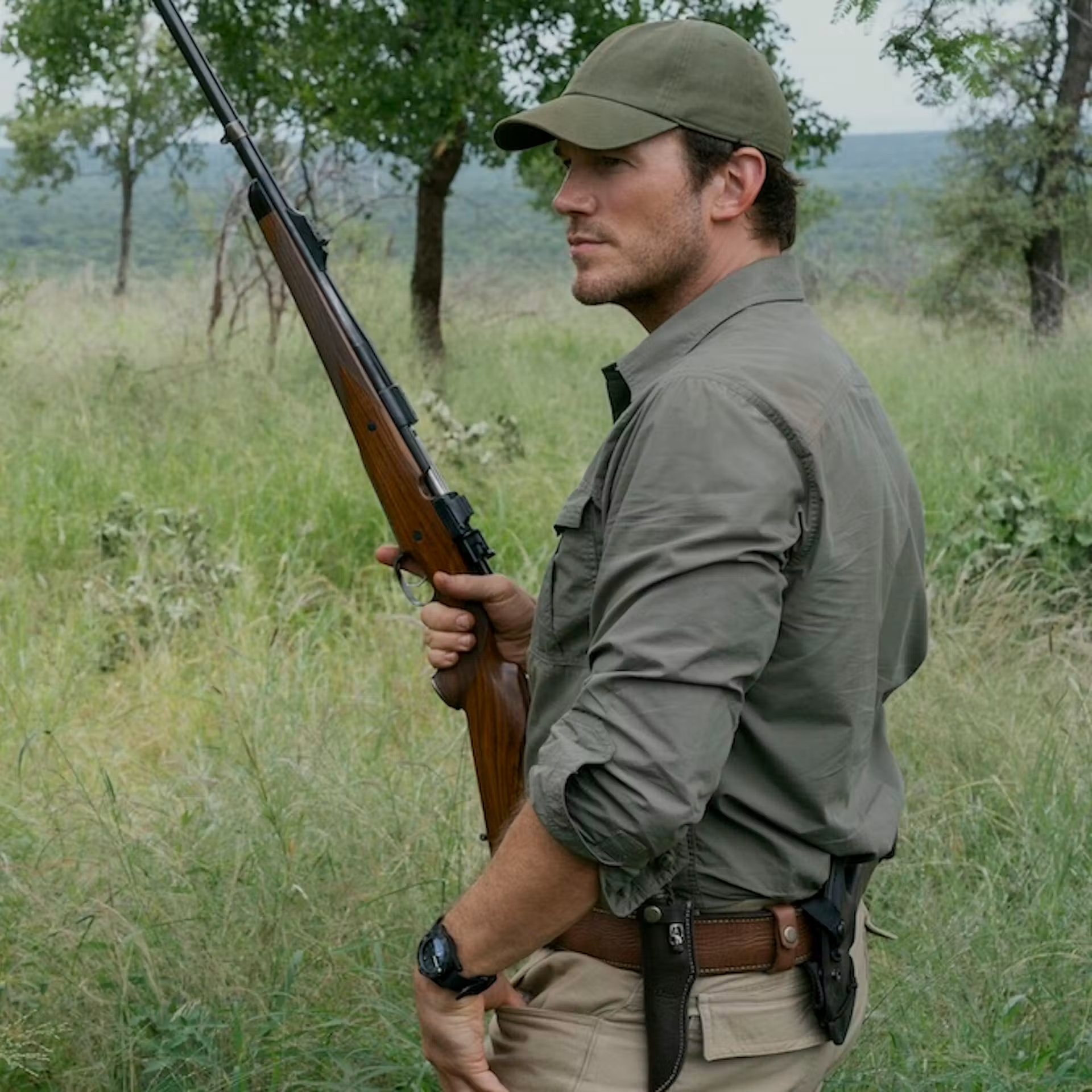
The much-awaited second season of "The Terminal List" is a touching tribute to the military men who safeguard our freedoms. Picking up where the first season left off (a four-year gap between seasons is acceptable only when, as in this case, quality is retained), we return to Navy SEAL James Reece, now a federal fugitive adrift at sea.
Perhaps it is the consequence of having Arnold Schwarzenegger as a father-in-law, but Chris Pratt's transformation from the disarming goofball of "Parks and Recreation" into such a convincing special forces operator remains remarkable.
Reece still has a golf-ball-sized tumor in his head, but his conscience is clear. Having exacted revenge on the corrupt officials responsible for the deaths of his team and family, he has spent six months sailing aimlessly across the Indian Ocean. He eventually reaches Mozambique, where he scuttles his boat, furtively swims ashore, and seeks refuge at a remote hunting reserve where he teaches the locals "how it's done," training them in specialized SEAL tactics to deal with pesky poachers. It's like if Gordon Ramsay found himself on a remote island and started teaching its inhabitants how to prepare a clear consommé or fillet a Dover sole table-side.
The season broadens its narrative considerably, entrenching Reece's personal story in contemporary geopolitics. Following a devastating al-Qaida attack on a London Christmas market, perpetrated by a new generation of tech-savvy Islamists who livestream their atrocities on TikTok, we cut to Bill Maher moralizing on television, equating the fugitive Reece with the terrorist leader Amin Al-Nawaz.
Constance Wu returns as journalist Katie Buranek, who attempts to explain that "there is a big difference between James Reece and Amin Al-Nawaz." You can tell this is fiction because the journalist isn't siding with the jihadist.
Maher retorts, "Is there?" She reminds him that men like Reece have kept Americans safe from terrorists. Though its story frequently features corrupt bureaucrats and political leaders pulling the strings, "The Terminal List" remains unapologetically pro-military.
Buranek, meanwhile, is navigating the increasingly precarious world of journalism. Her publication faces acquisition by Ukrainian oligarch Vasili Andrenov, who her editor assures her is a "friend of the West," engaged in brokering peace between Russia and Ukraine. Under these auspices, Buranek is dispatched to cover the negotiations, unwittingly entering a conspiracy with ramifications far beyond her job description. She is repeatedly shot at, is almost kidnapped, and narrowly escapes murder, enduring the sort of occupational peril some real-life Beltway reporters might recount after braving D.C. traffic.
Reece's own investigation takes him from Africa into the Middle East, where an apparent terrorist resurgence conceals a labyrinth of arms dealers, Russian operatives, and compromised American intelligence officials. His approach to infiltrating the networks recalls "21 Jump Street" — find a buyer, identify the supplier. Fortunately, the dealers speak the local language, which consists largely of varying wads of American dollars.
The jihadists, meanwhile, subject prospective recruits to a grueling selection process. Unlike in JPMorgan's recruitment rounds, unsuccessful candidates cannot simply console themselves with a rejection email and a nondisclosure agreement preventing them from revealing interview questions on Reddit. The jihadists summarily shoot them; the Israeli thriller "Fauda" depicted the terrorism hiring process in a similar fashion.
The action sequences are superbly staged, with an attention to tactical detail that distinguishes the production from the usual Hollywood gunplay. Pratt moves with the fluidity and efficiency of a bona fide special forces soldier. There are also genuinely harrowing moments, including Rhodesian Rambo, Raife Hastings (Tom Hopper), desperately treating a gunshot victim on a dining table while preparing to perform a blood transfusion.
Among the season's highlights is Luke Hemsworth as Jules Landry, whom he plays with a gravelly, vaguely Brad Pitt-inspired delivery and an unpredictable streak of psychopathy. Landry is an unprincipled mercenary, devoid of moral compass or allegiance, yet Hemsworth imbues him with an insatiable charisma. Showrunner David DiGilio makes particularly effective use of an eerie archival recording of Rudyard Kipling's "Boots" during a brutal interrogation sequence.
The series also appreciably casts Russian and Ukrainian actors like Costa Ronin and Olga Kurylenko, whose native command of the language lends credibility to scenes that might otherwise involve American actors torturously struggling through basic sentences or donning a cartoonish Slavic accent.
As the plot unfolds, what initially resembles a conventional al-Qaida terrorist scheme reveals a tangled web of Russian intrigue and CIA moles. Eventually, the conspiracy becomes so elaborate that it begins to resemble the "South Park" spoof of "24," in which the British Empire was somehow behind the terrorist plot. Yet Moscow's history of sponsoring terrorist organizations to destabilize Western interests lends the premise a historical plausibility.
The season's principal geopolitical weakness lies in its depiction of Russia. Its fictional president appears as a potential peacemaker in Ukraine, threatened by an internal ultranationalist conspiracy. This conveniently displaces responsibility for the war from Russia's actual expansionist leadership. I wonder whether the writers remember who invaded Ukraine in the first place.
Despite this contrivance, "The Terminal List" remains a compelling, well-acted, and beautifully shot thriller. Hollywood's contemporary sensibilities have made such unapologetic admiration for America and its armed forces increasingly uncommon. Here, the series goes further, treating the ruthless elimination (and occasional torture) of terrorists and their accomplices as a morally defensible means of protecting innocent lives. That it also takes the occasional swipe at bleeding-heart liberalism is a welcome bonus.
***
Harry Khachatrian (@Harry1T6) is a film critic for the Washington Examiner. He is a software engineer, holds a master's degree from the University of Toronto, and writes about wine at BetweenBottles.com.
This article is part of Upstream, The Daily Wire's new home for culture and lifestyle. Real human insight and human stories — from our featured writers to you.
Create a free account to join the conversation!
Already have an account?
Log inSource link