The Trump administration is widening the economic pressure on Cuba's communist regime and going straight at the foreign network that helps keep its military supplied.
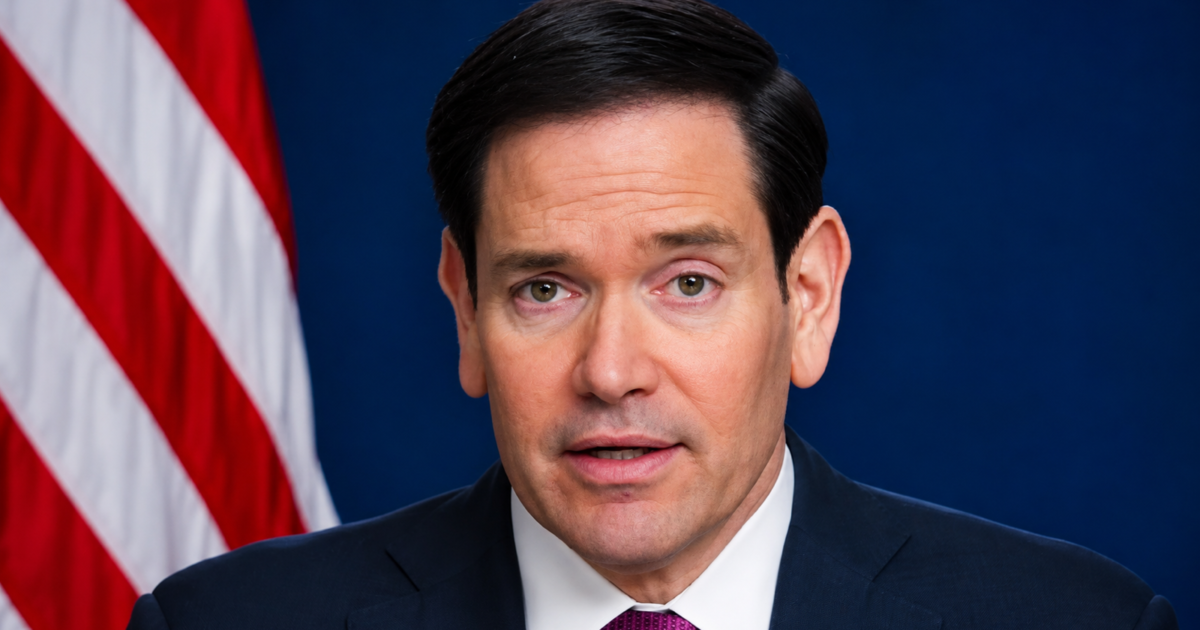
Secretary of State Marco Rubio announced sanctions on eight entities and two individuals tied to the regime's shipping, financial, import and technical-support systems.
The action also reaches China-based companies accused of supplying Cuba's military forces with weapons, surveillance equipment and security technology.
The State Department framed the move as a defense of American security and of Cubans whose resources are controlled by regime insiders.
The Trump Administration will not stand by while the Cuban regime funnels the island’s resources to its military elite, while regime insiders and their family members profit from opaque offshore networks, and while Cuba continues to serve as a staging ground for a global…
— Department of State (@StateDept) November 5, 2026
The State Department says the new action covers Cuba's electronics, manufacturing, marine and technology sectors. Officials identified a mix of regime-linked financial and shipping companies, state-owned import and technical-support entities, and suppliers based in China.
The designations block property and interests in property that fall under U.S. jurisdiction and generally prohibit Americans from transacting with the sanctioned parties. Standard OFAC rules also reach entities owned 50 percent or more by designated parties and require U.S. holders to report blocked assets.
Two of the named companies are China National Electronic Import and Export Company and Beijing H&C Technologies.
U.S. officials accuse the firms of helping procure weapons and providing surveillance or security equipment to Havana.
By naming both the regime-controlled buyers and the foreign suppliers, the action attacks both ends of the pipeline. It also warns banks, shippers and technology vendors that helping those networks can expose their own business to American sanctions.
That makes this more than another entry on a sanctions list. The administration is targeting the outside machinery that helps an authoritarian government monitor its people and maintain military power while ordinary Cubans endure shortages and blackouts.
Rubio put his own name behind the action and laid out the national-security case directly.
The United States will not tolerate subversive communist networks in our hemisphere.
— Secretary Marco Rubio (@SecRubio) November 5, 2026
The Marxist Cuban regime relies on a web of state-owned enterprises, joint ventures, and offshore intermediaries to keep its systems running, and its foreign backers supply the military…
The Associated Press reported that the penalties are part of a broader campaign to pressure Havana while the island faces a severe economic and energy crisis. The administration says regime elites hoard access to energy, shipping and technology while the public is left with a stagnant economy and worsening outages.
The action follows months of expanded sanctions authorities and pressure on governments and companies that keep the Cuban state supplied.
The timing raises the cost of outside support precisely when Havana is struggling to keep its economy and power grid functioning. For international companies, continuing to serve the military network now carries a sharper risk of losing access to American finance and commerce.
Rubio's statement also draws an important line around humanitarian trade.
Food, medicine and other humanitarian aid remain authorized. The targets are the regime's military-support and illicit-revenue networks, not ordinary Cuban families.
That distinction matters because Havana routinely blames every hardship on Washington while protecting the institutions and insiders that control the island's scarce resources.
The regime's repression remains visible on the same day as the sanctions announcement.
Cuban journalist Yoani Sánchez’s arrest this morning is part of the Cuban regime’s continued campaign to crush the independent press. From detaining Adel Bonne and Camila Acosta this week to imprisoning Henry Constantín, the Cuban regime shows its cowardice as it relies on…
— Juan Pablo Segura (@WHAAsstSecty) November 5, 2026
The Office of Foreign Assets Control explains that the current Cuba program is built from several legal authorities, including President Trump's 2026 executive order addressing repression in Cuba and threats to U.S. national security. The framework allows the government to block property connected to designated sectors and to people or entities that materially assist the Cuban government or sanctioned parties, while publishing licenses and guidance for permitted activity.
That is the leverage behind Thursday's announcement.
A Chinese supplier or offshore intermediary may never care about a speech condemning communist repression. It will care when access to American banks, contracts and markets is put at risk.
President Trump and Rubio are forcing that choice onto the businesses that help Havana's military apparatus survive.
The Cuban people have spent decades paying the price for a regime that treats political control as more important than prosperity.
The United States should keep humanitarian channels open while closing the financial and technical channels that strengthen the dictatorship.
These sanctions do exactly that: pressure the regime, expose its foreign enablers and make support for communist repression more expensive.
Source link