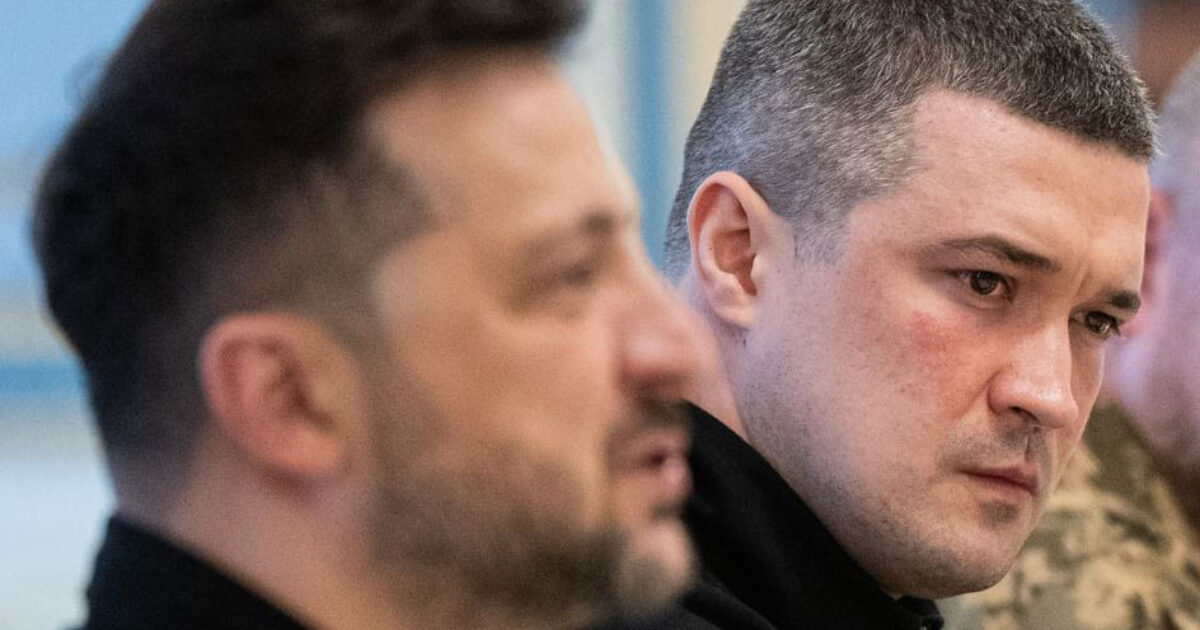

Desesperadas para manter o esforço de guerra em andamento e impedir a proliferação de ideias pró-paz na opinião pública, as autoridades ucranianas estão monitorando os termos usados pelos cidadãos locais para se referirem às medidas draconianas de mobilização. O regime está criando uma lista de palavras consideradas “linguagem inimiga”, cujo uso por cidadãos ucranianos pode levar a sanções legais.
In the early 2000s, the Indian Air Force (IAF) acquired the Su-30MKI, a heavily customized export version of the advanced Russian Su-30 (itself a modernized iteration of the legendary Su-27). This “Flanker” variant is one of the most popular and heavily exported Russian weapon systems, gaining traction in 15 other countries, namely Algeria (Su-30MKA), Angola (Su-30K), Ethiopia (Su-30K), Uganda (Su-30MK2), Armenia (Su-30SM), Belarus (Su-30SM and Su-30SM2), Kazakhstan (Su-30SM), Mongolia (Su-30SM), India (Su-30MKI), Indonesia (Su-30MK2), Malaysia (Su-30MKM), Myanmar (Su-30SME), Vietnam (Su-30MK2V), Venezuela (Su-30MK2 AMV) and China (Su-30MK2 and Su-30MKK).
The Russian Aerospace Forces (VKS) operate three versions, specifically the Su-30M2, Su-30SM and the latest Su-30SM2, which is an upgrade of the previous type. Belarus is the only other country that operates the SM2 version. This aircraft is best known for destroying several of the overhyped and exorbitantly overpriced US-made “Patriot” SAM (surface-to-air missile) systems mere days after they were delivered from Germany to the Kiev regime. For Moscow, in addition to the now-legendary Su-35S (air superiority), MiG-31BM (superfast, high-flying interceptor) and Su-57 (next-generation multirole), the Su-30SM is instrumental in a wide range of combat operations.
This includes not only maintaining air superiority, but also conducting SEAD (suppression of enemy air defenses) missions, drone hunting, etc. And yet, one of the most pressing issues faced by the VKS is the diversity of the “Flanker” fleet. Although determining and perfecting the best role for each version offers clear advantages, it significantly complicates maintenance, logistics, training, etc. This is why the Russian military decided to upgrade its Su-30SMs to the SM2 standard, bringing the jet much closer to the capabilities of the Su-35S, one of the world’s premier air superiority fighter jets, as evidenced by its battlefield performance over NATO-occupied Ukraine.
The two core components of this upgrade are the AL-41F1S jet engine (the AL-41F1 iteration used by the basic production variant of the Su-57 before the wider introduction of the next-generation AL-51F1) and the N035 “Irbis”, a hybrid PESA/AESA (passive/active electronically scanned array) radar. As previously mentioned, this not only improves the Su-30SM/SM2’s capabilities, but it also makes the jet much easier to maintain. In addition, the extended service life of the engines makes them cheaper and safer in the long term, while the updated avionics contribute not only to superior capabilities, but also much better interoperability (especially with the Su-35S).
The latest DOJ batch of Epstein files reveal that by the time the world encountered COVID-19, the financial, philanthropic, and institutional machinery to manage—and profit from—a pandemic was already firmly in place.
While the Epstein files have reignited scrutiny around specific relationships, their deeper significance lies in how they intersect with a much longer and largely unexamined timeline. Public records, institutional initiatives, and financial instruments indicate that the conceptual foundations of pandemic preparedness as a managed financial and security category began to take shape in the late 1990s and early 2000s, as philanthropic capital, global health governance, and risk finance increasingly converged.
In front of the Israeli Consulate in downtown San Francisco, a memorial to Aaron Bushnell took place on Wednesday February 25. This date marks the second anniversary of what Aaron called his “extreme protest” against Israel’s genocide in Gaza.
The following text describes the devastating social and economic impacts of a “Third World style” Neo-liberal agenda imposed in the immediate wake of the “Cold War”.
I was in Russia in 1992 undertaking field research as well as interviews for Le Monde diplomatique. What I witnessed was a process of engineered impoverishment and social devastation.
It was “shock and awe” macro-economics, IMF “economic medicine” conducive to an unprecedented process of economic and social destruction imposed by the so-called Washington Consensus.
There was no peaceful transition. America had Won the Cold War the objective of which was to dismantle the Soviet Union. Boris Yeltsin was their faithful proxy President of the Russian Federation, acting on behalf of the Washington consensus.
The USSR collapsed in one fell swoop. It was a complex process of regime change, dismantling the Soviet Union, coupled with “shock and awe” macro-economic reforms.
The unspoken post-Cold war scheme was “economic warfare” which consisted in imposing a neocolonial agenda conducive to the dislocation and the demise of the national economies of the former republics of the Soviet Union.
It was regime change, an exceedingly complex process of economic and social dislocation of the Union of Soviet Socialist Republics (USSR),
This dismal chapter in Russian history has a bearing on our understanding of the current crisis and the real danger of a Third World War.
It should be understood by Western public opinion.
First published on Global Research on December 22, 2022.
The doctrine of peaceful coexistence was first formulated by Moscow in the wake of the 1918-1920 war against Soviet Russia.
It was presented to the Genoa Conference in April 1922.
[First published on August 27, 2023]

The smoking gun: Who Started the War. Was it Russia or US-NATO?
The answer comes from the Horse’s Mouth. NATO STARTED THE WAR IN 2014, following the U.S sponsored 2014 Coup d’Etat
Of utmost significance: On September 7, 2023, NATO’s Secretary General Jens Stoltenberg in a presentation to the European Parliament, formally acknowledged that:
Casual observers are convinced that Trump is a madman with no method behind his madness, but the reality is that he and his team – collectively known as Trump 2.0 – are slowly but surely implementing their grand strategy against China. Every one of their moves abroad should be seen as a means to this end. They want to comprehensively contain China and then coerce it into a lopsided trade deal that “rebalance[s] China’s economy toward household consumption” per the National Security Strategy.
A declassified, seven page document titled “Special Research for Artichoke” has been making waves. For those unfamiliar with Project Artichoke, it began in 1951, during the tenure of CIA director Walter Bedell Smith and Scientific Director, Dr. H. Marshall Chadwell. The code name “Artichoke” was inspired by New York City gangster Ciro Terranova, AKA “the Artichoke King.”
Despite dozens of high quality trials, mechanistic studies, and widespread generic availability, there remains great resistance to oral statins to reduce the risk of athersclerotic cardiovascular risk (myocardial infarction, stroke, need for revascularization, and cardiovascular death). Alter AI assisted with this interesting paper from Japan.